
Why Combine Gold and Blockchain: Creating Stable, Transparent Digital Assets

Traditional gold investment meets cutting-edge blockchain innovation, offering crypto investors and precious metals enthusiasts a new way to build portfolio stability. Combining gold’s record as a trusted store of value with the transparency and immutability of blockchain technology brings the potential for fractional ownership, global access, and instant digital trading. This intersection challenges common misconceptions, reveals new avenues for asset management, and highlights how tokenized gold is reshaping modern investment strategies.
Table of Contents
- Gold And Blockchain Defined And Debunked
- Types Of Gold-Backed Blockchain Tokens
- How Gold Tokenization Actually Works
- Key Advantages: Liquidity, Transparency, Access
- Risks And Challenges Of Combining Gold And Blockchain
- Comparing Traditional Gold Vs Tokenized Gold Assets
Key Takeaways
| Point | Details |
|---|---|
| Gold and Blockchain Integration | The convergence of gold and blockchain transforms asset ownership and investment strategies, offering enhanced liquidity and transparency. |
| Types of Gold-Backed Tokens | Various gold-backed blockchain tokens exist, including physically backed and fractional ownership tokens, each providing different investment benefits. |
| Key Advantages of Tokenization | Gold tokenization enables 24/7 global trading, reduced transaction costs, and fractional ownership, making gold investment more accessible. |
| Investment Risks | Investors should be aware of risks including smart contract vulnerabilities and regulatory uncertainties, necessitating thorough due diligence. |
Gold And Blockchain Defined And Debunked
Traditional gold investment and blockchain technology represent two powerful financial paradigms converging to transform asset ownership and transparency. Gold’s longstanding reputation as a store of value meets the revolutionary potential of decentralized digital ledgers, creating a potent combination that challenges conventional investment strategies.
Blockchain Technology fundamentally reimagines how assets can be tracked, traded, and verified. Unlike traditional financial systems, blockchain provides a decentralized, transparent mechanism for recording transactions with unprecedented security. This technology creates verifiable digital representations of physical assets, addressing critical trust issues in gold trading.
Key characteristics of this innovative intersection include:
- Fractional Ownership: Digital tokens enable investors to purchase smaller gold quantities
- Global Accessibility: Eliminate geographic and financial barriers to gold investment
- Instant Transferability: Trade gold-backed tokens within seconds across international markets
- Enhanced Transparency: Every transaction recorded immutably on blockchain ledgers
The convergence of gold and blockchain represents more than a technological novelty—it’s a fundamental reimagining of asset management. By tokenizing physical gold, investors gain liquidity, transparency, and unprecedented control over their precious metal investments.
Pro tip: Research gold-backed blockchain tokens with robust auditing processes and clear reserve documentation before making investment decisions.
Types Of Gold-Backed Blockchain Tokens
Gold-backed blockchain tokens represent a sophisticated financial innovation bridging traditional precious metal investment with digital asset technologies. Cryptocurrency research reveals multiple token structures that offer investors unique approaches to digital gold ownership.
The primary categories of gold-backed blockchain tokens include:
- Physically Backed Tokens: Direct representation of physical gold stored in secure vaults
- Synthetic Tokens: Derivative contracts tracking gold prices without direct physical backing
- Fractional Ownership Tokens: Enabling investors to purchase small gold quantities digitally
- Fully Collateralized Tokens: Guaranteed 1:1 ratio with physical gold reserves
Notable examples in the market demonstrate different approaches to tokenization. Tokens like Tether Gold and PAX Gold showcase varied mechanisms of gold representation, each with unique attributes around liquidity, transparency, and regulatory compliance. These digital assets provide investors flexible alternatives to traditional gold investment strategies.
Regulatory Considerations play a critical role in gold-backed token design. Each token must navigate complex legal frameworks, ensuring proper asset verification, storage authentication, and investor protection. The most robust tokens provide comprehensive documentation, regular third-party audits, and clear redemption mechanisms.
Here’s a quick summary of the four main types of gold-backed blockchain tokens and their unique attributes:
| Token Type | Asset Backing Approach | Key Benefit | Main Drawback |
|---|---|---|---|
| Physically Backed Tokens | Direct gold, audited vaults | High trust, secure | Higher storage costs |
| Synthetic Tokens | Derivative price contracts | Cost-effective trading | No physical redemption |
| Fractional Ownership | Shared gold reserves | Small investments | Complex record-keeping |
| Fully Collateralized | 1:1 gold reserve guarantee | Strongest assurance | Limited token supply |
Pro tip: Always verify a gold-backed token’s physical reserve documentation and independent audit reports before making investment decisions.
How Gold Tokenization Actually Works
Gold tokenization transforms traditional precious metal investment by converting physical gold into digital blockchain assets. The process involves sophisticated technological mechanisms that revolutionize how investors interact with gold as an asset class.
The tokenization workflow typically involves several critical stages:
- Gold Acquisition: Procuring high-quality, verified physical gold from reputable sources
- Secure Storage: Placing gold in insured, audited vaults with third-party custodians
- Smart Contract Creation: Developing blockchain-based tokens representing precise gold quantities
- Verification Process: Conducting regular independent audits to confirm gold reserves
- Digital Issuance: Minting tokens on secure blockchain platforms
Smart Contracts play a pivotal role in gold tokenization. These blockchain protocols govern token issuance by establishing strict rules for ownership, trading, and potential redemption. Each token represents a specific, verifiable amount of physical gold, ensuring transparent and immutable ownership records.

The technical infrastructure enables unprecedented advantages for gold investors. Blockchain technology allows fractional ownership, 24/7 global trading, reduced transaction costs, and enhanced liquidity compared to traditional gold investment methods. Investors can now trade gold-backed tokens with the same ease as digital currencies while maintaining the inherent stability of a physical asset.
Pro tip: Investigate a token’s custody arrangements, audit frequency, and redemption mechanisms before making any investment decisions.
Key Advantages: Liquidity, Transparency, Access
Gold tokenization introduces a revolutionary approach to precious metal investment, transforming traditional market dynamics through blockchain technology. By converting physical gold into digital assets, investors gain unprecedented flexibility and opportunity.
The primary advantages of gold tokenization include:
- 24/7 Global Trading: Eliminate time zone and market hour restrictions
- Fractional Ownership: Enable investments as small as a few dollars
- Reduced Transaction Costs: Minimize intermediary fees and storage expenses
- Instant Transferability: Move gold assets digitally across international borders
- Lower Investment Barriers: Make gold accessible to global investors
Blockchain’s core strengths fundamentally reshape gold investment strategies. Digital tokens provide transparent, verifiable ownership records, ensuring each token represents a precise, audited amount of physical gold. This approach dramatically reduces fraud risks and increases investor confidence by creating immutable, public transaction histories.
The democratization of gold investment represents a significant technological breakthrough. Investors worldwide can now access gold markets with minimal capital, sophisticated security, and complete transparency. Digital tokens eliminate traditional barriers like high entry costs, complex physical storage, and geographical limitations, creating a more inclusive and efficient investment ecosystem.
Pro tip: Verify the token’s physical gold reserve ratio and independent audit frequency before making any investment decisions.
Risks And Challenges Of Combining Gold And Blockchain
Gold-backed blockchain tokens introduce complex technological and regulatory challenges that investors must carefully evaluate. Blockchain technology presents inherent security vulnerabilities that require sophisticated risk management strategies to protect digital asset investments.
Key risks in gold tokenization include:
- Smart Contract Vulnerabilities: Potential coding errors that could compromise token integrity
- Cybersecurity Threats: Risks of hacking and unauthorized access to digital assets
- Regulatory Uncertainty: Evolving legal frameworks across different jurisdictions
- Custody Verification: Challenges in proving and maintaining physical gold reserves
- Technical Complexity: Difficulties in maintaining robust blockchain infrastructure
Technological Challenges represent a significant barrier to widespread adoption. Legal and regulatory uncertainties create additional complexity for gold-backed blockchain tokens, requiring continuous monitoring and adaptation of governance mechanisms. Investors must conduct thorough due diligence to understand the comprehensive risk landscape.
The most critical concern remains ensuring the genuine backing and transparency of tokenized gold assets. Sophisticated investors demand multiple layers of verification, including regular third-party audits, transparent reserve documentation, and robust security protocols that can withstand evolving technological and regulatory challenges.
Below is a comparison of common risks in gold tokenization and suggested investor safeguards:
| Risk Category | Description | Investor Safeguard |
|---|---|---|
| Smart Contract Failures | Flaws in contract code | Review audit reports |
| Cybersecurity Threats | Hacking of digital wallets | Use insured custodians |
| Regulatory Shifts | Changing legal frameworks | Monitor compliance updates |
| Reserve Verification | Uncertainty of gold backing | Demand third-party audits |
| Technical Complexity | Difficult user experience | Choose established platforms |
Pro tip: Conduct comprehensive due diligence, examining a token’s security architecture, audit history, and regulatory compliance before making any investment.
Comparing Traditional Gold Vs Tokenized Gold Assets
Gold investment has undergone a transformative evolution, with blockchain technology revolutionizing traditional asset ownership. The fundamental differences between traditional and tokenized gold reveal a profound shift in how investors can interact with this timeless asset.
Key comparative characteristics include:
-
Accessibility:
- Traditional Gold: Limited by physical storage, geographic restrictions
- Tokenized Gold: Global access, 24/7 trading capabilities
-
Ownership Flexibility:
- Traditional Gold: Requires full unit purchases
- Tokenized Gold: Enables fractional ownership starting from minimal investments
-
Transaction Costs:
- Traditional Gold: High fees for storage, insurance, transportation
- Tokenized Gold: Reduced overhead, lower transaction expenses
-
Liquidity:
- Traditional Gold: Slower trading, dependent on physical market conditions
- Tokenized Gold: Instant transferability, digital exchange platforms
Transparency Mechanisms distinguish tokenized gold as a more modern investment vehicle. Physical gold investments traditionally rely on opaque supply chains and complex verification processes, whereas blockchain-based assets provide real-time, immutable transaction records that enhance investor confidence.
The technological infrastructure of tokenized gold fundamentally reimagines asset management. By converting physical gold into digital tokens, investors gain unprecedented control, reducing intermediary dependencies and creating a more democratized investment landscape that bridges traditional precious metal markets with cutting-edge digital finance.
Pro tip: Compare the specific backing ratios, audit frequencies, and regulatory compliance of different tokenized gold offerings before making investment decisions.
Discover Transparent Gold-Backed Blockchain Solutions with Maya Preferred
The article highlights the challenges of securing trust, verifying physical gold reserves, and ensuring regulatory compliance in gold-backed digital assets. If you seek stability, transparency, and real-world asset backing in blockchain tokens like MPRA, MPRD, and MCAT, Maya Preferred provides exactly that. We address key pain points such as audit verification, custody transparency, and global accessibility by offering fully backed token solutions supported by detailed proofs, mining projects, and legal disclosures.
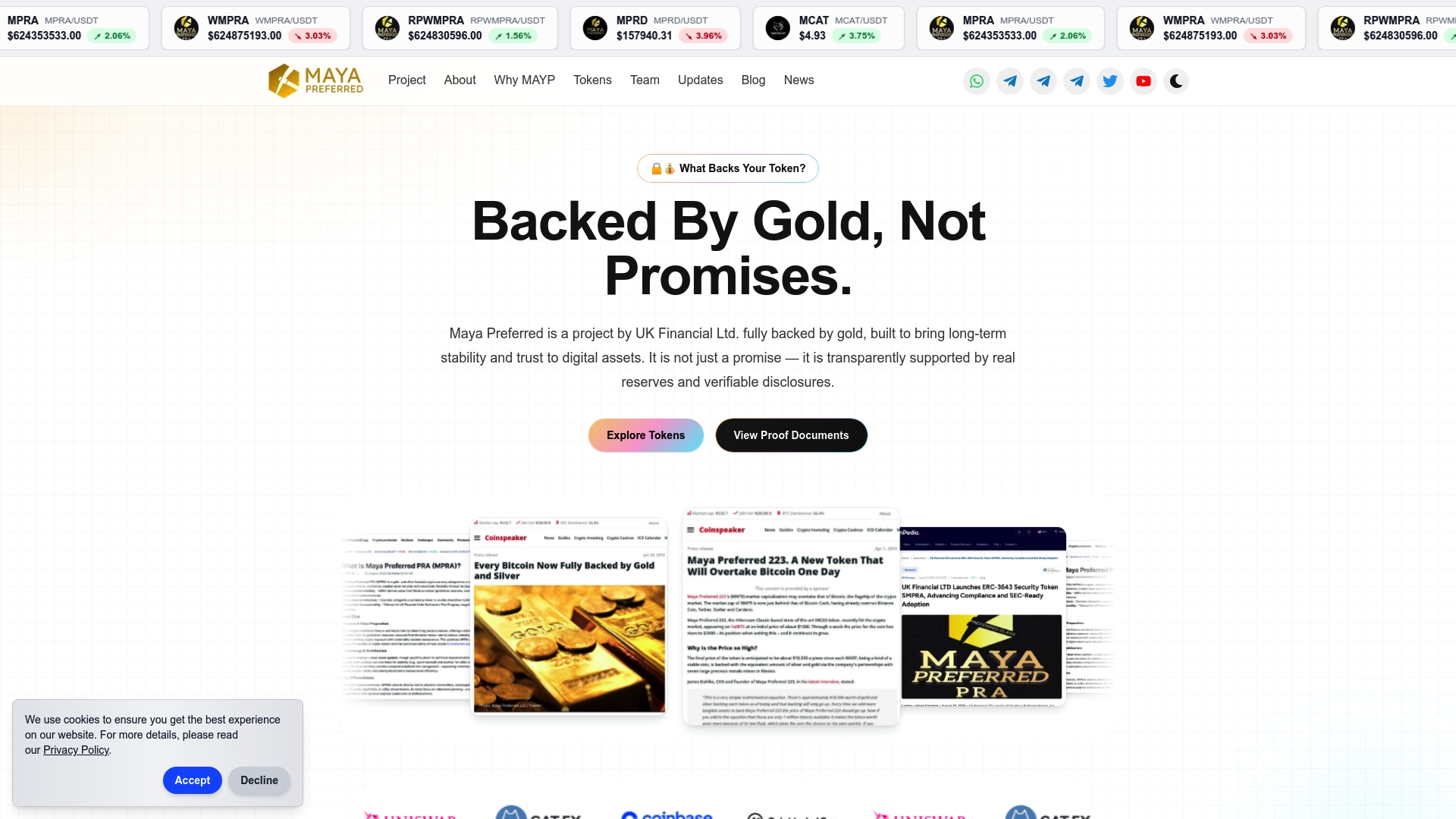
Explore how Maya Preferred bridges traditional precious metal investments and modern blockchain technology. Take control of your investments with gold and silver-backed tokens designed for safety and transparency. Visit Maya Preferred now to join a trusted community, access thorough documentation, and start trading secure, asset-backed cryptocurrencies today.
Frequently Asked Questions
What are gold-backed blockchain tokens?
Gold-backed blockchain tokens are digital assets that represent ownership of physical gold, leveraging blockchain technology for transparency and security in transactions.
How does tokenization of gold enhance liquidity for investors?
Tokenization allows investors to trade digital tokens representing gold 24/7, facilitating instant transferability and reducing barriers to entry compared to traditional gold investments.
What are the main advantages of combining gold with blockchain technology?
Combining gold and blockchain offers enhanced transparency, fractional ownership, lower transaction costs, and global accessibility, which democratizes gold investment opportunities.
What risks should investors consider with gold-backed blockchain investments?
Investors should be aware of smart contract vulnerabilities, cybersecurity threats, regulatory uncertainties, and the need for thorough verification of physical gold reserves associated with tokenized assets.