
Tokenization of Gold: Unlocking Secure Digital Assets

Over $16 billion in gold-backed digital assets now circulate worldwide, attracting increasing attention from American and European investors. Trust matters more than ever as the lines between physical assets and blockchain technology blur. This article delivers a clear look at how gold tokenization works, why regulatory compliance is critical, and what sets legitimate opportunities apart for investors who demand transparency.
Table of Contents
- Tokenization Of Gold Defined Clearly
- Types Of Gold-Backed Digital Tokens
- How Blockchain Secures Physical Gold Ownership
- Legal, Audit, And Regulatory Requirements Globally
- Risks, Fees, And Investor Responsibilities
Key Takeaways
| Point | Details |
|---|---|
| Gold Tokenization Enhances Accessibility | Converting physical gold into digital tokens provides investors with easier access and the ability to trade smaller quantities, fostering broader participation in gold investments. |
| Key Types of Gold-Backed Tokens | Investors should understand various types of gold-backed tokens, including Physical-Backed, Commodity, Securities, Synthetic, and Fractional Tokens, to align with their investment goals and risk tolerances. |
| Blockchain Improves Security | Blockchain technology ensures tamper-proof ownership records for gold, enhancing transparency and security while reducing the risks associated with traditional gold ownership. |
| Due Diligence is Essential | Investors must conduct thorough due diligence to mitigate risks related to custody, counterparty, and regulatory compliance when investing in gold-backed digital tokens. |
Tokenization of Gold Defined Clearly
Tokenization of gold represents a groundbreaking digital transformation of physical precious metal assets. Gold tokenization fundamentally reimagines how investors can own, trade, and interact with gold as an investment vehicle. By converting physical gold into digital tokens on a blockchain, this innovative approach creates a more accessible and flexible method of gold ownership.
At its core, gold tokenization works by creating digital representations that directly correspond to specific quantities of physical gold. Cryptographic tokens on blockchain networks provide legal enforceability of ownership claims, enabling investors to own fractional amounts of gold without managing physical storage. Each digital token represents a precise weight of gold, allowing investors to trade smaller quantities that were previously challenging or impossible with traditional gold investments.
The key advantages of gold tokenization include:
- Enhanced transparency in ownership tracking
- Reduced transaction costs compared to physical gold trading
- Ability to trade 24/7 across global markets
- Lower barriers to entry for gold investment
- Simplified process of buying and selling gold assets
Pro tip: When exploring gold tokenization, always verify the physical gold reserves backing your digital tokens and understand the redemption process for converting tokens back to physical gold.
Types of Gold-Backed Digital Tokens
Gold-backed digital tokens represent a sophisticated approach to asset ownership, offering multiple classification frameworks that cater to different investor needs and regulatory environments. These tokens fundamentally transform how investors can interact with gold as an investment vehicle, providing unprecedented flexibility and accessibility.
Physical-Backed Tokens are the most straightforward type of gold-backed digital asset. In this model, each token directly corresponds to a specific quantity of physical gold stored in secure vaults. Hybrid token models combine on-chain features with off-chain gold custody, creating a more complex and dynamic investment instrument. These tokens can be further categorized into several distinct types:
- Commodity Tokens: Representing direct ownership of physical gold
- Securities Tokens: Offering derivative rights and investment contracts
- Synthetic Tokens: Backed by financial derivatives rather than physical gold
- Fractional Ownership Tokens: Enabling investors to own small gold quantities
The primary differentiators among these token types include:
- Custody arrangements
- Issuance mechanisms
- Regulatory compliance
- Redemption processes
- Trading flexibility
Pro tip: Always verify the specific legal and financial characteristics of gold-backed tokens before investing, as each type offers unique benefits and potential risks.
Here is a side-by-side comparison of major types of gold-backed tokens:
| Token Type | Backing Mechanism | Typical Investor Benefit | Common Regulatory Consideration |
|---|---|---|---|
| Physical-Backed Tokens | Allocated physical gold | Direct ownership, real asset link | Vault audit and asset verification |
| Commodity Tokens | Specific gold quantities | Physical asset exposure | Commodities law compliance |
| Securities Tokens | Contractual/financial rights | Income or profit participation | Securities legislation and disclosure |
| Synthetic Tokens | Gold price derivatives | Market exposure with flexibility | Derivatives rules, risk disclosures |
| Fractional Tokens | Divided ownership shares | Lower investment minimums | Custodian transparency and legal claim |
How Blockchain Secures Physical Gold Ownership
Blockchain technology provides an unprecedented level of security and transparency for digital gold ownership. Blockchain creates tamper-proof ownership records that fundamentally transform how investors track and verify their gold assets. By cryptographically linking digital tokens to physical gold reserves, blockchain eliminates traditional vulnerabilities associated with asset ownership and tracking.

The security mechanisms of blockchain-based gold ownership are multifaceted. Digital tokens backed 1:1 by physical gold enable verifiable ownership through on-chain transparency. Smart contracts play a critical role in this process, automatically enforcing transaction rules and redemption protocols. These programmable contracts ensure that each token represents a precise quantity of gold, with every transfer and ownership change permanently recorded on an immutable digital ledger.
Key security features of blockchain gold ownership include:
- Cryptographic proof of ownership
- Immutable transaction history
- Real-time auditability
- Transparent reserve verification
- Automated compliance checks
- Reduced intermediary risks
Pro tip: Always independently verify the gold reserves and blockchain auditing mechanisms behind any gold-backed digital token before making an investment.
This table highlights how blockchain improves core aspects of gold ownership:
| Aspect | Traditional Gold Ownership | Blockchain-Based Tokenization |
|---|---|---|
| Transfer Process | Manual, requires intermediaries | Automated, peer-to-peer |
| Ownership Records | Paper-based, easy to alter | Immutable and auditable ledger |
| Market Access | Limited hours, geographic limits | 24/7 online global access |
| Verification | External audits required | Real-time on-chain proof |
Legal, Audit, and Regulatory Requirements Globally
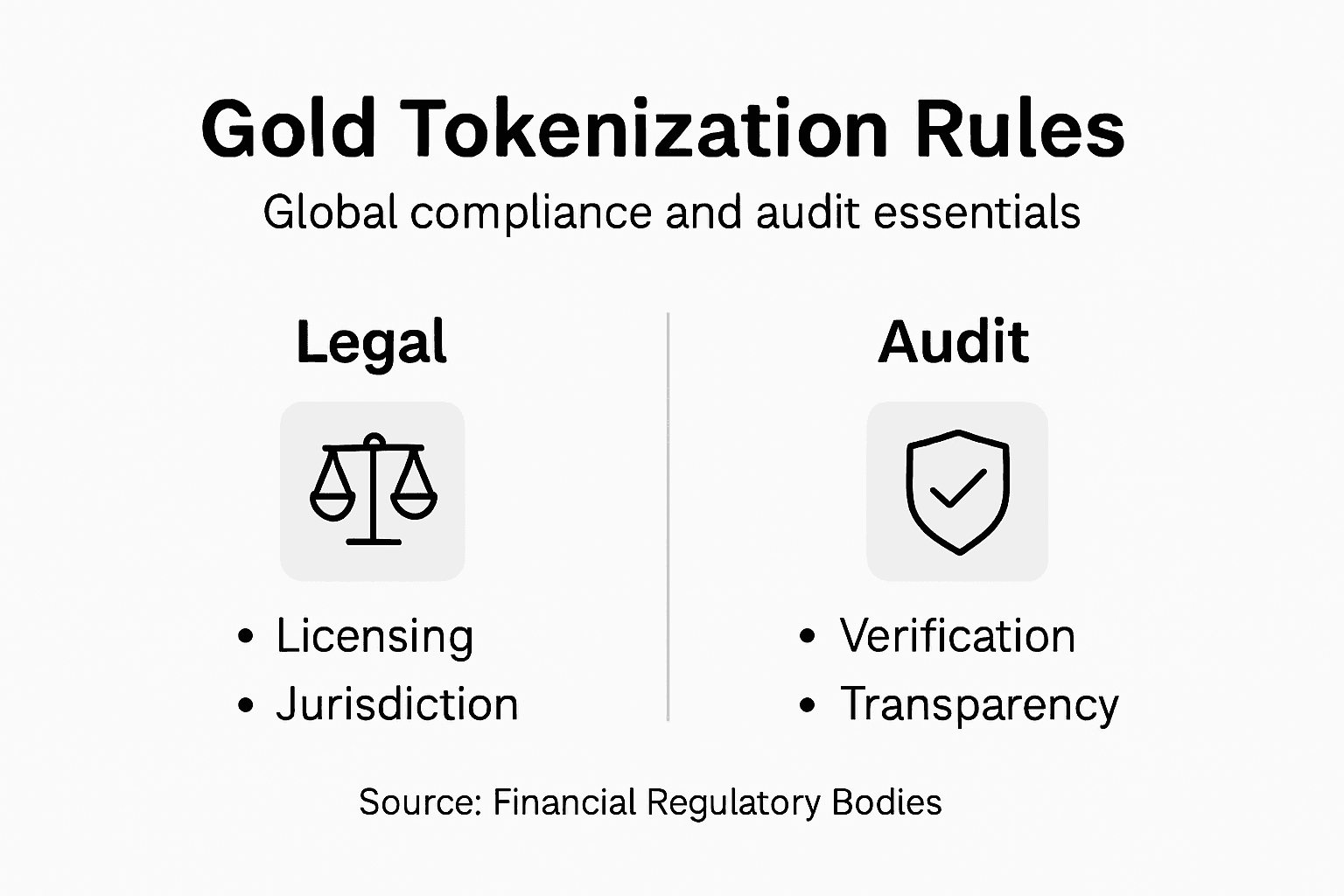
Gold-backed digital tokens exist within a complex global regulatory landscape that varies significantly across different jurisdictions. Regulatory frameworks address ownership rights comprehensively by establishing clear guidelines for investor protection, transparency, and legal compliance. These frameworks ensure that digital gold tokens are treated with the same rigor as traditional financial instruments.
Legal classification of gold tokens varies globally, often being categorized as securities, commodities, or investment contracts depending on specific jurisdictional requirements. Regulatory compliance involves multiple critical components:
- Know Your Customer (KYC) protocols
- Anti-Money Laundering (AML) verification
- Regular custodial audits
- Insurance mandate compliance
- Transparent reserve reporting
- Securities law alignment
The primary regulatory objectives include:
- Protecting investor interests
- Preventing financial fraud
- Ensuring accurate asset representation
- Maintaining market integrity
- Facilitating cross-border transactions
Pro tip: Consult legal experts familiar with international financial regulations to understand the specific compliance requirements for gold-backed digital tokens in your jurisdiction.
Risks, Fees, and Investor Responsibilities
Gold-backed digital tokens introduce a complex landscape of potential risks and financial responsibilities for investors. Tokenization creates new operational and cyber risks that require careful and proactive management. Understanding these potential challenges is crucial for making informed investment decisions and protecting one’s financial interests.
Investors must conduct comprehensive due diligence to mitigate potential risks associated with gold-backed digital tokens. The primary risk categories investors should evaluate include:
- Custody Risks: Physical gold storage vulnerabilities
- Counterparty Risks: Issuer reliability and financial stability
- Technological Risks: Smart contract and blockchain security
- Regulatory Risks: Evolving legal and compliance landscapes
- Liquidity Risks: Potential constraints in token trading
Key investor responsibilities encompass:
- Thoroughly reviewing token issuance documentation
- Understanding complete fee structures
- Monitoring regulatory changes
- Assessing redemption conditions
- Verifying physical gold reserve authenticity
Pro tip: Always allocate time to perform independent research and consult financial professionals before investing in any gold-backed digital token.
Secure Your Investment with Transparent Gold Tokenization
The article highlights critical challenges in owning and trading gold through tokenization including verifying physical gold reserves, ensuring legal compliance, and navigating complex risks. If you are seeking transparent, asset-backed tokens that combine real physical gold and a secure blockchain structure, Maya Preferred offers exactly that. Our ecosystem backs tokens like MPRA, MPRD, and MCAT with verifiable gold and silver reserves, fully audited and compliant to give you confidence and peace of mind.
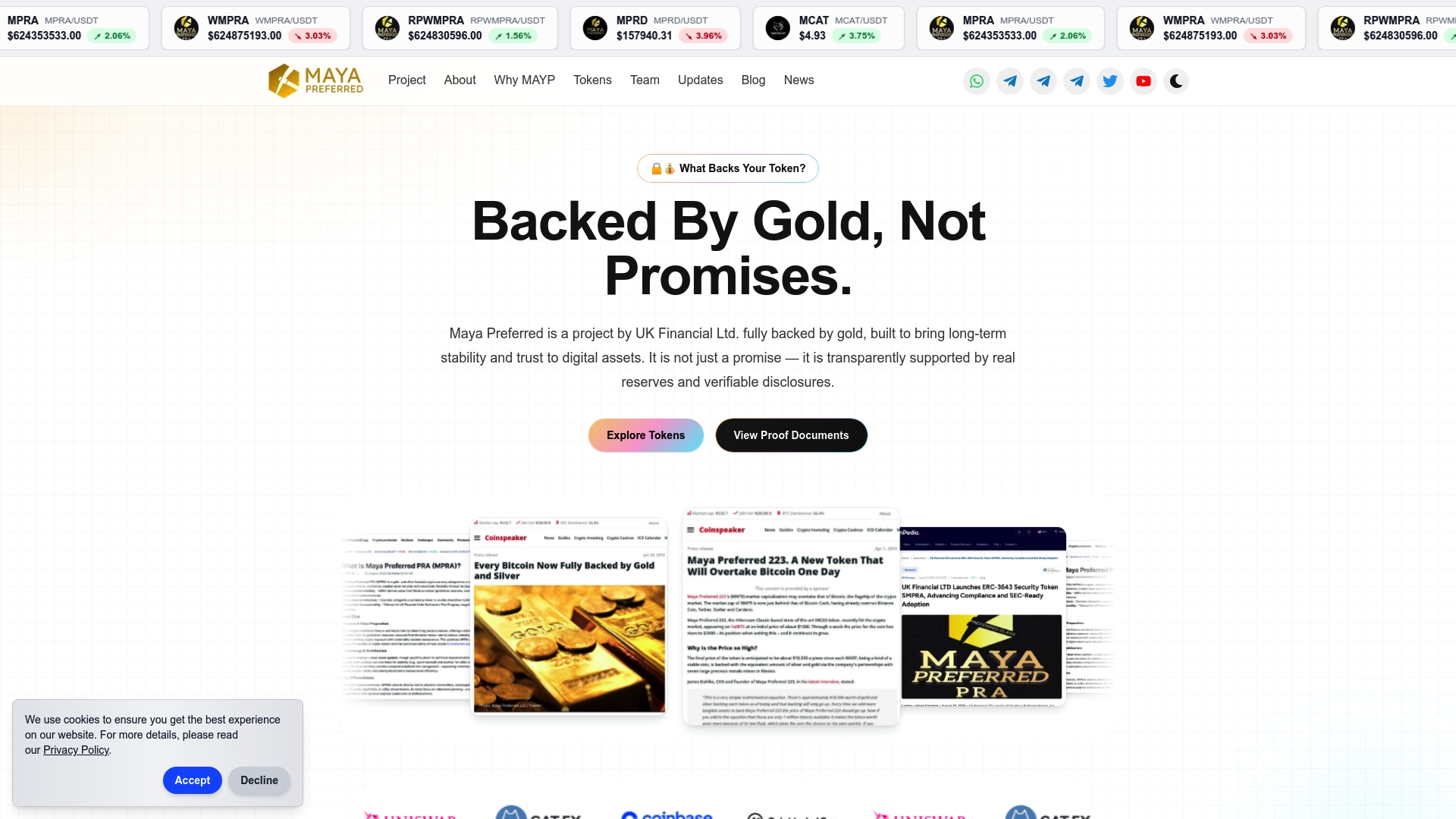
Discover a trusted bridge between traditional precious metals and modern blockchain technology. At Maya Preferred, you can access detailed proof documents, regulatory disclosures, and engage with a community committed to long-term stability in gold-backed digital assets. Take control of your gold investment now with clear transparency and easy digital access by exploring our platform here. Start securing your financial future with gold tokenization that truly stands for ownership and trust.
Frequently Asked Questions
What is gold tokenization?
Gold tokenization is the process of converting physical gold into digital tokens on a blockchain, allowing investors to own, trade, and interact with gold in a more accessible and flexible way.
What are the benefits of using gold-backed digital tokens?
Gold-backed digital tokens offer enhanced transparency, reduced transaction costs, the ability to trade 24/7, lower barriers to entry for investment, and a simplified buying and selling process compared to traditional gold investments.
What are the different types of gold-backed digital tokens?
The main types of gold-backed digital tokens include physical-backed tokens, commodity tokens, securities tokens, synthetic tokens, and fractional ownership tokens, each with unique benefits and characteristics.
How does blockchain enhance the security of gold ownership?
Blockchain technology provides security through cryptographic proof of ownership, an immutable transaction history, real-time auditability, and automated compliance checks, reducing risks associated with traditional gold ownership.