
Token Backing Explained: Ensuring Secure Asset Value

Traditional cryptocurrencies leave many investors searching for stability and trust. Gold and silver enthusiasts now seek alternatives that promise real asset backing and transparent management. Backed tokens stand out by connecting digital value directly to tangible assets, offering a new layer of assurance. This article clarifies what truly defines token backing, exposes frequent misconceptions, and highlights key factors you need to evaluate before investing in secure, asset-backed digital currencies.
Table of Contents
- Defining Token Backing And Common Misconceptions
- Types Of Asset-Backed Tokens And Key Distinctions
- How Token Backing Works On Blockchain
- Legal Structures And Global Compliance Standards
- Risks, Costs, And Investor Protections In Token Backing
Key Takeaways
| Point | Details |
|---|---|
| Understanding Token Backing | Token backing connects digital assets to real-world value, providing stability and trust compared to unbacked cryptocurrencies. |
| Investor Due Diligence | Investors should thoroughly verify a token’s backing, auditing processes, and legal protections to avoid superficial claims. |
| Types of Asset-Backed Tokens | Different categories of asset-backed tokens exist, each with unique risks and benefits that investors must evaluate carefully. |
| Legal and Regulatory Awareness | The evolving legal landscape for tokenized assets poses complexity; consulting legal professionals is essential for compliance. |
Defining Token Backing and Common Misconceptions
Token backing represents a critical mechanism in digital asset design that connects cryptocurrency tokens to tangible real-world value. Unlike traditional cryptocurrencies that fluctuate based on market speculation, backed tokens aim to provide stability and intrinsic worth by linking their value directly to specific assets like gold, silver, or financial reserves.
The core concept of token backing involves creating a direct relationship between a digital token and a specific underlying asset. Tokenisation represents a transformative financial innovation that records claims on real assets onto programmable platforms, enabling more transparent and verifiable investment mechanisms. This approach differs fundamentally from unbacked cryptocurrencies, which rely purely on market demand and investor sentiment.
Several key misconceptions often arise regarding token backing:
- Not all tokens with claimed backing are equally reliable
- Reserve transparency varies significantly between different token projects
- Backing does not automatically guarantee price stability
- Legal and regulatory frameworks for backed tokens remain complex and evolving
Understanding the nuanced differences in token backing requires examining several critical factors:
- Quality of underlying asset reserves
- Frequency of independent audits
- Legal mechanisms protecting token holders
- Transparency of reserve management
- Regulatory compliance of the token issuer
Digital asset investors must conduct thorough due diligence to distinguish between tokens with robust backing and those making superficial claims. Stablecoins demonstrate significant structural variations in how they maintain value and ensure investor protection.
Pro tip: Always request and independently verify the most recent reserve documentation before investing in any asset-backed token.
Types of Asset-Backed Tokens and Key Distinctions
Asset-backed tokens represent a sophisticated financial innovation that transforms traditional investment approaches by connecting digital representations to tangible assets. Stablecoins demonstrate multiple backing strategies that fundamentally reshape how investors conceptualize digital asset value and risk management.
Token backing categories can be broadly classified into several distinct types, each with unique characteristics and investment implications:
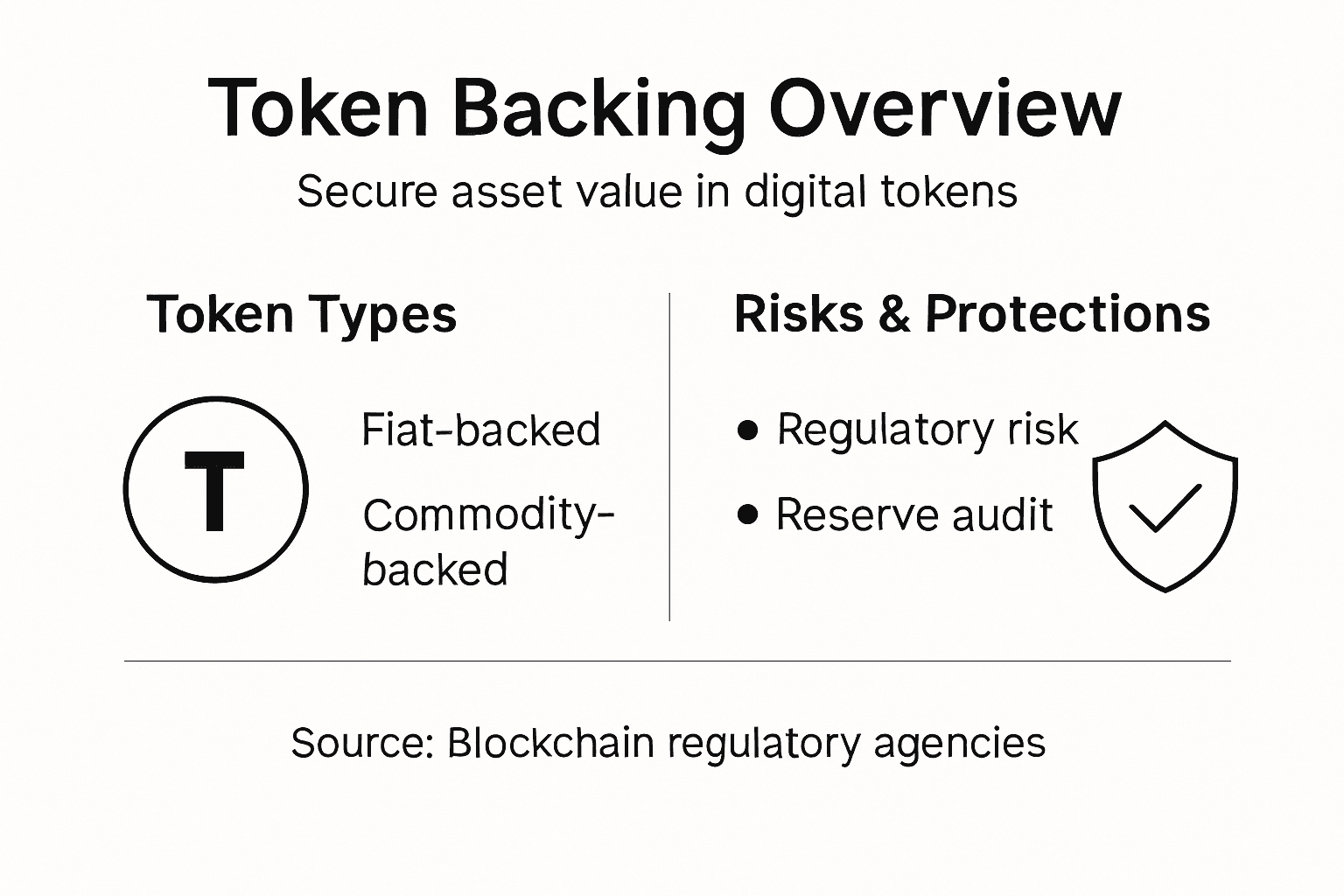
- Fiat-backed tokens: Directly pegged to traditional currency reserves
- Commodity-backed tokens: Linked to physical assets like gold or silver
- Crypto-collateralized tokens: Supported by other cryptocurrency holdings
- Synthetic tokens: Derived from complex financial instruments
- Algorithmic tokens: Stabilized through automated monetary mechanisms
Asset-backed tokens can be categorized across multiple financial product types, including:
- Fixed income products
- Repurchase agreement (repo) markets
- Collateral markets
- Money market funds
- Equity-based instruments
Each token type presents distinct risk profiles and structural nuances that investors must carefully evaluate. The underlying backing mechanism significantly influences the token’s stability, liquidity, and potential for value preservation. Sophisticated investors recognize that the quality of reserves, transparency of management, and legal frameworks are crucial determinants of a token’s reliability.

Understanding these distinctions requires deep analysis of each token’s specific characteristics, including:
Here is a comparison of the main types of asset-backed tokens and their distinct features:
| Token Type | Backing Asset | Main Advantage | Key Challenge |
|---|---|---|---|
| Fiat-backed | Government currency | Price stability | Banking dependence |
| Commodity-backed | Gold, silver, real estate | Tangible asset exposure | Storage and transport |
| Crypto-collateralized | Other cryptocurrencies | Decentralized structure | Market volatility |
| Synthetic | Derivative instruments | Flexible asset exposure | Complex structure |
| Algorithmic | No physical backing | Scalability | Fragile stability |
- Collateral quality and diversity
- Redemption mechanisms
- Legal counterparty risks
- Recovery potential during market disruptions
- Regulatory compliance standards
Pro tip: Conduct comprehensive due diligence by requesting detailed documentation about a token’s backing structure, reserve audits, and legal protections before making any investment decisions.
How Token Backing Works on Blockchain
Blockchain technology provides a revolutionary framework for implementing token backing through its unique architectural design. Token backing operates via decentralized ledger mechanisms that ensure unprecedented transparency and security for digital asset representation.
At its core, blockchain token backing involves several critical technical components:
- Cryptographic linking: Connecting digital tokens to underlying physical assets
- Smart contract integration: Automating verification and compliance processes
- Distributed ledger recording: Maintaining immutable transaction histories
- Decentralized verification: Eliminating single points of failure
- Programmable asset management: Enabling complex ownership transfer mechanisms
The technical process of token backing on blockchain follows a structured approach:
- Asset identification and valuation
- Cryptographic token generation
- Smart contract development
- Reserve verification
- Ongoing compliance monitoring
Central banks and financial institutions are increasingly exploring blockchain-based tokenization for digital currency reserves, recognizing the technology’s potential to enhance operational resilience and transparency.
The fundamental blockchain mechanisms enable several key advantages for token backing:
- Immutable record-keeping
- Transparent asset tracking
- Reduced intermediary costs
- Enhanced security protocols
- Real-time auditing capabilities
Pro tip: Verify a token’s blockchain infrastructure by examining its smart contract code, consensus mechanism, and independent security audits before making investment decisions.
Legal Structures and Global Compliance Standards
Global regulatory frameworks for tokenized assets represent an increasingly complex legal landscape that demands sophisticated understanding. Tokenised assets require nuanced legal interpretation addressing multiple jurisdictional challenges and technological innovations.
The primary legal considerations for asset-backed tokens involve several critical dimensions:
- Ownership rights and transfer mechanisms
- Regulatory classification
- Investor protection standards
- Cross-border compliance requirements
- Identity verification protocols
Key legal structures for token backing can be categorized into fundamental types:
- Direct rights tokens
- Indirect claim tokens
- Hybrid ownership models
- Contractual representation tokens
- Securities-based tokenized assets
Compliance challenges emerge from significant variations in global regulatory approaches. Different jurisdictions maintain distinct perspectives on:
- Asset ownership definitions
- Securities regulation
- Financial instrument classifications
- Consumer protection standards
- Anti-money laundering requirements
Investors and token issuers must navigate a complex landscape of legal considerations that include:
- Detailed documentation requirements
- Transparent reporting mechanisms
- Rigorous verification processes
- Comprehensive risk disclosure
- Ongoing regulatory monitoring
Pro tip: Always consult legal professionals specializing in digital asset regulations to understand the specific compliance requirements for token investments in your jurisdiction.
Risks, Costs, and Investor Protections in Token Backing
Token backing introduces a complex landscape of financial risks that investors must carefully navigate. Token-based financial systems present significant operational challenges that require comprehensive risk management strategies.
The primary risk categories for token-backed investments include:
- Operational risks
- Liquidity management challenges
- Regulatory classification uncertainties
- Market volatility
- Technological infrastructure vulnerabilities
Investors face multiple critical financial risk dimensions:
- Asset price instability
- Counterparty default potential
- Regulatory compliance gaps
- Technological security breaches
- Market interconnectedness risks
Financial stability risks emerge from several key structural challenges in tokenized markets. Global regulatory bodies highlight complex risk interconnections that can potentially undermine investor confidence and market integrity.
Effective investor protection strategies require comprehensive approaches:
Below is a summary of common risks, who is most affected, and key mitigation approaches in token-backed assets:
| Risk Type | Most Impacted Party | Key Mitigation Measure |
|---|---|---|
| Operational | Token issuer | Regular audits |
| Liquidity | Investors | Large, high-quality reserves |
| Regulatory | Both parties | Expert legal guidance |
| Technological | Investors | Advanced security protocols |
| Market Volatility | Investors | Portfolio diversification |
- Transparent reserve documentation
- Regular independent audits
- Robust risk disclosure mechanisms
- Advanced security protocols
- Comprehensive investor education programs
Pro tip: Always conduct thorough due diligence and maintain a diversified investment portfolio to mitigate potential risks associated with token-backed assets.
Discover True Security with Asset-Backed Tokens at Maya Preferred
The article highlights critical challenges in digital asset investing such as token backing clarity, reserve transparency, and legal compliance. You want trustworthy tokens that offer real-world value and stable backing to protect your investment from volatility and operational risks. Maya Preferred tackles these exact pain points by offering gold and silver-backed digital assets like MPRA, MPRD, and MCAT. Each token comes with comprehensive proof documents, independent audits, and regulatory disclosures that deliver the transparency and legal safeguards you need to invest with confidence.
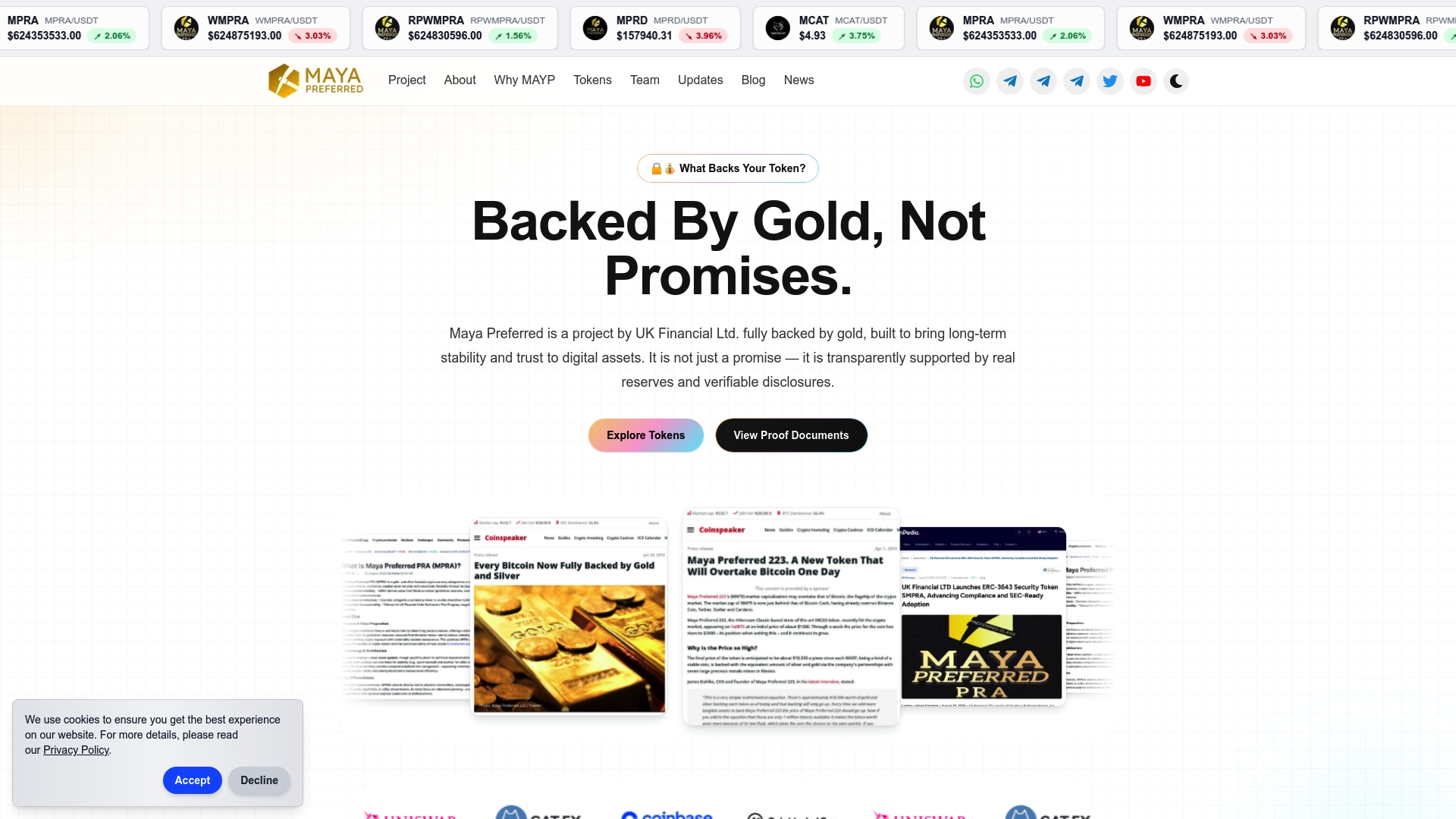
Explore how blockchain innovation combined with tangible asset backing can redefine your investment security. Visit Maya Preferred to review detailed reserve reports and audit documents. Learn how our commitment to transparency bridges the gap between traditional precious metals and modern digital finance. Take the step today to join an investor community focused on long-term stability and regulatory compliance by visiting Maya Preferred’s platform. Secure your position in the future of asset-backed digital currencies now.
Frequently Asked Questions
What is token backing and why is it important?
Token backing connects cryptocurrency tokens to tangible real-world assets, providing stability and intrinsic worth. It is important because it aims to reduce volatility associated with unbacked cryptocurrencies by ensuring that the token’s value is tied to specific underlying assets.
What are the main types of asset-backed tokens?
The main types of asset-backed tokens include fiat-backed tokens, commodity-backed tokens, crypto-collateralized tokens, synthetic tokens, and algorithmic tokens. Each type has distinct characteristics and risk profiles that investors should understand.
How does token backing work on blockchain technology?
Token backing on blockchain involves creating cryptographic links between digital tokens and physical assets, utilizing smart contracts for automation, and maintaining an immutable ledger for transparency and security, ensuring the integrity of asset representation.
What are the legal considerations for investing in asset-backed tokens?
Legal considerations include ownership rights, regulatory classification, investor protection standards, and compliance with local laws. It’s crucial for investors to consult legal professionals familiar with digital asset regulations to navigate these complexities.