
Step by Step Asset-Backed Token Purchase Guide

Every investor who has weathered unpredictable market conditions knows that true confidence comes from verifying the authenticity of asset-backed tokens before making a move. Recognizing the importance of secure reserves and transparent audits, especially when considering gold and silver-backed options, helps avoid unnecessary risks. This guide explains each essential step, showing how seasoned investors can protect capital, validate reserves using third-party tools, and approach tokenized precious metals with assurance.
Table of Contents
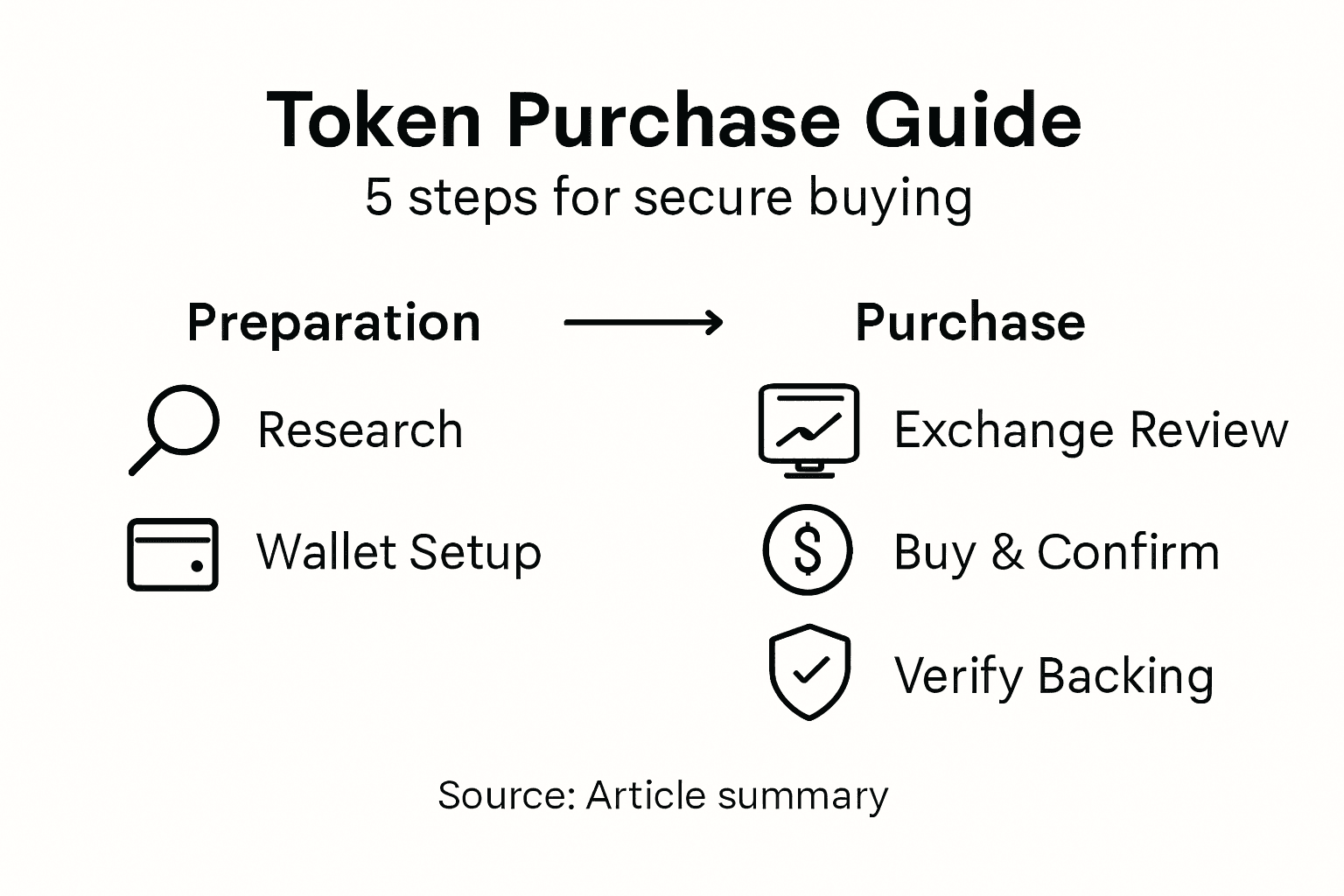
- Step 1: Research Asset-Backed Tokens And Verify Reserves
- Step 2: Set Up Your Digital Wallet And Secure Access
- Step 3: Connect To Approved Exchanges And Review Listings
- Step 4: Initiate Token Purchase And Confirm Transaction
- Step 5: Verify Asset Backing Through Documentation And Audits
Quick Summary
| Main Takeaway | Explanation |
|---|---|
| 1. Verify Asset Reserves | Ensure thorough documentation and attestation reports to confirm the backing of asset-backed tokens. |
| 2. Secure Your Digital Wallet | Choose between custodial and non-custodial wallets, and implement strong security measures for asset protection. |
| 3. Research Reputable Exchanges | Identify exchanges with transparent listing processes and robust compliance before engaging in trading. |
| 4. Confirm Transaction Details | Double-check token quantity and transaction fees before purchasing to avoid costly mistakes. |
| 5. Regularly Audit Documentation | Continuously verify asset backing through independent audits and maintain records for future reference. |
Step 1: Research asset-backed tokens and verify reserves
Researching asset-backed tokens requires a systematic approach to understanding their underlying value and authenticity. Your goal is to verify the actual reserves supporting these digital assets and assess their credibility through meticulous investigation.
Begin by examining the token’s official documentation and third-party attestation reports that validate reserve balances. These critical documents provide transparent snapshots of the token’s backing, revealing key details about its real-world asset portfolio. Look for comprehensive information such as:
- Total circulating token supply
- Specific types of assets held in reserve
- Verified financial institutions managing reserves
- Frequency and date of most recent asset verification
- Independent audit documentation
Investors should pay special attention to the granularity of reserve documentation. Tokens with frequent and detailed verification offer higher confidence compared to those with infrequent or opaque reporting. A robust asset-backed token will provide clear evidence of its underlying assets, demonstrating a direct link between digital tokens and tangible financial resources.
Professional verification requires examining not just the quantity of reserves, but their quality, liquidity, and legal standing.
During your research, cross-reference multiple sources including regulatory filings, independent financial reports, and blockchain transparency records. Scrutinize the reputation of the issuing organization and its track record in maintaining reserve integrity.
Pro tip: Always request and review the most recent third-party attestation report before making any investment decisions, as reserve compositions can change rapidly in the digital asset market.
Step 2: Set up your digital wallet and secure access
In this crucial step, you’ll establish a secure digital wallet to store and manage your asset-backed tokens. Understanding the nuances of wallet selection and security is fundamental to protecting your digital investments.

Begin by choosing between custodial and non-custodial wallet options. Non-custodial wallets provide greater control and security, as you manage your own private keys, while custodial wallets offer convenience with third-party key management. Your selection should align with your technical comfort level and security preferences.
Here’s a comparison of custodial and non-custodial wallets for digital assets:
| Wallet Type | User Control Level | Security Responsibility | Best For |
|---|---|---|---|
| Custodial | Low | Provider manages security | Beginners |
| Non-custodial | High | User manages all security | Advanced users |
When setting up your wallet, follow these critical security steps:
- Download wallet software from official sources only
- Create a strong, unique password
- Enable two-factor authentication
- Securely record and store your recovery seed phrase
- Consider using a hardware wallet for enhanced protection
Digital wallet security is not a one-time task, but an ongoing commitment to protecting your assets.
After wallet setup, perform a small test transaction to confirm everything functions correctly. Verify transaction fees, transfer speeds, and ensure you can successfully send and receive tokens before moving significant funds.
Pro tip: Never store your seed phrase digitally or share it online, and consider creating a physical backup in a secure, fireproof location.
Step 3: Connect to approved exchanges and review listings
Navigating cryptocurrency exchanges requires strategic selection and thorough verification to ensure secure and legitimate asset-backed token trading. Your goal is to identify reputable platforms that meet rigorous compliance and security standards.
Begin by researching exchanges with established track records, focusing on those with transparent token listing processes. Credible exchanges typically implement comprehensive evaluation criteria that include:
- Detailed legal and regulatory compliance checks
- Technical infrastructure assessment
- Liquidity and market viability analysis
- Security audit requirements
- Comprehensive tokenomics review
Not all exchanges are created equal. Your due diligence determines your investment safety.
Prioritize exchanges that provide clear documentation about their listing procedures and maintain high standards for asset verification. Pay close attention to the exchange’s reputation, trading volume, geographical regulations, and user reviews before initiating any account registration.
Ensure your chosen platform supports the specific asset-backed tokens you intend to trade, verifying compatibility with your digital wallet and understanding associated transaction fees and processing times.
Pro tip: Create accounts on multiple reputable exchanges to diversify your trading options and mitigate platform-specific risks.
Step 4: Initiate token purchase and confirm transaction
Purchasing asset-backed tokens requires precision, attention to detail, and a clear understanding of the transaction process. Your objective is to complete a secure and compliant token acquisition that protects your investment and ensures regulatory adherence.
Begin by preparing for your purchase by reviewing the token transfer and purchase workflow. This involves several critical preparatory steps:
- Verify your account’s Know Your Customer (KYC) status
- Confirm available funds in your linked payment method
- Double-check token quantity and pricing
- Review transaction fees and blockchain network costs
- Ensure your digital wallet is ready to receive tokens
Transaction precision matters more than speed. Verify every detail before confirming.
When initiating the purchase, carefully input the exact token quantity and review all transaction parameters. Select the appropriate payment method and be prepared to complete additional verification steps that might include digital signatures or two-factor authentication.
After submission, monitor the transaction closely. Most blockchain platforms provide real-time transaction tracking, allowing you to confirm successful token transfer to your designated wallet. Keep all transaction receipts and confirmations for your financial records.
Pro tip: Always perform a small test transaction first to confirm system compatibility and minimize potential transfer risks.
Step 5: Verify asset backing through documentation and audits
Confirming the legitimacy of asset-backed tokens requires a meticulous approach to reviewing official documentation and independent audit reports. Your goal is to establish absolute confidence in the underlying assets supporting your investment.
Carefully examine the token issuer’s comprehensive documentation, focusing on critical verification elements that demonstrate transparency and financial integrity:
- Detailed reserve composition reports
- Independent third-party audit certificates
- Physical asset inventory documentation
- Verification of asset ownership and storage locations
- Periodic valuation and reconciliation reports
- Legal documentation proving asset rights and claims
Thorough documentation is the foundation of trust in asset-backed investments.
Pay special attention to the frequency and depth of audits, ensuring they are conducted by reputable, independent financial institutions. Look for comprehensive reports that provide granular details about the type, quantity, and current valuation of backing assets.
Below is a summary of key verification elements when auditing asset-backed tokens:
| Verification Aspect | Why It Matters | What To Check For |
|---|---|---|
| Independent Audits | Confirms asset legitimacy | Recent third-party reports |
| Asset Ownership Proof | Ensures legal asset claims | Valid ownership documentation |
| Valuation Frequency | Reflects current asset value | Up-to-date valuation reports |
| Storage Location | Reduces theft/mismanagement | Transparent storage records |
Request and review the most recent verification documents, cross-referencing information from multiple sources to confirm consistency and accuracy. Be prepared to ask detailed questions about any discrepancies or areas lacking complete transparency.
Pro tip: Maintain a digital file of all verification documents and audit reports, creating a personal archive that allows you to track the asset backing over time.
Secure Your Investment with Transparent Asset-Backed Tokens Today
Navigating the complex world of asset-backed tokens demands clarity, trust, and thorough verification. This guide highlights common challenges like verifying reserve backing, securing digital wallets, and ensuring rigorous audit transparency. If you want to confidently step into the future of alternative investments with gold and silver-backed tokens, Maya Preferred offers exactly what you need. Our platform is built on real-world asset backing, detailed proof documents, and ongoing regulatory compliance, making it easier to bridge the gap between precious metals and blockchain technology.
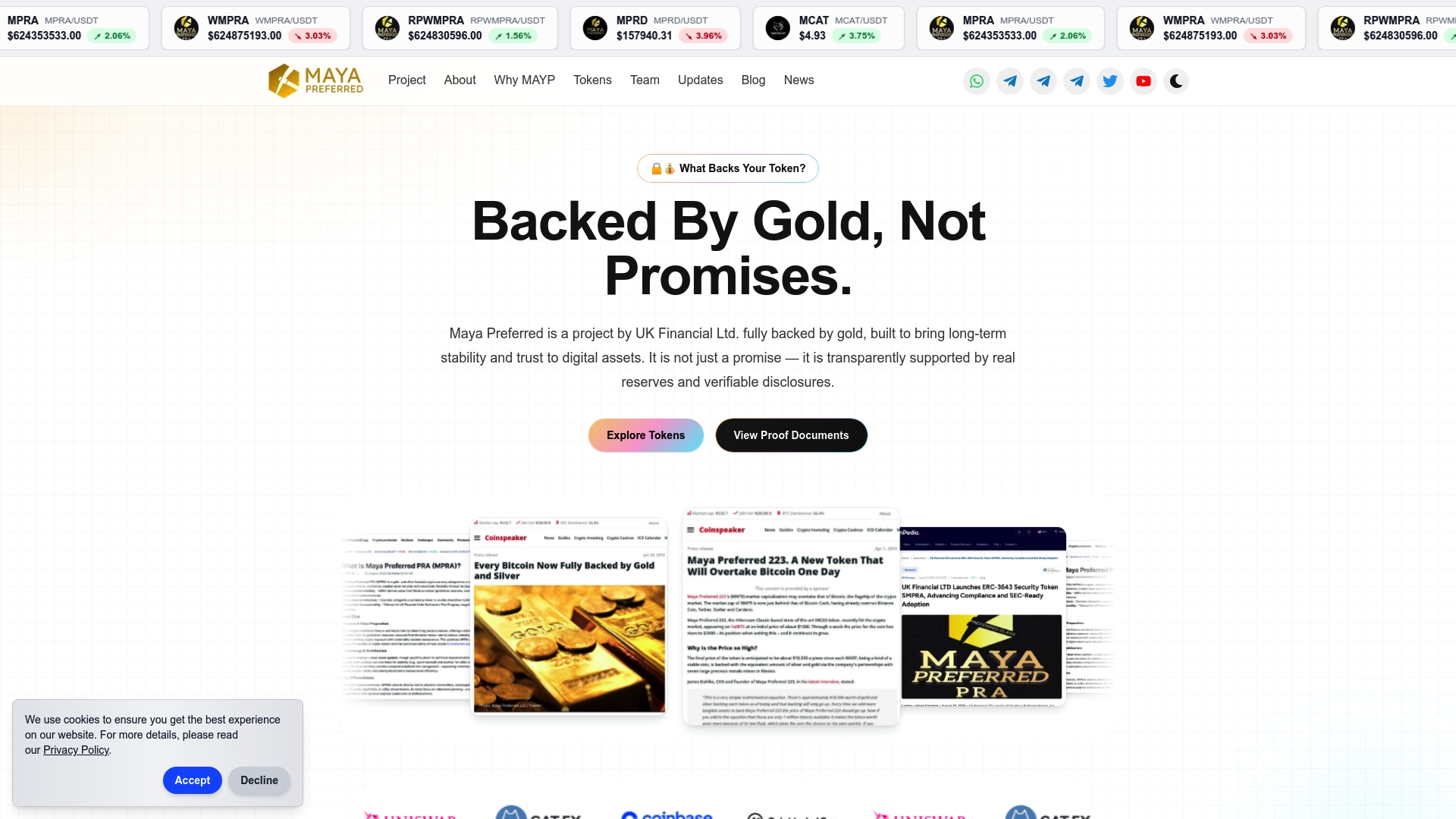
Discover how you can benefit from the unique transparency and stability of tokens like MPRA, MPRD, and MCAT by visiting Maya Preferred’s official site. Explore our extensive documentation, audit reports, and mining project disclosures that set us apart. Don’t wait to secure your place in the new era of digital assets. Start your journey with Maya Preferred now to experience investment confidence backed by tangible assets.
Frequently Asked Questions
How do I research asset-backed tokens before purchasing?
To research asset-backed tokens, start by examining the token’s official documentation and third-party attestation reports. Collect data on the total circulating token supply, types of assets held in reserve, and the reputation of the issuing organization. Cross-reference multiple sources to ensure credibility.
What steps should I take to set up a secure digital wallet?
To set up a secure digital wallet, choose between custodial and non-custodial wallet options based on your security preferences. Download wallet software from official sources, create a strong password, and enable two-factor authentication. After setup, perform a small test transaction to ensure everything functions properly.
How can I find approved exchanges for trading asset-backed tokens?
To find approved exchanges, research platforms with established track records and transparent token listing processes. Check for compliance with legal and regulatory standards, and verify if your chosen exchange supports the specific asset-backed tokens you want to trade. User reviews and trading volume can provide insight into the exchange’s reputation.
What do I need to verify before initiating a token purchase?
Before initiating a token purchase, verify your account’s Know Your Customer (KYC) status and confirm that you have sufficient funds in your linked payment method. Double-check the token quantity, pricing, and any transaction fees before proceeding. This preparation can prevent costly errors during the transaction process.
How do I confirm the legitimacy of the asset backing for my purchased tokens?
To confirm the legitimacy of asset backing, examine documentation such as independent third-party audit certificates and reserve composition reports. Ensure that these documents provide evidence of asset ownership, storage locations, and current valuations. Request recent verification documents to maintain trust in your investment.
What should I do if I find discrepancies in the asset backing documentation?
If you find discrepancies in the asset backing documentation, contact the token issuer for clarification. Be prepared to ask detailed questions about any inconsistencies and gathering additional information can help establish trust. Maintaining open communication with the issuer can lead to a better understanding of your investment’s security.