
How to Invest in Asset-Backed Tokens for Secure Growth

Over 60 percent of global investors, including a rising number of American buyers, now demand greater transparency and legal backing from digital assets tied to gold and silver. As regulatory standards tighten worldwide, the search for stable, asset-backed tokens has never been more urgent or complex. This guide offers a clear roadmap for evaluating your own risk profile, understanding real asset security, and navigating compliant investments built for long-term peace of mind.
Table of Contents
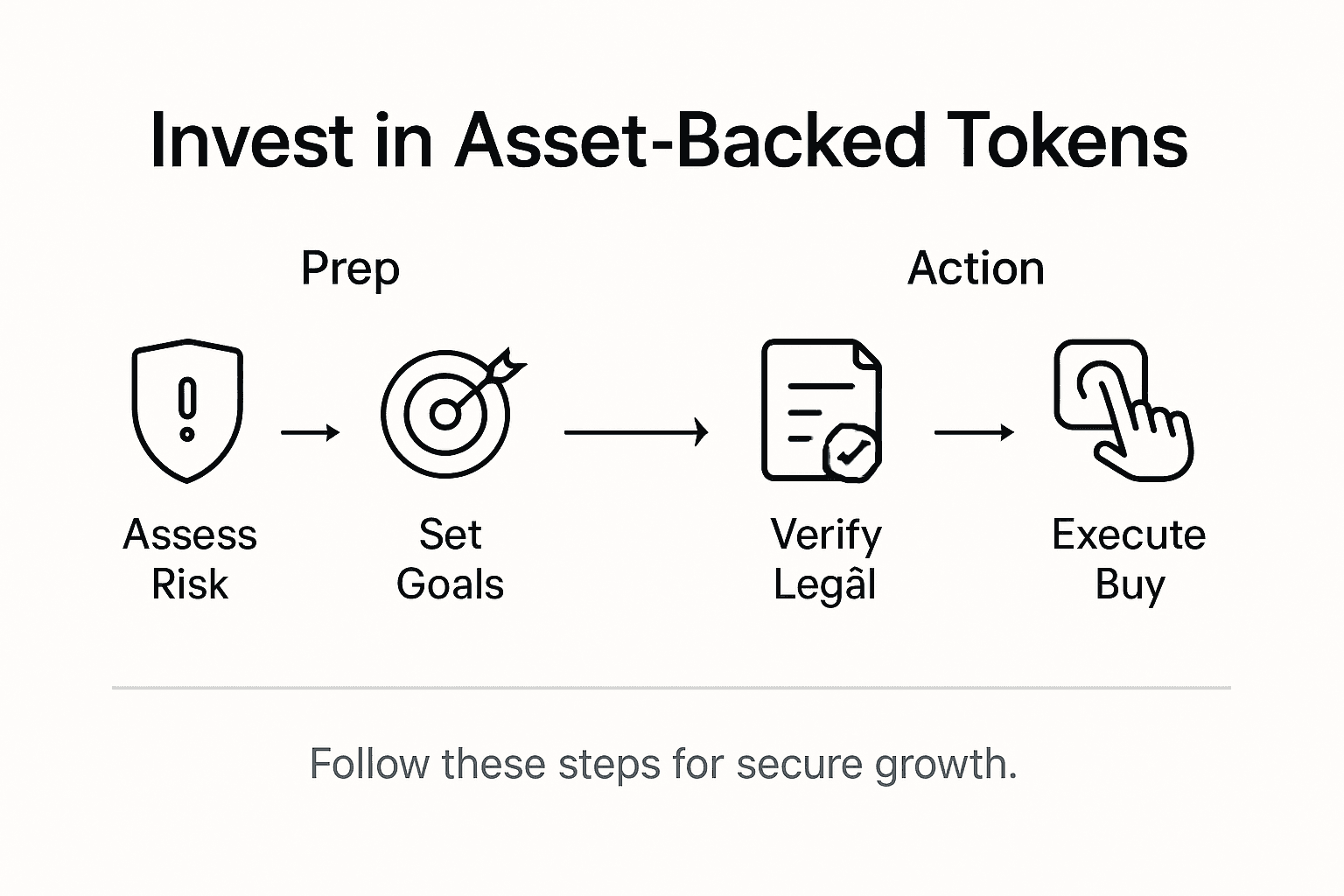
- Step 1: Assess Your Risk Profile And Investment Goals
- Step 2: Research Different Asset-Backed Token Projects
- Step 3: Verify Asset Backing And Legal Transparency
- Step 4: Select A Secure Wallet And Compliant Exchange
- Step 5: Execute Your Token Purchase And Confirm Ownership
Quick Summary
| Key Point | Explanation |
|---|---|
| 1. Assess Your Risk Profile | Determine your risk tolerance and investment goals to allocate assets appropriately. |
| 2. Research Projects Thoroughly | Investigate asset-backed token projects for transparency and robust foundations. |
| 3. Verify Legal Compliance | Ensure the token has legitimate backing and complies with legal standards. |
| 4. Choose Secure Wallets and Exchanges | Select platforms with strong security measures and regulatory compliance to safeguard assets. |
| 5. Document and Verify Ownership | Maintain detailed records of transactions for transparency and verification of ownership. |
Step 1: Assess your risk profile and investment goals
Understanding your unique risk tolerance and investment objectives is the foundational step in successfully investing in asset-backed tokens. Before diving into digital asset investments, you need to conduct a comprehensive self evaluation that maps your financial landscape and personal risk appetite.
Start by examining your current financial situation through several critical lenses. First, calculate your total investable assets and determine what percentage you can reasonably allocate to digital tokens without compromising your financial stability. Project Pyxtrial’s risk monitoring framework suggests investors should have near real-time visibility into their asset backing and potential exposures. This means tracking not just your investment amount but understanding how those assets are secured and monitored.
Next, assess your personal risk tolerance by asking pointed questions about your investment horizon and comfort with market volatility. Are you seeking short-term gains or long-term wealth preservation? The Financial Stability Board recommends thoroughly evaluating sector exposures before committing capital. This involves understanding potential market confidence effects and global economic factors that might impact your investment. Your risk profile will determine whether you lean towards conservative asset-backed tokens with stable precious metal reserves or are willing to explore more dynamic digital asset opportunities.
Insider Advice: Create a detailed spreadsheet tracking your current assets, risk tolerance percentages, and potential token investment allocations to maintain clear financial visibility.
Here’s a quick summary of core risk factors to evaluate before investing in asset-backed tokens:
| Risk Factor | Impact on Investment | How to Assess |
|---|---|---|
| Volatility | Affects short-term returns | Analyze historical trends |
| Asset Liquidity | Determines ease of exit | Check trading volume |
| Regulatory Compliance | Reduces legal exposure | Verify licenses |
| Asset Transparency | Increases investor confidence | Review audit reports |
Step 2: Research different asset-backed token projects
Researching asset-backed token projects requires a strategic and thorough approach to understand the landscape of digital investments. Your goal is to identify projects with robust asset foundations, transparent governance, and verifiable backing mechanisms that align with your investment objectives.
Begin by exploring blockchain-powered asset tokenization platforms that enable secure ownership transfers and fractional asset investments. These platforms provide critical insights into how different projects structure their tokens, ranging from real estate and commodities to precious metals. Look for projects that demonstrate clear documentation about their underlying physical assets, including detailed information about reserve quantities, storage locations, and independent auditing processes. Analytical frameworks for tokenized assets can help you understand the legal structures and regulatory compliance of various token models, which is essential for assessing long-term investment viability.

When evaluating potential asset-backed token investments, create a comprehensive comparison matrix that tracks key attributes such as asset type, backing ratio, blockchain platform, liquidity, historical performance, and regulatory status. Prioritize projects with transparent governance, regular third-party audits, and clear redemption mechanisms that provide investors with tangible asset protection.
Pro Tip: Develop a scoring system that weights different project attributes to objectively compare and rank potential asset-backed token investments.
Use this table to compare different asset-backed token projects for better decision making:
| Attribute | Project Alpha | Project Beta |
|---|---|---|
| Backing Asset | Gold reserves | Real estate portfolio |
| Blockchain Type | Ethereum mainnet | Polygon network |
| Audit Frequency | Quarterly independent | Annual internal |
| Redemption Option | Physical gold delivery | Fiat currency payout |
Step 3: Verify asset backing and legal transparency
Ensuring the legitimacy and legal foundation of your asset-backed token investment requires meticulous verification of its underlying asset structure and regulatory compliance. Your primary objective is to confirm that the token represents genuine, legally protected value with transparent backing mechanisms.
Legal structures for tokenized assets reveal critical insights into the robustness of the connection between digital tokens and their physical assets. Begin by requesting comprehensive documentation that demonstrates clear ownership rights, precise asset descriptions, and verifiable reserve quantities. Pay close attention to the legal frameworks governing the token, examining how Markets in Crypto-Assets Regulation standards establish transparency and consumer protection requirements. This involves reviewing independent audit reports, understanding the redemption mechanisms, and confirming that the token issuer maintains sufficient liquid assets to back the total token supply.
Develop a systematic checklist for evaluating asset-backed token legitimacy that includes reviewing the project’s legal jurisdiction, compliance certifications, asset custody arrangements, and periodic reporting requirements. Look for tokens with clear governance structures, regular third-party asset verifications, and transparent mechanisms that allow token holders to understand and potentially exercise their underlying asset rights.
Pro Tip: Request and thoroughly review the most recent independent asset verification report before making any investment commitment.
Step 4: Select a secure wallet and compliant exchange
Choosing the right wallet and exchange is crucial for safeguarding your asset-backed token investments. Your goal is to select platforms that provide robust security, regulatory compliance, and seamless trading capabilities while protecting your digital assets from potential risks.
Professional security reviews of cryptocurrency exchanges highlight the critical features investors should prioritize. Look for platforms that offer multiple layers of security including two-factor authentication, cold storage options, and comprehensive proof of reserves. When evaluating exchanges, pay close attention to their institutional reliability and compliance with regional crypto wallet standards that support multi-chain assets. These platforms should provide advanced security measures such as biometric login options, anti-phishing tools, and clear regulatory certifications that demonstrate their commitment to protecting investor funds.
Develop a systematic evaluation process that goes beyond surface-level security claims. Examine the exchange’s historical performance, regulatory licenses, asset segregation practices, and insurance coverage. Verify the wallet’s compatibility with your specific asset-backed tokens, checking for features like multi-signature security, offline storage capabilities, and integration with reputable blockchain networks. Consider platforms that offer transparent reporting, regular security audits, and responsive customer support to ensure you can quickly address any potential issues with your digital assets.
Pro Tip: Create a dedicated spreadsheet comparing potential wallet and exchange options using a weighted scoring system that prioritizes security, regulatory compliance, and asset compatibility.
Step 5: Execute your token purchase and confirm ownership
Completing your asset-backed token investment requires careful execution and thorough verification of your transaction. Your objective is to navigate the purchase process smoothly while ensuring complete transparency and accurate ownership registration.
Begin by preparing your selected wallet and confirming your available funds before initiating the token purchase. Carefully review all transaction details including the exact token quantity, current market price, and any associated fees. Execute the purchase through your chosen compliant exchange by following their specific transaction protocols. After the purchase, immediately transfer the tokens to your secured wallet to minimize potential exchange-related risks.
Immediate post-purchase verification is critical. Document the transaction hash, screenshot your wallet balance, and cross reference the token quantity against your original purchase order. Check that the tokens match the precise asset backing specifications you researched earlier. Maintain meticulous records of the transaction including date, quantity, purchase price, and blockchain transaction identifier. Store these documents securely both digitally and in physical format to provide a comprehensive audit trail of your investment.
Pro Tip: Create an encrypted digital folder specifically for storing all cryptocurrency transaction documentation to ensure easy access and comprehensive record keeping.
Secure Your Investment with Transparent Gold and Silver-Backed Tokens
Investing in asset-backed tokens presents challenges around verifying asset backing, legal transparency, and choosing secure trading platforms. If you seek stable growth with assets you can trust, Maya Preferred offers a solution built on real gold and silver reserves, complete with detailed audits and transparent disclosures. Their focus on tangible backing, including mining projects and regulatory compliance, directly addresses the risks of opacity and volatility described in the article.
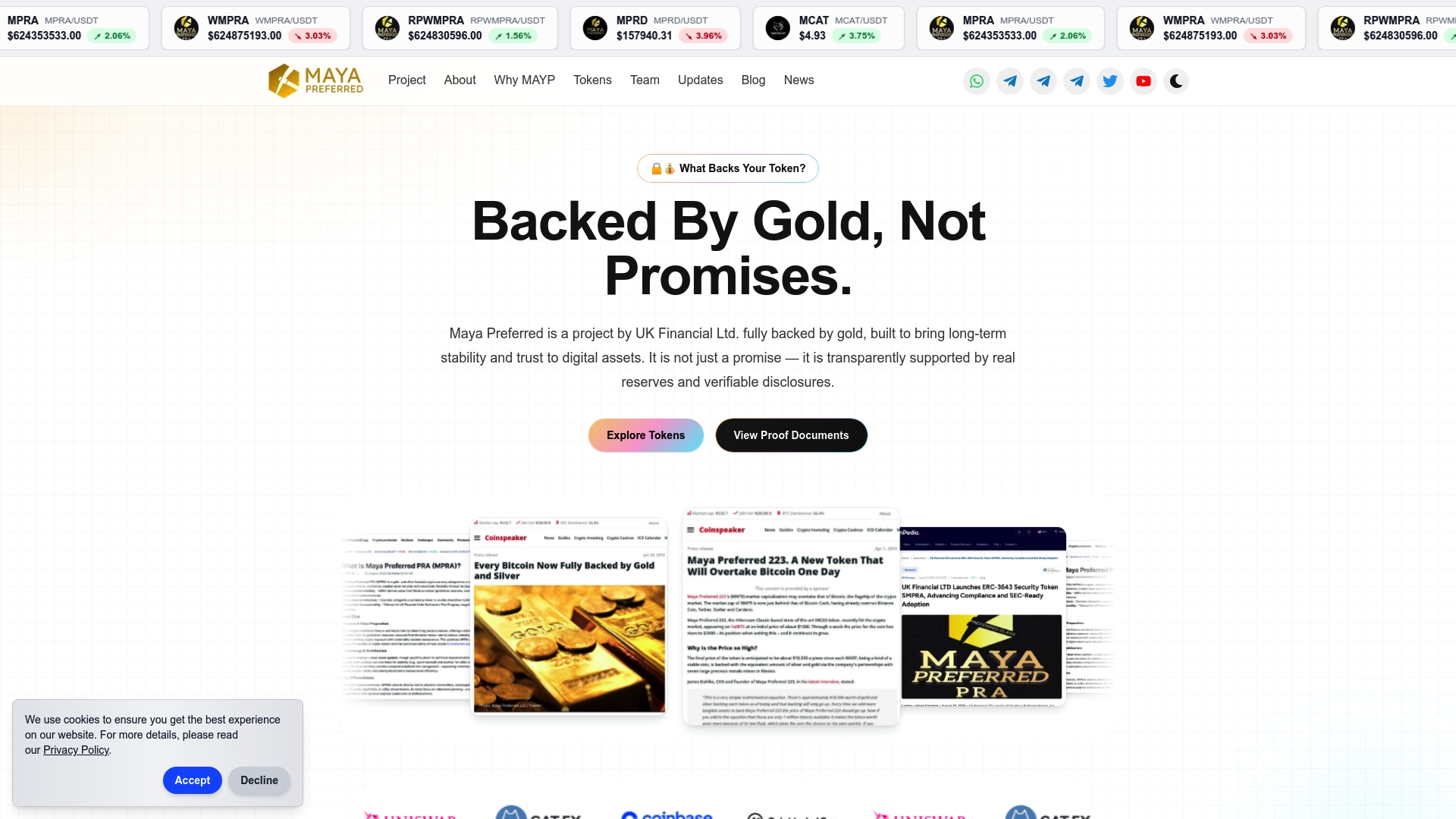
Discover how Maya Preferred’s blockchain tokens like MPRA, MPRD, and MCAT create a bridge between traditional precious metals investment and modern digital assets. Visit Maya Preferred’s landing page now to explore comprehensive documentation, proof of reserves, and access to an engaged community focused on secure and transparent asset-backed investing. Start building confidence today by choosing a platform that prioritizes real asset backing and long-term stability.
Frequently Asked Questions
How do I assess my risk profile before investing in asset-backed tokens?
To assess your risk profile, evaluate your financial situation, including total investable assets and what percentage can be allocated to digital tokens. Create a detailed spreadsheet that tracks your assets and risk tolerance percentages to maintain clear visibility into your investment strategy.
What key factors should I research when evaluating asset-backed token projects?
When researching asset-backed token projects, focus on the project’s asset foundation, governance transparency, and verification processes. Develop a comparison matrix that includes attributes like asset type, backing ratio, and regulatory status to help you objectively evaluate each project.
How can I verify the legal transparency of an asset-backed token investment?
To verify legal transparency, request documentation that demonstrates ownership rights, asset descriptions, and reserve quantities. Review independent audit reports and ensure the project complies with relevant regulations to confirm that the investment is legitimate and secure.
What criteria should I use to select a secure wallet for my asset-backed tokens?
When selecting a secure wallet, prioritize features such as two-factor authentication, cold storage options, and multi-signature security. Additionally, evaluate the wallet’s compatibility with your asset-backed tokens and any regulatory compliance certifications it holds.
What steps should I take to execute a token purchase and confirm ownership?
To execute a token purchase, prepare your wallet, confirm your funds, and carefully review transaction details before purchasing. After completing the purchase, document your transaction information and verify that the tokens match your initial research to ensure accurate ownership records.
How can I maintain a comprehensive record of my asset-backed token investments?
To maintain a comprehensive record, store documents related to each transaction, including dates, quantities, and prices, in an encrypted digital folder. Regularly back up these documents to ensure that all investment records are secure and easily accessible.