
Guide to Precious Metal Token Evaluation for Investors

Choosing secure gold and silver-backed digital assets means facing more than just market volatility—it requires deep trust in every detail. For investors focused on transparency and stability, understanding exactly how each token is documented, backed, and regulated is vital. This guide explains the critical steps for gathering essential documents, reviewing asset reserves, and confirming regulatory compliance, so you can confidently pursue risk-mitigated and fully verified investments in an evolving global market.
Table of Contents
- Step 1: Gather Essential Documents And Disclosures
- Step 2: Review Asset Backing And Reserve Proof
- Step 3: Verify Regulatory Compliance And Legal Status
- Step 4: Compare Token Utilities And Economic Models
- Step 5: Evaluate Transparency Through Audits And Reports
- Step 6: Confirm Market Accessibility And Trading Options
Quick Summary
| Key Point | Explanation |
|---|---|
| 1. Gather essential documentation | Collect vital documents to validate the token and protect your investment. Focus on proof of reserves and legal certifications. |
| 2. Review asset backing thoroughly | Ensure the physical asset backing is transparent and verifiable by examining weight, purity, and independent audits. |
| 3. Confirm regulatory compliance | Verify the token meets all legal requirements across jurisdictions, including AML, KYC, and securities laws to avoid risks. |
| 4. Analyze token economic models | Understand the utility and value creation of the token by exploring its economic structure, governance, and supply mechanisms. |
| 5. Evaluate transparency through audits | Assess the quality and frequency of independent audits and documentation that demonstrate the token’s integrity and management practices. |
Step 1: Gather essential documents and disclosures
When investing in precious metal tokens, your first critical task is collecting comprehensive documentation that validates the token’s legitimacy and protects your investment. This process requires systematic document gathering to establish transparency and ensure regulatory compliance.
Start by requesting a complete set of foundational documents from the token issuer. These will typically include key legal disclosure frameworks that demonstrate the digital asset’s credibility. The essential documentation package should contain:
- Proof of physical metal reserves
- Legal ownership certificates
- Asset valuation reports
- Jurisdiction-specific compliance certifications
- Technical token specification documents
- Independent auditor verification statements
Prioritize obtaining documents that provide clear evidence of the token’s backing. Focus on materials that show:
- Exact quantity of physical metals held
- Storage location and security protocols
- Independent verification of asset authenticity
- Current market valuation of underlying metals
Critical Insight: Documentation isn’t just paperwork – it’s your primary shield against potential investment risks.
When collecting these materials, maintain digital and physical copies in a secure, organized system. Request official, notarized versions whenever possible to ensure maximum legal protection.
Pro tip: Create a dedicated digital folder with encrypted backups of all critical investment documentation to safeguard against potential loss or technological failures.
Step 2: Review asset backing and reserve proof
Understanding the true value of your precious metal tokens requires a meticulous review of their physical asset backing. This critical step ensures you can confidently verify the tangible resources supporting your digital investment.
Begin by thoroughly examining the tokenized precious metals verification process, which provides transparent insight into how each token connects to physical metal reserves. Your comprehensive review should focus on several key verification elements:
- Quantity of physical metals
- Custodian credentials
- Independent audit reports
- Storage facility details
- Chain of ownership documentation
- Regular valuation updates
When analyzing asset backing, pay close attention to:
- Precise metal weight and purity specifications
- Verifiable storage location details
- Third-party audit frequency and methodology
- Timestamp of most recent asset verification
Critical Insight: True asset backing isn’t just about numbers – it’s about consistent, transparent documentation that proves real-world value.
Request comprehensive documentation that demonstrates a clear, unbroken chain of metal ownership. Look for detailed reports that show exact metal specifications, secure storage conditions, and periodic professional assessments.

Pro tip: Cross-reference multiple independent audit reports to establish a comprehensive understanding of your token’s underlying physical metal reserves.
Step 3: Verify regulatory compliance and legal status
Navigating the complex landscape of regulatory requirements is crucial when investing in precious metal tokens. Your goal is to confirm the legal legitimacy and ensure the token meets all necessary compliance standards across relevant jurisdictions.
Begin by thoroughly examining the regulatory frameworks governing tokenized assets, which vary significantly across different regions. This investigation helps you understand the legal classification and potential risks associated with your investment. Key compliance areas to investigate include:
- Securities law adherence
- Anti-money laundering (AML) protocols
- Know-your-customer (KYC) requirements
- Jurisdictional licensing status
- Tax reporting obligations
- Investor protection mechanisms
When verifying compliance, focus on these critical steps:
- Confirm the token’s legal classification
- Review issuer’s regulatory registrations
- Validate AML and KYC documentation
- Check international trading permissions
Critical Insight: Regulatory compliance is not a checkbox – it’s a comprehensive shield protecting your investment from potential legal vulnerabilities.
Carefully examine documentation that demonstrates the token issuer’s commitment to legal transparency. Request official compliance certificates and verify their authenticity through recognized regulatory bodies.
Pro tip: Consult with a legal professional specializing in digital asset regulations to get a comprehensive understanding of the token’s compliance landscape.
Step 4: Compare token utilities and economic models
Investing in precious metal tokens requires a strategic understanding of their unique economic structures and potential utilities. Your objective is to critically analyze how different token designs can impact investment potential and long-term value.
Begin by exploring the comprehensive tokenization business models, which reveal the diverse approaches to digital asset representation. Different tokens offer varying levels of utility, ranging from basic ownership to complex financial instruments. Key economic model characteristics to evaluate include:
- Fractional ownership mechanisms
- Governance participation rights
- Liquidity provision features
- Reward and incentive structures
- Token supply management
- Redemption and convertibility options
When comparing token economic models, focus on these critical evaluation criteria:
- Total token supply and distribution strategy
- Inflation or deflation mechanisms
- Investor voting and decision-making powers
- Potential revenue sharing models
Critical Insight: A token’s economic model is not just a technical specification – it’s the blueprint that determines its future value and investor attractiveness.
Carefully assess how each token’s utility aligns with your investment goals. Look beyond surface-level promises and dig into the underlying economic mechanisms that drive value creation.
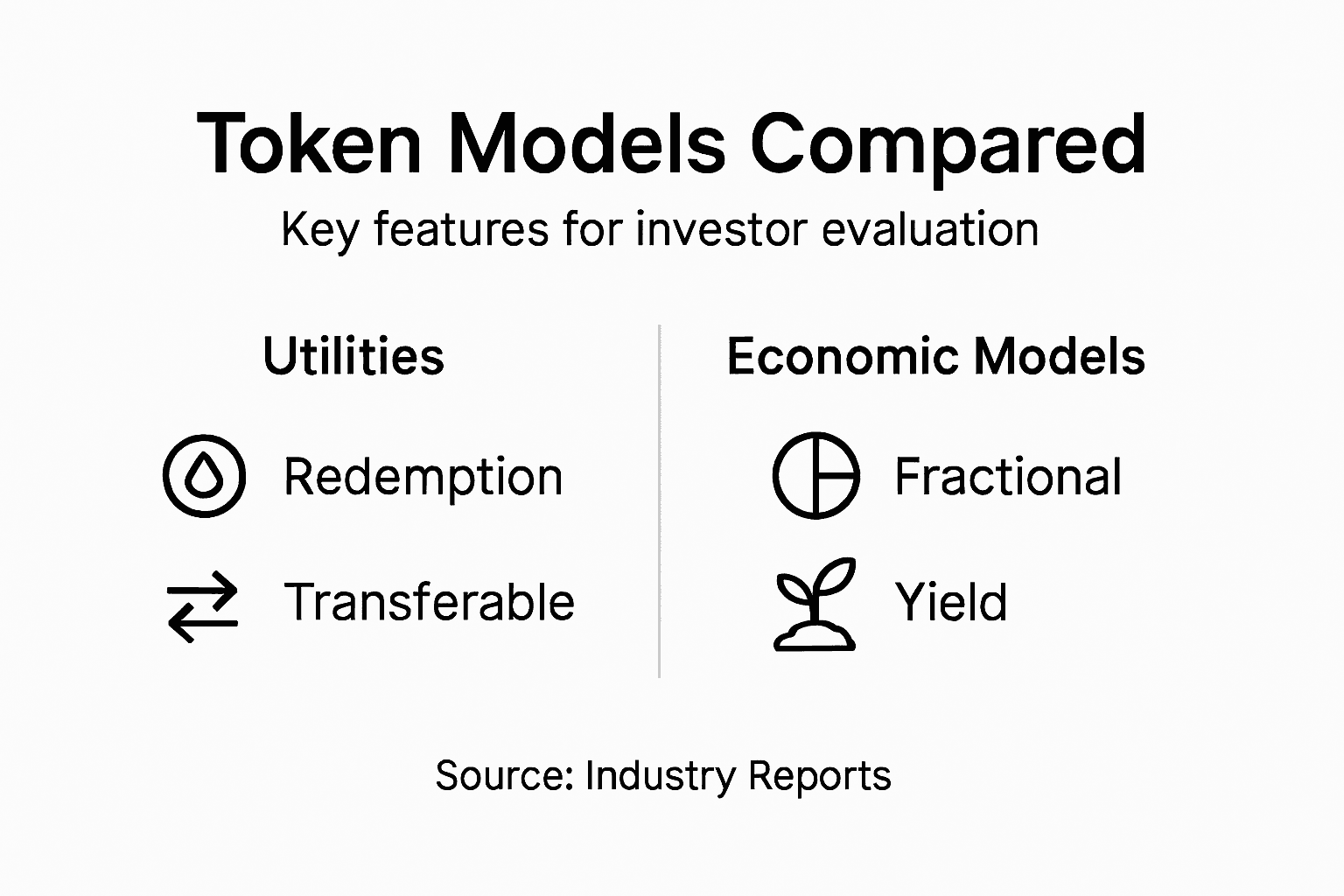
Pro tip: Create a comparative spreadsheet mapping out the unique economic features of each token to facilitate a systematic and objective evaluation.
For quick reference, the table below summarizes key differences among common precious metal token economic models:
| Token Model | Investor Utility | Value Creation Method |
|---|---|---|
| Simple ownership token | Direct asset exposure | Tracks metal spot price |
| Fractionalized token | Small-scale access | Pool-based asset allocation |
| Governance-enabled token | Voting rights included | Decisions affect token economics |
| Revenue-sharing token | Earns portion of fees | Shared profits from platform activity |
Step 5: Evaluate transparency through audits and reports
Transparency is the cornerstone of trust in precious metal token investments. Your mission is to rigorously assess the depth and quality of documentation that validates the token’s underlying asset integrity and management practices.
Begin by examining the comprehensive tokenization transparency practices that reputable token issuers employ to maintain investor confidence. Effective transparency goes far beyond basic reporting and requires a multilayered approach to documentation and verification. Key elements to scrutinize include:
- Independent third-party audit reports
- Detailed reserve verification documentation
- Custodian authenticity certificates
- Periodic asset valuation statements
- Physical metal storage location confirmations
- Comprehensive compliance documentation
When evaluating transparency, systematically review these critical components:
- Frequency of independent audits
- Comprehensiveness of reserve documentation
- Clarity and accessibility of reporting
- Historical consistency of disclosed information
Critical Insight: Transparency is not a one-time achievement but an ongoing commitment to investor trust and regulatory compliance.
Look beyond surface-level reports and seek documentation that provides granular details about asset management, storage conditions, and verification methodologies. Genuine transparency means providing complete, unambiguous information that allows investors to make informed decisions.
Pro tip: Request and compare audit reports from multiple independent sources to cross-validate the token issuer’s transparency claims.
Here’s a comparison of typical audit and verification practices for precious metal tokens:
| Practice Type | Frequency | Business Impact |
|---|---|---|
| Independent audits | Quarterly | Boosts investor trust and compliance |
| Asset valuation reports | Monthly | Ensures up-to-date asset value |
| Storage facility checks | Semi-annual | Minimizes risk of theft or loss |
| Chain of ownership reviews | Annual | Guarantees asset legitimacy |
Step 6: Confirm market accessibility and trading options
Understanding the trading landscape is crucial for transforming your precious metal token investment from a theoretical asset to a practical financial instrument. Your goal is to comprehensively assess the token’s market accessibility and liquidity potential across various platforms.
Begin by investigating the market accessibility frameworks that determine where and how you can trade these digital assets. The modern tokenized metals market offers unprecedented opportunities for investors through diverse trading channels. Key trading accessibility elements to evaluate include:
- Global digital exchange listings
- Decentralized finance (DeFi) integration
- Fractional trading capabilities
- Cross-platform transferability
- Liquidity pool participation
- Peer-to-peer trading options
When confirming market accessibility, systematically examine these critical trading dimensions:
- Number of supported cryptocurrency exchanges
- Trading volume across platforms
- Geographical trading restrictions
- Minimum investment thresholds
Critical Insight: Market accessibility is not just about where you can trade – it’s about the ease, speed, and cost-effectiveness of your transactions.
Carefully assess each platform’s technical infrastructure, transaction fees, settlement times, and compliance requirements. The most accessible tokens provide seamless trading experiences with minimal friction.
Pro tip: Create a spreadsheet comparing trading fees, transaction speeds, and platform reputations to identify the most efficient trading routes for your precious metal tokens.
Unlock Real-World Value with Transparent Precious Metal Tokens
Investing in precious metal tokens means facing the challenge of verifying authentic asset backing, understanding complex economic models, and ensuring thorough regulatory compliance. If you seek trusted documentation, independent audits, and clear legal disclosure as outlined in the guide to precious metal token evaluation you just read, Maya Preferred offers a proven solution. Our blockchain-based tokens like MPRA, MPRD, and MCAT are fully backed by tangible gold and silver reserves and supported by comprehensive proof documents and audits designed to build your confidence and protect your investment.
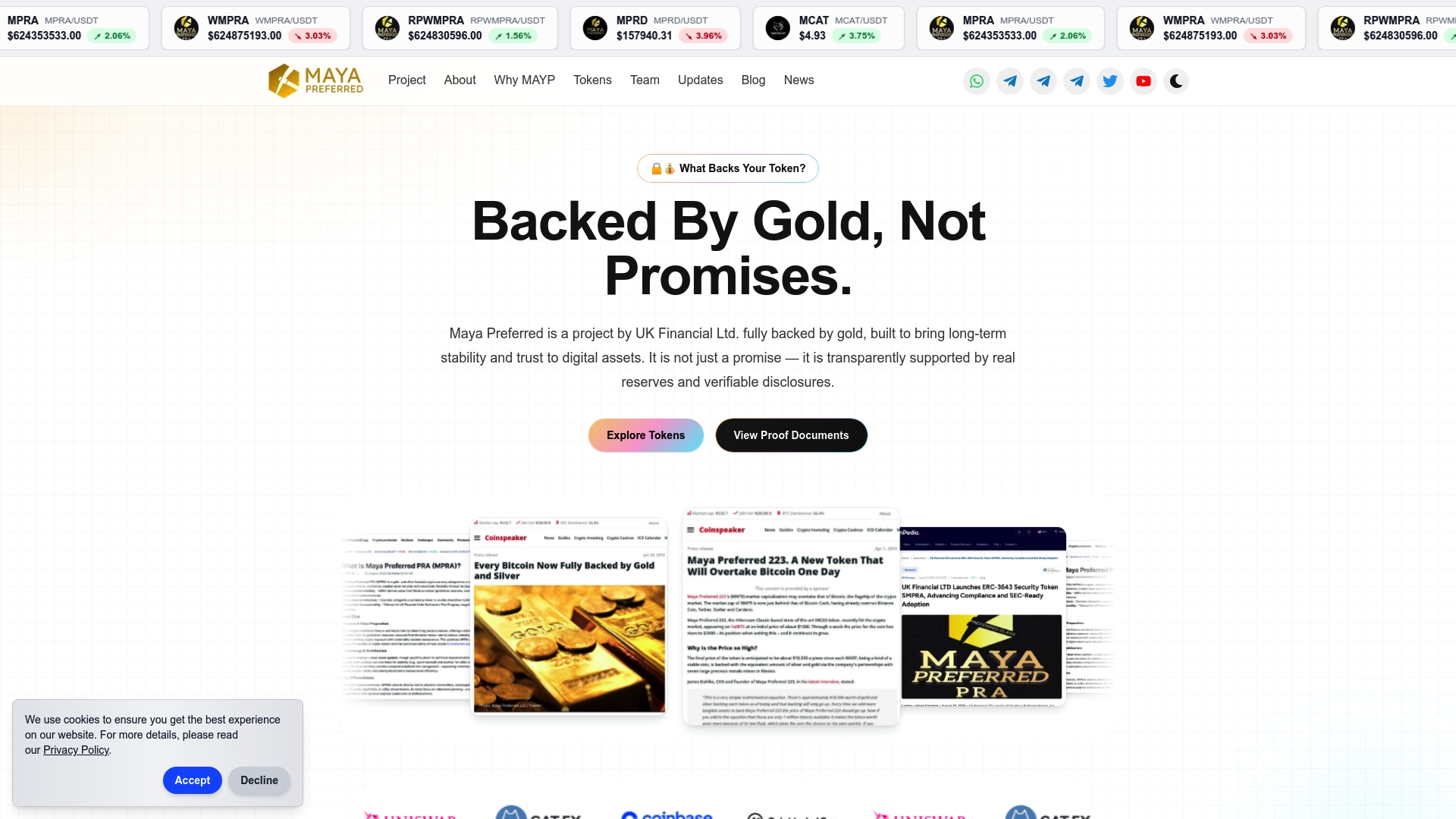
Explore how Maya Preferred bridges the gap between traditional precious metals and cutting-edge digital assets by delivering unparalleled transparency and accessibility. Visit Maya Preferred now to review detailed disclosures, gain exposure to asset-backed cryptocurrencies, and join a community committed to sustainable and legally compliant precious metal investment. Start your journey today and secure your portfolio with tokens that put proof and trust first. Learn more about our offerings at Maya Preferred Official Site and discover the future of precious metals investing.
Frequently Asked Questions
What essential documents should I gather when evaluating precious metal tokens?
To effectively evaluate precious metal tokens, start by collecting key documents such as proof of physical metal reserves, ownership certificates, and independent auditor verification statements. Organize these documents securely to ensure transparency in your investment evaluation process.
How can I verify the asset backing of a precious metal token?
You can verify the asset backing by examining documentation that details the quantity of physical metals, storage location, and independent audit reports. Focus on acquiring reports that specify the weight and purity of the metals, which will enhance your confidence in the token’s value.
What regulatory compliance aspects should I check for precious metal tokens?
When examining regulatory compliance, ensure that the token adheres to securities laws, anti-money laundering protocols, and know-your-customer requirements. Verify the issuer’s regulatory registrations to confirm that the token is legally compliant within the relevant jurisdiction.
How do I compare different economic models of precious metal tokens?
To compare economic models, evaluate factors such as fractional ownership mechanisms, governance participation rights, and liquidity features across different tokens. Create a comparative spreadsheet to visually map out their unique attributes and how they align with your investment goals.
How can I assess transparency in the auditing practices of token issuers?
Assess transparency by reviewing independent third-party audit reports and detailed reserve verification documentation provided by the token issuers. Ensure you check the frequency of audits and the clarity of the reports to gauge their commitment to transparency and investor trust.
What should I look for when confirming market accessibility for trading precious metal tokens?
When confirming market accessibility, examine the number of supported cryptocurrency exchanges, trading volumes, and any geographical trading restrictions. Create a comparison of trading fees and transaction speeds to identify the most efficient platforms for your investment transactions.