
Difference Between Fiat and Asset-Backed Tokens Explained

Discerning between digital tokens backed by fiat currency and those anchored to real assets shapes how investors approach stability and transparency in today’s crypto markets. For global investors turning to gold and silver on the blockchain, understanding the difference between purely monetary tokens and those offering verifiable asset backing is crucial. This guide unpacks how these token categories operate, highlighting what sets asset-backed investments apart for those prioritizing regulatory compliance and trustworthy value representation.
Table of Contents
- Defining Fiat Tokens vs Asset-Backed Tokens
- Key Traits and Backing Mechanisms
- Major Use Cases in Crypto Investing
- Risks, Transparency, and Investor Protections
- Choosing Between Fiat and Asset-Backed Tokens
Key Takeaways
| Point | Details |
|---|---|
| Fiat Tokens vs Asset-Backed Tokens | Fiat tokens are digital representations of currency, while asset-backed tokens are tied to physical assets, influencing their stability and underlying values. |
| Investment Objectives | Investors should assess their financial goals and risk tolerance when choosing between fiat and asset-backed tokens. |
| Risk and Transparency | Both token types require awareness of risks such as regulatory uncertainty and the necessity of transparency for investor protection. |
| Market Applications | Fiat tokens facilitate stable transactions and lending, whereas asset-backed tokens enable fractional ownership and democratize market access. |
Defining Fiat Tokens vs Asset-Backed Tokens
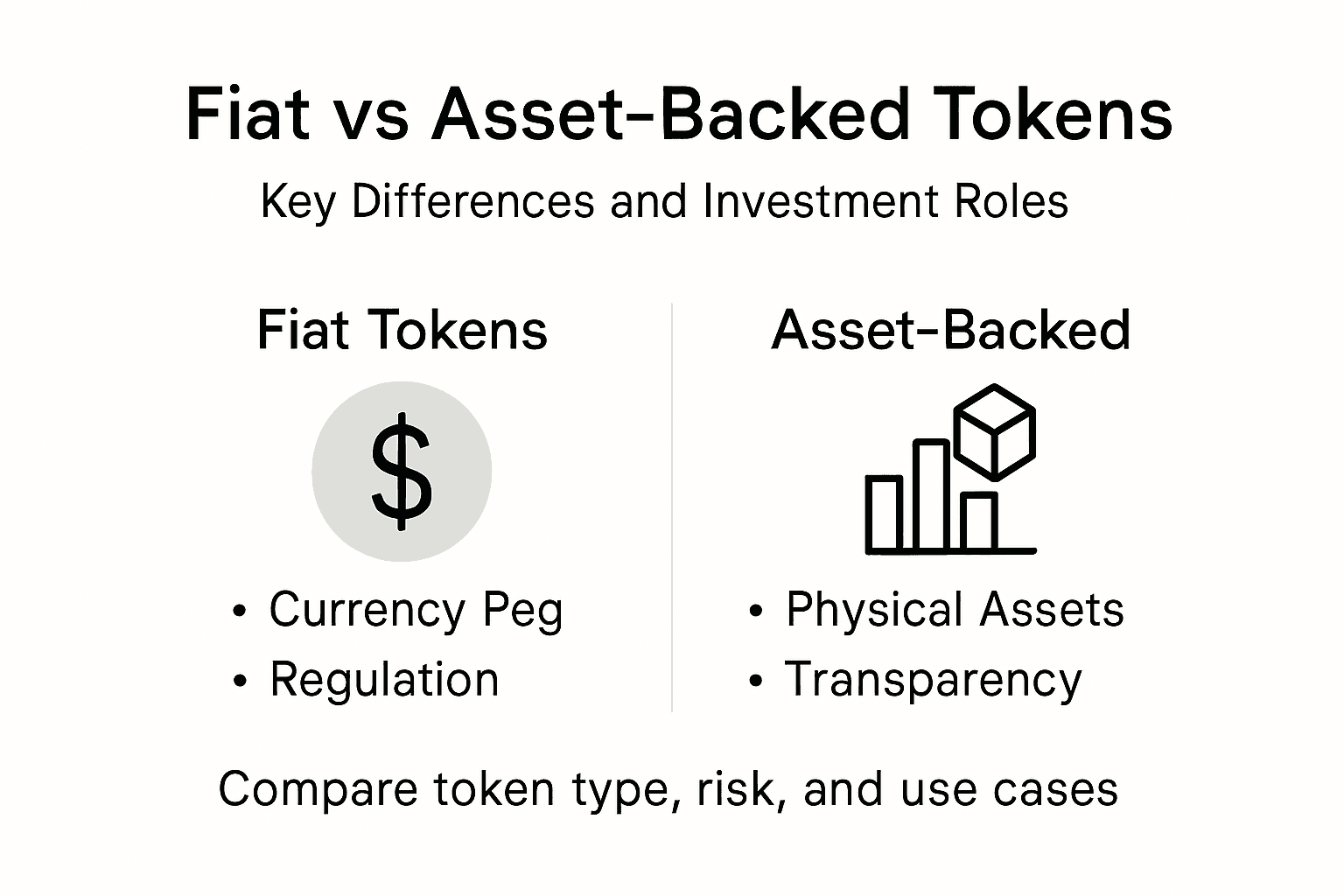
Digital tokens represent a complex financial innovation with distinct categories that fundamentally differ in their underlying value structures. Fiat tokens and asset-backed tokens are two primary classifications that exhibit critical variations in design, stability, and investor utility.
Fiat tokens are digital representations of traditional currency, essentially functioning as digital proxies for government-issued money. These tokens are typically referenced against liquid financial assets and aim to maintain a consistent 1:1 value relationship with their corresponding fiat currency.
Key characteristics of fiat tokens include:
- Direct correlation with national currency valuations
- High liquidity and rapid transaction capabilities
- Limited intrinsic value beyond monetary representation
- Dependent on central financial system stability
In contrast, asset-backed tokens represent a more tangible digital financial instrument. These tokens are directly linked to specific physical assets like precious metals, real estate, or commodities. Unlike fiat tokens, asset-backed tokens derive their value from the underlying physical assets, providing investors with a more transparent and potentially more stable investment mechanism.
Primary distinctions between fiat and asset-backed tokens include:
- Fiat tokens: Purely monetary representation
- Asset-backed tokens: Directly tied to physical asset value
- Fiat tokens: Centralized stability
- Asset-backed tokens: Intrinsic value from tangible resources
The fundamental difference lies in their value generation mechanism. Fiat tokens rely on governmental monetary policy and financial system trust, while asset-backed tokens offer direct ownership representation of real-world assets through blockchain technology.
Pro tip: Always conduct thorough due diligence on token backing mechanisms and verify the actual asset reserves before making any investment decisions.
Here is a concise comparison of fiat-backed and asset-backed tokens for investors:
| Factor | Fiat-Backed Tokens | Asset-Backed Tokens |
|---|---|---|
| Primary Value Source | National currency backing | Physical asset reserve |
| Volatility | Usually low | Depends on asset price |
| Transparency Level | Audit required, varies | Reserve documentation needed |
| Typical Investor | Risk-averse, short-term | Diversification, long-term |
This side-by-side comparison helps clarify how each token type serves different investment needs and risk profiles.
Key Traits and Backing Mechanisms
The intricate world of digital tokens reveals complex backing mechanisms that fundamentally distinguish their value propositions. Fiat-backed tokens and asset-backed tokens represent two distinct approaches to creating digital financial instruments with unique structural characteristics.

Fiat-backed stablecoins maintain precise monetary equivalency through carefully managed reserve strategies. These digital assets are designed to replicate traditional currency values with remarkable precision, providing investors a bridge between conventional financial systems and emerging digital platforms.
Key characteristics of fiat token backing mechanisms include:
- Direct 1:1 currency pegging
- Reserves held in cash or cash equivalents
- Rapid transaction processing
- Dependence on traditional financial infrastructure
- Regular third-party audits for transparency
In contrast, asset-backed tokens derive their value from tangible physical resources. These tokens represent fractional ownership of underlying assets like precious metals, real estate, or commodities, offering investors a more concrete value proposition.
Asset-backed token characteristics encompass:
- Direct linkage to physical asset value
- Transparent reserve documentation
- Potential for appreciating underlying asset value
- Reduced volatility compared to traditional cryptocurrencies
- Enhanced investor confidence through verifiable asset representation
The fundamental distinction between these token types lies in their value generation methodology. Fiat tokens rely on monetary policy and financial system trust, while asset-backed tokens provide direct ownership representation of tangible resources through sophisticated blockchain technologies.
Both token types share a critical requirement: robust regulatory compliance and transparent governance to maintain investor trust and market stability.
Pro tip: Always verify the specific backing mechanism, reserve ratio, and independent audit credentials before investing in any tokenized financial instrument.
Major Use Cases in Crypto Investing
Cryptocurrency investors have increasingly recognized the strategic value of fiat-backed tokens and asset-backed tokens as sophisticated financial instruments with diverse applications across digital investment landscapes. These tokens have transformed traditional investment approaches by offering innovative solutions to long-standing financial challenges.
Asset-backed tokens enable fractional ownership strategies that democratize access to previously illiquid markets. Investors can now purchase partial stakes in high-value assets like real estate, precious metals, and international commodities with unprecedented ease and flexibility.
Major use cases for asset-backed tokens include:
- Fractional real estate investments
- Commodity trading with reduced transaction costs
- Global portfolio diversification
- Access to previously restricted international markets
- Reduced investment entry barriers
Fiat-backed stablecoins provide critical functionality in cryptocurrency ecosystems. These tokens serve essential market stabilization roles by offering predictable value storage and enabling rapid cross-border transactions without traditional banking intermediaries.
Key investment applications for fiat-backed tokens encompass:
- Hedging against cryptocurrency market volatility
- Facilitating decentralized finance (DeFi) transactions
- Enabling fast international money transfers
- Providing stable collateral for digital lending platforms
- Reducing transaction friction in crypto trading
Both token types represent sophisticated financial technologies that bridge traditional investment paradigms with emerging blockchain-based economic models. They offer investors increased transparency, reduced intermediary costs, and enhanced global market accessibility.
Pro tip: Conduct thorough due diligence on token backing mechanisms, verifying reserve ratios and regulatory compliance before making any investment decisions.
Below is a summary of major use cases for each token type in the crypto ecosystem:
| Token Type | Core Use Cases | Impact on Market |
|---|---|---|
| Fiat-Backed | Fast transfers, stable lending | Lowered transaction costs |
| Asset-Backed | Fractional ownership, commodity trade | Broadened investor access |
This summary illustrates the distinct market roles these tokens play and their contribution to wider crypto adoption.
Risks, Transparency, and Investor Protections
The digital token ecosystem presents complex risk landscapes that demand rigorous investor scrutiny and comprehensive understanding. Regulatory frameworks and investor protection mechanisms have emerged as critical safeguards in navigating the increasingly sophisticated world of digital asset investments.
Fiat-backed token risks include significant regulatory uncertainties, particularly surrounding reserve management and potential exposure to illicit financial activities. Investors must remain vigilant about the underlying financial structures that support these digital representations of traditional currency.
Key risk factors for fiat-backed tokens involve:
- Potential reserve opacity
- Limited regulatory oversight
- Systemic financial vulnerability
- Counterparty credit risks
- Potential for sudden value destabilization
Asset-backed tokens introduce additional layers of complexity, requiring sophisticated risk assessment strategies. European regulatory regimes establish stringent governance standards designed to protect investor interests and ensure transparent operational practices.
Critical investor protection considerations include:
- Mandatory periodic financial audits
- Full reserve backing requirements
- Comprehensive disclosure protocols
- Strict authorization standards for token issuers
- Enhanced legal frameworks for dispute resolution
Transparency remains the cornerstone of investor confidence in digital token markets. Robust regulatory mechanisms and proactive governance practices are essential in mitigating potential systemic risks and maintaining market integrity.
The evolving landscape of digital tokens demands continuous investor education and vigilant risk management approaches that prioritize comprehensive due diligence and regulatory compliance.
Pro tip: Always request and independently verify detailed documentation about token reserves, regulatory compliance, and issuer credentials before committing any investment capital.
Choosing Between Fiat and Asset-Backed Tokens
Investors navigating the complex digital asset landscape face critical decision-making challenges when selecting between fiat-backed tokens and asset-backed tokens. Each token type presents unique advantages and potential limitations that demand careful strategic evaluation.
Investment selection depends on stability and exposure goals, requiring investors to thoroughly assess their individual financial objectives and risk tolerance. The selection process involves analyzing multiple strategic dimensions beyond simple monetary considerations.
Key considerations for fiat-backed token selection include:
- Consistent value preservation
- High regulatory compliance
- Rapid transaction capabilities
- Lower volatility profiles
- Direct currency correlation
Asset-backed token selection criteria encompass:
- Direct physical asset linkage
- Potential appreciation potential
- Portfolio diversification opportunities
- Enhanced transparency mechanisms
- Reduced dependency on centralized financial systems
The fundamental decision-making framework involves understanding individual investment goals, risk appetite, and desired market exposure. Fiat tokens provide stability and predictability, while asset-backed tokens offer tangible value representation and potential long-term appreciation.
Critical comparative factors include liquidity requirements, investment horizon, regulatory environment, and personal financial strategy. Sophisticated investors often utilize a balanced approach, incorporating both token types to optimize their digital asset portfolios.
Pro tip: Develop a comprehensive investment strategy that strategically allocates resources across different token types, ensuring balanced risk management and potential growth opportunities.
Discover the Stability of Asset-Backed Tokens with Maya Preferred
Understanding the difference between fiat-backed tokens and asset-backed tokens is essential for investors seeking trust and transparency in digital assets. While fiat tokens rely on monetary policy and centralized systems, asset-backed tokens like those offered by Maya Preferred provide direct ownership of tangible assets such as gold and silver. If you are concerned about volatility, reserve transparency, or regulatory compliance, Maya Preferred addresses these challenges by emphasizing real-world backing, detailed audits, and comprehensive disclosures.
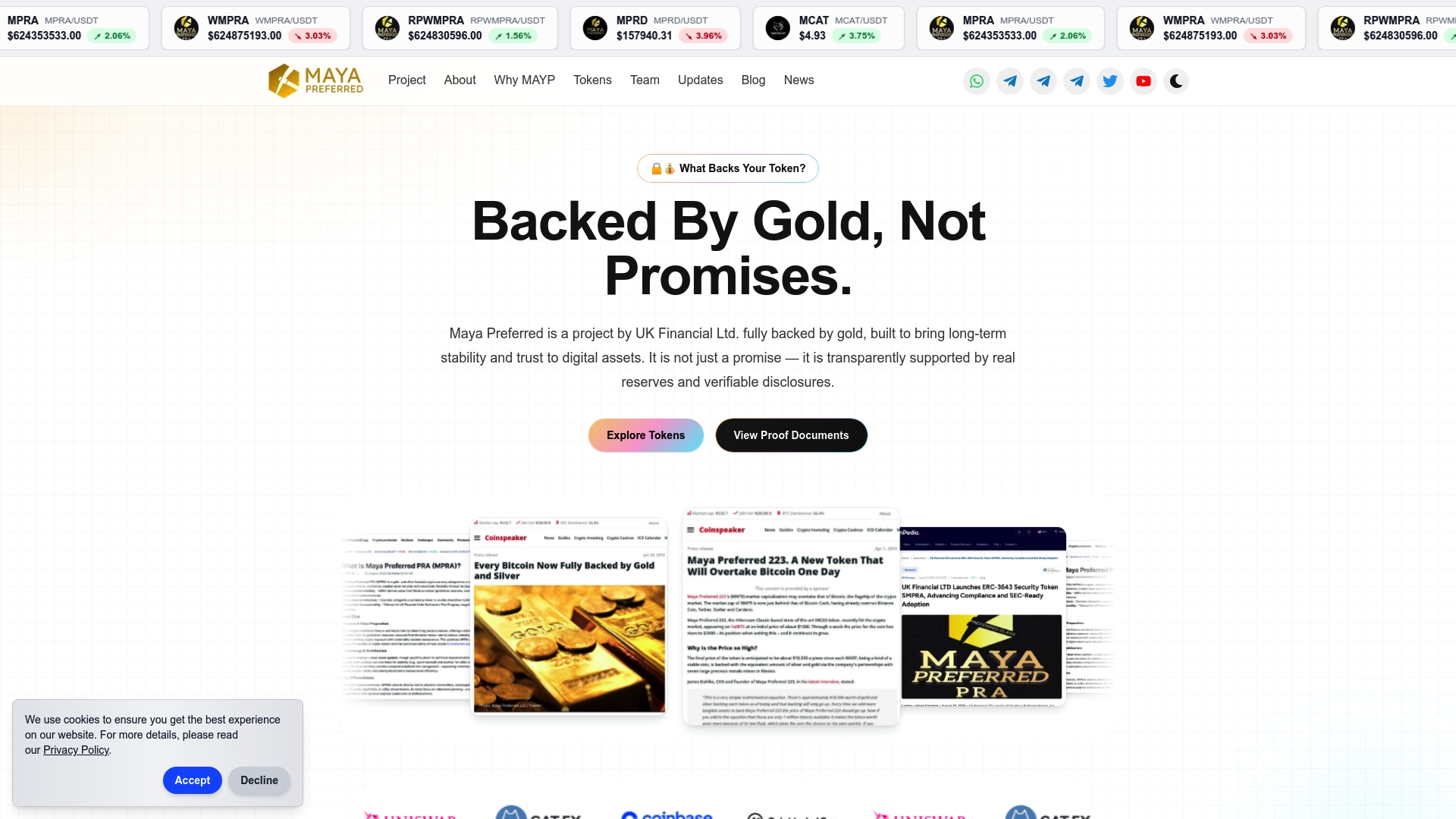
Explore how Maya Preferred’s blockchain-based project bridges traditional precious metals with modern digital technology. Visit Maya Preferred to learn about our MPRA, MPRD, and MCAT tokens backed by gold and silver reserves. Take action now to invest with confidence in asset-backed tokens that prioritize transparency and long-term stability. Start securing your portfolio today at Maya Preferred.
Frequently Asked Questions
What is the main difference between fiat tokens and asset-backed tokens?
Fiat tokens are digital representations of traditional currencies, designed to maintain a stable 1:1 value with government-issued money. In contrast, asset-backed tokens are linked to physical assets such as real estate or precious metals, deriving their value from these tangible resources.
How do fiat tokens ensure stability in value?
Fiat tokens maintain their stability through a 1:1 peg with a national currency, relying on reserves held in cash or cash equivalents. Their value is influenced by governmental monetary policies and the stability of the financial system.
What are the advantages of investing in asset-backed tokens?
Investing in asset-backed tokens offers direct ownership representation of physical assets, potential for appreciation, and transparency through reserve documentation. They also provide diversification opportunities in an investment portfolio.
Are there any risks associated with fiat tokens?
Yes, risks for fiat tokens include potential opacity in reserves, limited regulatory oversight, systemic financial vulnerabilities, and counterparty credit risks. Investors should thoroughly evaluate these factors before investing.