
7 Key Examples of Digital Assets Every Investor Should Know

More than 40 percent of American adults now own or have traded cryptocurrency, marking a dramatic shift in financial habits across the nation. Digital assets like Bitcoin and Ethereum no longer belong to niche tech circles—they are rapidly becoming mainstream investment tools. As Americans search for new ways to grow and protect their wealth, understanding how cryptocurrencies, stablecoins, and other digital assets work could help unlock smarter strategies for participating in this modern financial revolution.
Table of Contents
- 1. Understanding Cryptocurrencies as Digital Assets
- 2. Stablecoins: Bridging Traditional and Digital Finance
- 3. Asset-Backed Tokens: Linking Gold, Silver, and Crypto
- 4. Security Tokens: Digital Shares and Compliance
- 5. Utility Tokens: Access to Blockchain Services
- 6. Non-Fungible Tokens (nfts): Unique Digital Collectibles
- 7. Tokenized Mining Rights: Investing in Real-World Resources
Quick Summary
| Takeaway | Explanation |
|---|---|
| 1. Understand cryptocurrencies as digital assets | Cryptocurrencies use blockchain to create secure, decentralized monetary systems beyond traditional banks. |
| 2. Research stablecoins before investing | Stablecoins minimize price volatility by pegging to fiat currencies, so it’s crucial to verify their backing mechanisms. |
| 3. Evaluate security tokens for compliance | Security tokens offer legally recognized ownership and must adhere to securities regulations; due diligence is essential. |
| 4. Investigate utility tokens specific functionality | Utility tokens provide access to services in blockchain ecosystems, making research on their use and demand vital for value. |
| 5. Check asset-backed tokens’ underlying assets | Asset-backed tokens represent ownership in real-world assets; confirming documentation and issuer credibility is crucial before investing. |
1. Understanding Cryptocurrencies as Digital Assets
Cryptocurrencies represent a groundbreaking digital financial innovation that transforms how we think about money and value exchange. These digital assets exist purely in electronic form, utilizing advanced blockchain technology to create secure, decentralized monetary systems that operate independently from traditional banking infrastructures.
Unlike conventional currencies controlled by governments, cryptocurrencies like Bitcoin are generated through complex mathematical computations called mining. Each cryptocurrency transaction gets recorded on a public ledger known as the blockchain, which provides unprecedented transparency and security. The CFA Institute describes these digital assets as electronically created, stored, and transmitted instruments that rely on distributed ledger technology for authenticity.
Investors find cryptocurrencies attractive because they offer several unique advantages. They enable global transactions without intermediaries, reduce transaction fees, provide potential anonymity, and operate 24/7 without geographical restrictions. Moreover, cryptocurrencies can serve as alternative investment vehicles with potential for significant returns, though they also carry substantial volatility risks.
To start investing in cryptocurrencies, you will need a digital wallet and an account on a reputable cryptocurrency exchange. Research different cryptocurrencies, understand their underlying technologies, and start with small investments while learning about market dynamics. Henri Arslanian’s comprehensive guide provides an excellent 360-degree overview of the crypto ecosystem that can help newcomers navigate this complex landscape.
Pro Tip: Always allocate only a small percentage of your investment portfolio to cryptocurrencies, as they remain a high-risk, high-volatility asset class that requires continuous learning and careful risk management.
2. Stablecoins: Bridging Traditional and Digital Finance
Stablecoins represent a revolutionary financial instrument that combines the best features of traditional currencies with the technological advantages of digital assets. These unique cryptocurrencies are designed to maintain a consistent value, providing investors and traders with a more predictable digital financial tool.
According to PwC, stablecoins are cryptocurrencies specifically engineered for price stability, with values directly linked to fiat currencies, commodities, or other crypto assets. Unlike volatile cryptocurrencies like Bitcoin, stablecoins aim to minimize price fluctuations by anchoring their value to more stable external references.
The primary mechanism behind stablecoins involves maintaining reserves that match the coin’s total value. For instance, a stablecoin pegged to the US dollar would hold equivalent dollar reserves to back each digital token. This approach provides three primary stabilization methods:
- Fiat Collateralization: Backed by traditional currency reserves
- Crypto Collateralization: Supported by other cryptocurrency holdings
- Algorithmic Stabilization: Managed through automated smart contract mechanisms
Investors and businesses find stablecoins attractive for several practical reasons. They enable faster international transactions, reduce cross border transfer fees, provide quick cryptocurrency trading, and offer a safer entry point into digital financial markets. The Cambridge Centre for Alternative Finance continues to research and track the evolution of these digital monetary instruments, highlighting their growing importance in the global financial ecosystem.
When considering stablecoin investments, research the specific backing mechanism, understand the issuing organization’s transparency, and evaluate the coin’s track record of maintaining its pegged value. Some popular stablecoins include Tether (USDT), USD Coin (USDC), and Dai (DAI), each with unique stabilization approaches.
Pro Tip: Always verify a stablecoin’s reserve documentation and regulatory compliance before investing, as the strength of its underlying assets determines its true stability and reliability.
3. Asset-Backed Tokens: Linking Gold, Silver, and Crypto
Asset-backed tokens represent a groundbreaking financial innovation that transforms how investors interact with tangible and intangible assets through digital platforms. These unique digital instruments create a bridge between traditional physical assets and the dynamic world of cryptocurrency trading.
Britannica Money describes these tokens as digital representations of tangible assets like real estate, fine art, and precious commodities, enabling investors to trade fractional ownership with unprecedented ease and flexibility. Asset-backed tokens essentially convert physical assets into tradable digital securities, allowing broader market participation and increased liquidity.
The key mechanisms of asset-backed tokens include:
- Direct Asset Representation: Each token corresponds to a specific portion of a physical asset
- Blockchain Verification: Transparent ownership tracking through distributed ledger technology
- Fractional Ownership: Enabling smaller investors to access high-value assets
- Global Tradability: Seamless international transaction capabilities
Precious metals like gold and silver are particularly well-suited for tokenization. Researchers have proposed advanced two-tier tokenization architectures that enhance asset liquidity and transparency, creating sophisticated frameworks for converting complex assets into tradable digital instruments.
Investors can benefit from asset-backed tokens by gaining exposure to traditionally difficult-to-access markets. For instance, a single gold-backed token might represent a precise weight of physical gold stored in a secure vault, allowing investors to trade gold fractions without managing physical storage or transportation.
Pro Tip: Always verify the underlying asset documentation and the token issuer’s credibility before investing, ensuring the digital token has genuine, auditable physical asset backing.
4. Security Tokens: Digital Shares and Compliance
Security tokens represent a sophisticated digital financial instrument that transforms traditional investment mechanisms by converting ownership rights into blockchain-verified digital assets. These innovative financial tools bridge the gap between conventional securities and cutting-edge digital technologies.
University research highlights that security tokens represent direct ownership in an asset and are subject to federal securities regulations, providing investors with a legally recognized and compliant investment mechanism. Unlike utility tokens or cryptocurrencies, security tokens carry explicit legal rights and are designed to function as regulated financial instruments.
The primary characteristics of security tokens include:
- Legal Compliance: Adherence to traditional securities regulations
- Fractional Ownership: Enabling smaller investors to access high-value assets
- Instant Transferability: Seamless trading across global platforms
- Enhanced Transparency: Blockchain-verified ownership records
Comparative legal analyses reveal the complex landscape of digital asset property rights across international jurisdictions, underscoring the importance of understanding regulatory frameworks when investing in security tokens. Investors must carefully evaluate the legal status and compliance mechanisms of each token.
Typical applications for security tokens include representing shares in private companies, real estate investments, fine art collections, and other traditionally illiquid assets. By tokenizing these investments, companies can dramatically reduce transaction costs, increase market accessibility, and provide more flexible investment opportunities.
Pro Tip: Always conduct thorough due diligence on the regulatory compliance and legal framework of security tokens before investing, as their value and legitimacy depend heavily on robust legal foundations.
5. Utility Tokens: Access to Blockchain Services
Utility tokens represent a revolutionary digital asset that provides users direct access to specific services within blockchain ecosystems. These unique digital instruments function like specialized digital keys, unlocking specific functionalities and services across decentralized platforms.
Britannica Money explains that utility tokens grant access to particular products or services, with their value dynamically influenced by ecosystem growth and transaction volumes. Unlike other cryptocurrency types, utility tokens are not primarily designed as investment vehicles but as functional access mechanisms within blockchain networks.
The core characteristics of utility tokens include:
- Service Access: Providing entry to specific blockchain platform features
- Ecosystem Functionality: Enabling transactions and interactions within networks
- Value Determination: Tied to platform usage and demand
- Non Securities: Typically designed to avoid traditional investment regulations
Ethereum represents a prime example of a blockchain platform where utility tokens power complex decentralized applications and smart contract interactions. Developers and users can leverage these tokens to execute sophisticated blockchain services, from financial transactions to decentralized governance mechanisms.
Investors and technology enthusiasts can benefit from utility tokens by understanding their specific ecosystem roles. Some platforms use utility tokens for transaction fees, voting rights, or accessing specialized services like decentralized computing resources or data storage networks.
Utility tokens differ from cryptocurrencies by offering concrete, tangible utility within their native platforms. Their value proposition centers on practical functionality rather than speculative investment potential.
Maya Preferred’s commitment to transparent digital asset practices remains crucial in navigating complex blockchain ecosystems.
Pro Tip: Always thoroughly research a utility token’s specific ecosystem functionality and adoption potential before investing, as its long-term value depends directly on platform usage and developer engagement.
6. Non-Fungible Tokens (NFTs): Unique Digital Collectibles
Non-Fungible Tokens represent a groundbreaking digital asset class that transforms how we perceive ownership of unique digital and physical items. These blockchain-verified tokens provide irrefutable proof of ownership for digital content, creating scarcity and authenticity in the digital realm.
PwC defines NFTs as tokens that represent ownership of unique digital items, allowing holders to sell, trade, or redeem their specific digital assets. Unlike cryptocurrencies where each unit is interchangeable, each NFT carries a distinct value and cannot be directly exchanged for an identical token.
The fundamental characteristics of NFTs include:
- Unique Identification: Each token represents a one-of-a-kind digital asset
- Blockchain Verification: Provides transparent ownership authentication
- Digital Scarcity: Creates value through limited availability
- Cross Platform Tradability: Enables global digital asset exchanges
Academic research highlights the transformative potential of NFTs in decentralized finance and digital asset markets. These tokens have expanded beyond digital art to include domains like music rights, virtual real estate, collectible sports moments, and even tokenized physical assets.
Investors and collectors can leverage NFTs across multiple domains:
- Digital Art Collections
- Virtual Real Estate Investments
- Intellectual Property Rights
- Gaming Asset Ownership
- Memorabilia and Collectibles
The technology enables creators to monetize digital content directly, providing unprecedented transparency and direct economic connections between creators and consumers.
Maya Preferred’s commitment to transparent digital asset practices remains crucial in navigating emerging blockchain technologies.
Pro Tip: Conduct thorough research on an NFT’s underlying asset, creator reputation, and blockchain authenticity before investing, as the value is intrinsically tied to the asset’s unique characteristics and market perception.
7. Tokenized Mining Rights: Investing in Real-World Resources
Tokenized mining rights represent a revolutionary approach to investing in natural resource extraction, transforming traditional investment models through blockchain technology. These digital assets enable investors to own fractional shares of mining operations, providing unprecedented access to complex industrial assets.
Innovative two-tier tokenization architectures are introducing Element Tokens and Everything Tokens to enhance the liquidity and transparency of complex mining assets. This approach allows investors to participate in resource extraction projects with lower entry barriers and increased market accessibility.
The key characteristics of tokenized mining rights include:
- Fractional Ownership: Enabling smaller investors to access high-value mining projects
- Transparent Tracking: Blockchain verification of asset ownership and performance
- Global Accessibility: Removing geographical investment barriers
- Liquidity Enhancement: Creating more dynamic trading mechanisms for resource assets
Colored Coins protocols have pioneered the technological framework for tokenizing complex assets like mining rights, allowing for sophisticated financial interactions within blockchain ecosystems. These technologies transform how investors can engage with resource extraction industries.
Investors can benefit from tokenized mining rights by:
- Diversifying investment portfolios
- Accessing previously unavailable resource projects
- Reducing traditional investment barriers
- Gaining direct exposure to raw material extraction
Pro Tip: Thoroughly investigate the specific mining project, its geological surveys, extraction potential, and the credibility of the tokenization platform before making any investment decisions.
Below is a comprehensive table summarizing the different types of digital assets discussed throughout the article.
| Type of Digital Asset | Description | Key Considerations |
|---|---|---|
| Cryptocurrencies | Digital assets operating through blockchain technology, offering decentralized, secure transactions. | High potential returns with significant volatility; requires a digital wallet and exchange account. |
| Stablecoins | Cryptocurrencies pegged to stable assets like fiat currencies to minimize price fluctuations. | Evaluate backing mechanisms such as fiat or crypto collateralization; check transparency and regulatory compliance. |
| Asset-Backed Tokens | Tokens representing physical assets like real estate and commodities, enabling fractional ownership. | Confirm underlying asset documentation for authenticity and liquidity enhancement. |
| Security Tokens | Blockchain-verified digital assets representing ownership rights, subject to securities regulations. | Legal compliance and regulatory understanding are crucial; offers fractional ownership and global trading. |
| Utility Tokens | Provide access to services within blockchain ecosystems, often not intended as investment vehicles. | Value linked to platform usage; research ecosystem functionality before investing. |
| Non-Fungible Tokens (NFTs) | Unique tokens representing ownership of specific digital or physical assets, providing scarcity and authenticity. | Verify asset’s uniqueness and creator’s reputation; value tied to its distinct characteristics. |
| Tokenized Mining Rights | Digital assets allowing fractional ownership in natural resource extraction projects. | Research specific mining projects and platform credibility; offers transparency and global accessibility. |
Discover Real-World Security in Digital Assets with Maya Preferred
Navigating the complex world of digital assets requires trust and transparency that few platforms provide. This article highlights the challenges investors face when balancing innovation with stability, especially in categories like asset-backed tokens and tokenized mining rights. Many investors struggle with verifying the authenticity and backing of their digital tokens. At Maya Preferred, we solve this by offering gold and silver-backed digital assets supported by comprehensive audits and transparent proof documents. Our MPRA, MPRD, and MCAT tokens blend the cutting-edge blockchain technology with the security of tangible precious metals.
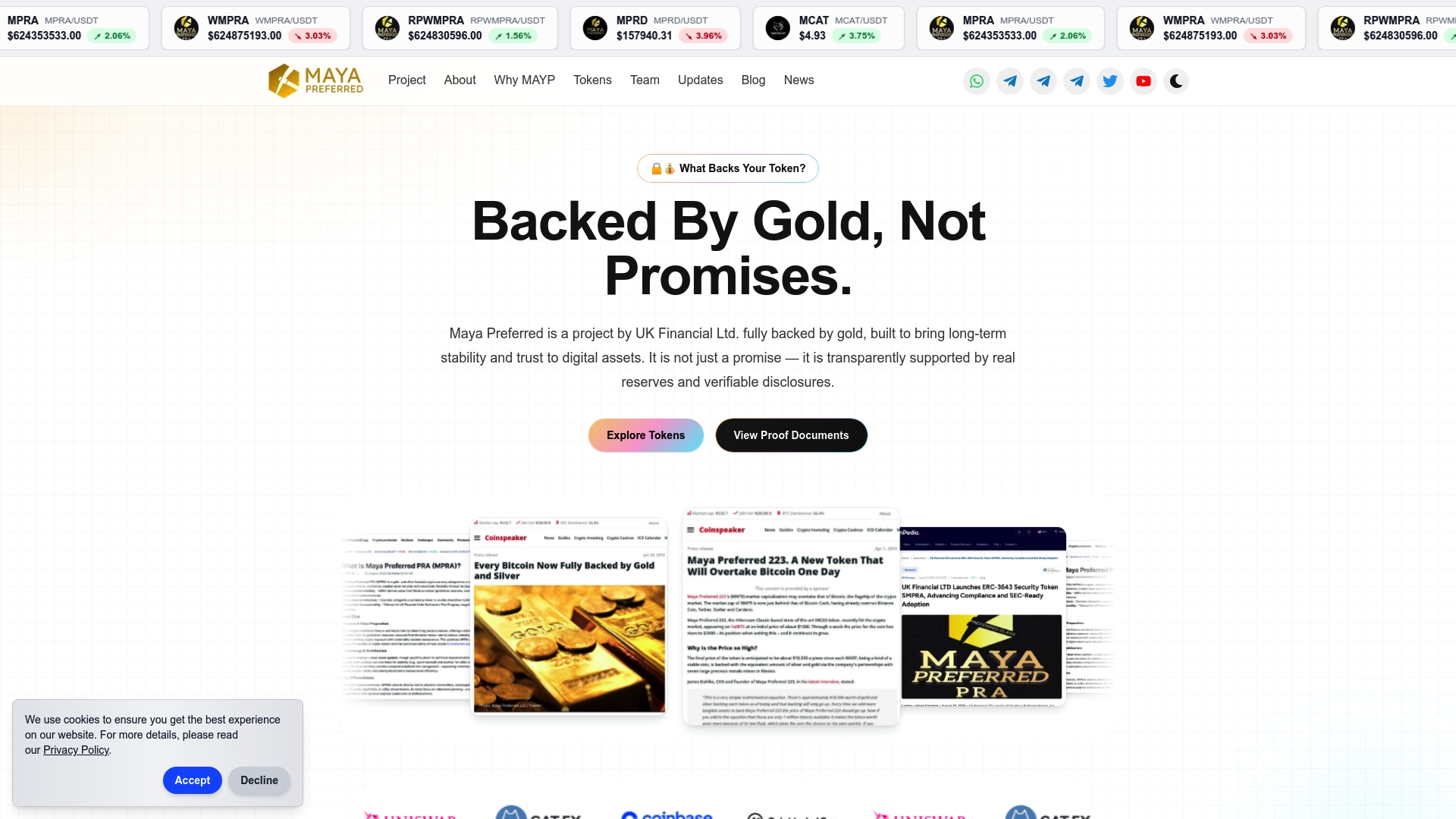
Elevate your investment strategy by bridging traditional value with blockchain innovation. Explore how our real-world asset backing can provide confidence and long-term stability in a high-volatility market. Visit Maya Preferred now to access detailed documentation, join a trusted investor community, and start investing in digital assets that prioritize transparency and credibility. Don’t wait to secure your future with tokens anchored in real gold and silver reserves.
Frequently Asked Questions
What are the key types of digital assets every investor should know?
Digital assets include cryptocurrencies, stablecoins, asset-backed tokens, security tokens, utility tokens, non-fungible tokens, and tokenized mining rights. Familiarize yourself with these categories to better navigate the digital asset landscape.
How do I evaluate the stability of a stablecoin before investing?
To evaluate a stablecoin’s stability, research its backing mechanism, the reserves it holds, and the transparency of the issuing organization. Ensure that the stablecoin maintains a consistent value pegged to a reliable external reference.
What benefits do asset-backed tokens offer to investors?
Asset-backed tokens provide fractional ownership of tangible assets, increase liquidity, and allow for transparent tracking of ownership. Consider investing in these tokens for diversified access to traditionally illiquid markets without the complexities of physical asset management.
How do security tokens differ from utility tokens?
Security tokens represent ownership and are subject to regulatory compliance, while utility tokens provide access to specific services within a blockchain network without being classified as securities. Define your investment goals to determine which type aligns with your strategy.
What makes non-fungible tokens (NFTs) valuable?
NFTs are valuable due to their unique identification and scarcity, allowing for ownership of exclusive digital items. To capitalize on NFT investments, research the underlying asset’s uniqueness and the creator’s reputation in the digital space.
How can I get started with tokenized mining rights investments?
Begin by researching specific mining projects and understanding their geological potential and the credibility of the tokenization platform. Start small to test the waters and gradually increase your investment as you gain more knowledge about the industry.