
Digital Gold Explained: Stability for Crypto Investors

Nearly one in three American investors now seeks alternatives to traditional assets, driven by a demand for greater transparency and price stability. As digital gold redefines how global investors access precious metals, confidence in secure, asset-backed tokens becomes essential. This introduction clears up common misconceptions while highlighting why gold and silver-backed digital assets are rewriting what it means to invest with trust in a rapidly changing financial landscape.
Table of Contents
- Defining Digital Gold And Common Misconceptions
- How Asset-Backed Digital Gold Works
- Types Of Digital Gold Tokens Available
- Transparency, Verification, And Regulatory Compliance
- Risks, Costs, And Comparing Alternatives
- Use Cases And Benefits For Global Investors
Key Takeaways
| Point | Details |
|---|---|
| Understanding Digital Gold | Digital gold offers a blockchain-based, tokenized investment in physical gold, enabling secure and transparent ownership. |
| Regulatory Compliance is Key | Investors should verify compliance and audit processes of platforms to ensure authenticity and security of their assets. |
| Types of Digital Gold Tokens | Various token types, including stablecoins and direct ownership certificates, cater to different investor preferences and risk profiles. |
| Global Investment Benefits | Digital gold enhances accessibility and liquidity, allowing global investors to diversify portfolios with lower entry costs and fractional ownership options. |
Defining Digital Gold and Common Misconceptions
Digital gold represents a revolutionary approach to asset-backed digital investments, transforming how investors perceive and interact with precious metal investments. Unlike traditional physical gold investments, digital gold exists as blockchain-based tokens precisely representing physical gold reserves.
At its core, digital gold functions as a tokenized representation of actual gold assets, providing investors with a secure, transparent method of owning and trading precious metals without physical storage challenges. These digital assets are typically backed by verifiable gold reserves, ensuring that each token corresponds to a specific quantity of physical gold stored in secured vaults. The SEC framework for digital assets provides critical regulatory oversight, helping investors understand the legal and financial structures behind these innovative investment vehicles.
Common misconceptions about digital gold often stem from misunderstandings about its nature and regulation. Many investors incorrectly assume that digital gold is unregulated, speculative, or inherently risky. However, reputable digital gold platforms operate under strict compliance standards, with transparent asset backing, regular audits, and clear governance mechanisms. These platforms leverage blockchain technology to provide real-time verification of gold reserves, offering unprecedented transparency that traditional gold investments rarely achieve.
Key Features of Digital Gold:
- Direct ownership of gold-backed tokens
- Instant transferability across global markets
- Lower transaction costs compared to physical gold
- Enhanced transparency through blockchain verification
- Fractional ownership opportunities
Pro tip: Before investing in digital gold, always verify the platform’s gold reserve documentation and regulatory compliance to ensure asset authenticity and investment security.
How Asset-Backed Digital Gold Works
Asset-backed digital gold represents a sophisticated financial mechanism that transforms traditional gold ownership by leveraging blockchain technology. The Federal Reserve explains that these digital tokens function by creating precise ownership claims to physical gold reserves, providing investors with a transparent and secure method of gold investment.
The core mechanism involves a meticulous process of tokenization, where each digital gold token represents a specific quantity of physical gold stored in secure, audited vaults. When an investor purchases a digital gold token, they receive a verifiable digital certificate of ownership that corresponds directly to a precise weight of gold. These digital representations are carefully maintained by trusted custodians, ensuring that the digital asset maintains a direct and provable connection to its underlying physical asset.
Blockchain technology plays a critical role in this ecosystem by providing unprecedented transparency and security. Each transaction is recorded on a decentralized ledger, creating an immutable record of ownership transfers. This technology allows for fractional ownership, instant transferability, and real-time tracking of gold-backed assets. Investors can buy, sell, or trade these tokens with the confidence that their investment is directly linked to a tangible asset, eliminating many of the risks associated with traditional gold investments such as storage, transportation, and authenticity verification.
Key Components of Asset-Backed Digital Gold:
- Precise gold reserve mapping
- Blockchain-verified ownership
- Secure custodial management
- Instant global transferability
- Fractional investment options
Pro tip: Always verify the gold reserve documentation and audit reports before investing in any digital gold platform to ensure the authenticity and backing of your digital assets.
Types of Digital Gold Tokens Available
Digital gold tokens represent a diverse ecosystem of investment instruments, each with unique characteristics and technological frameworks. These digital assets provide investors multiple pathways to access gold investments through innovative blockchain-based mechanisms, ranging from fully centralized to decentralized token structures.

The Federal Reserve identifies several primary categories of digital gold tokens, each designed to meet different investor requirements. Stablecoins pegged to gold prices offer a direct correlation with physical gold markets, providing price stability and predictable valuation. Tokenized gold securities represent more complex financial instruments that bundle gold-related assets, allowing for broader exposure to gold-backed investment strategies.
The technological infrastructure behind these tokens varies significantly, impacting their liquidity, transferability, and regulatory compliance. Some digital gold tokens provide direct ownership certificates linked to specific gold reserves, while others offer indirect claims through intermediary financial structures. This diversity enables investors to choose tokens that align with their risk tolerance, investment goals, and preferred level of asset transparency.
Types of Digital Gold Tokens:
- Stablecoins pegged to gold prices
- Direct ownership gold certificates
- Tokenized gold securities
- Fractional gold investment tokens
- Decentralized gold-backed cryptocurrencies
Pro tip: Research the specific backing mechanism and regulatory compliance of each digital gold token before investing to ensure alignment with your financial objectives.
Transparency, Verification, and Regulatory Compliance
Transparency represents the cornerstone of trust in digital gold investments, with robust governance frameworks establishing critical accountability measures. Investors demand comprehensive visibility into the underlying asset mechanisms, requiring digital gold platforms to provide detailed, verifiable documentation about their gold reserves, custody arrangements, and financial structures.
Global regulatory efforts emphasize stringent disclosure and compliance protocols that protect investor interests across international markets. These frameworks mandate regular independent audits, real-time reserve tracking, and transparent reporting of gold holdings. Such rigorous verification processes ensure that each digital gold token maintains a direct and provable connection to its physical gold backing, mitigating risks associated with fraudulent or unsupported digital assets.
The technological infrastructure supporting digital gold transparency goes beyond traditional financial reporting. Blockchain technology enables unprecedented levels of verification, creating immutable records of asset ownership, transaction history, and reserve quantities. This decentralized approach allows investors to conduct independent verification, reducing reliance on centralized intermediaries and enhancing overall market integrity. Advanced cryptographic techniques further strengthen these verification mechanisms, providing multiple layers of security and authenticity checks.
Key Transparency and Compliance Elements:
- Independent third-party audits
- Real-time reserve tracking
- Blockchain-verified ownership records
- Comprehensive asset documentation
- Cross-border regulatory compliance
Pro tip: Always request and thoroughly review the most recent independent audit reports before investing in any digital gold platform to ensure complete transparency and asset verification.
Risks, Costs, and Comparing Alternatives
Digital gold investments present a complex landscape of potential risks and opportunities, requiring investors to carefully evaluate multiple dimensions beyond traditional investment strategies. The digital gold ecosystem introduces unique challenges such as platform stability, technological vulnerabilities, and regulatory uncertainties that differ significantly from conventional gold investment methods.
The Federal Reserve highlights the multifaceted nature of digital asset risks and cost structures, emphasizing the importance of comprehensive due diligence. Investors must consider various expense categories including management fees, transaction costs, custody charges, and potential cybersecurity investments. These financial considerations can substantially impact the overall investment performance and net returns of digital gold holdings.
Comparing digital gold to alternative investment vehicles reveals nuanced trade-offs. Physical gold offers tangible ownership but involves storage and insurance expenses. Gold Exchange Traded Funds (ETFs) provide liquidity but carry management fees and may have less direct asset backing. Digital gold tokens potentially offer greater accessibility, fractional ownership, and instant transferability, though they introduce technological and regulatory risks not present in traditional investment instruments. Understanding these distinctions allows investors to make more informed decisions aligned with their specific financial goals and risk tolerance.
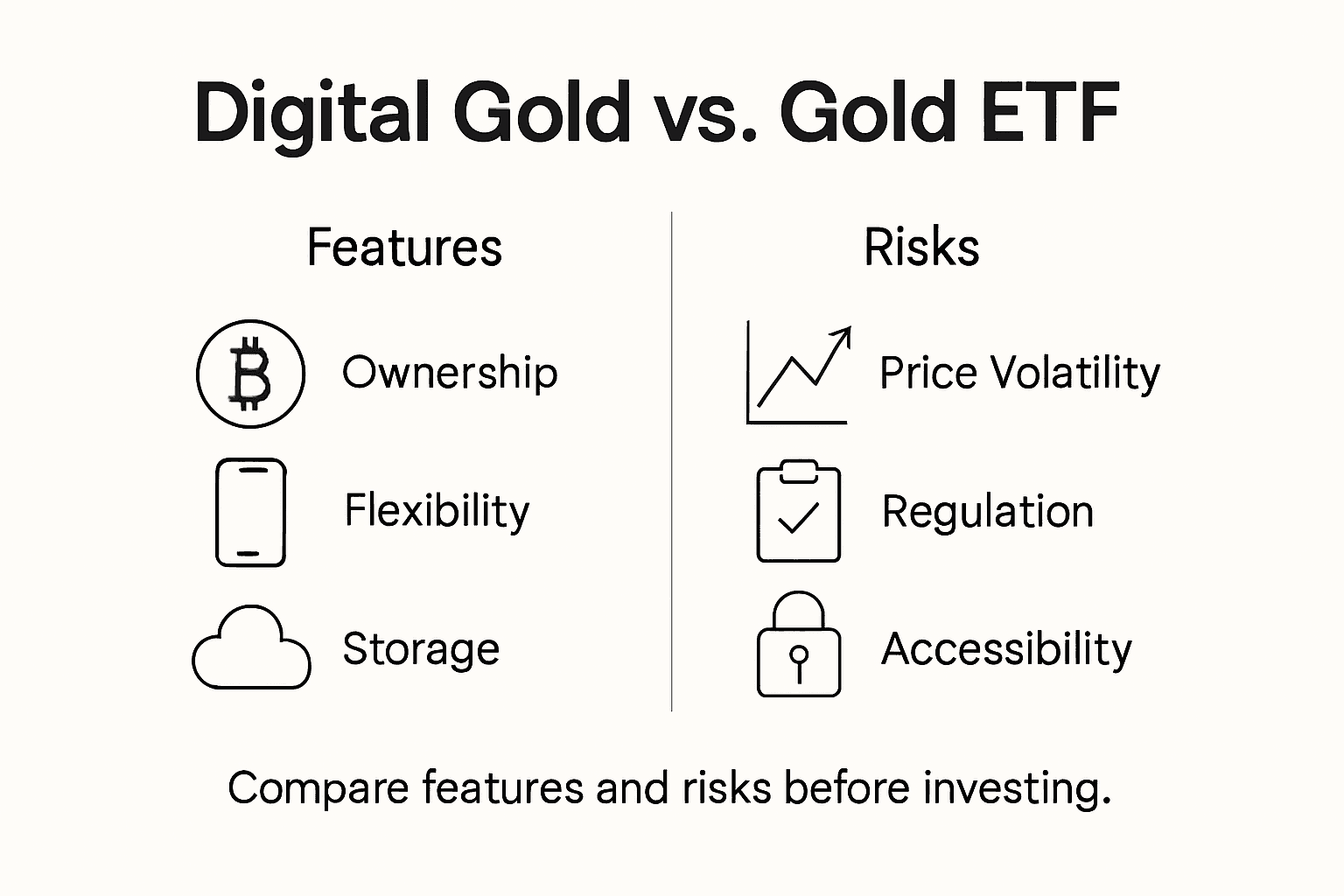
Here’s how digital gold compares with physical gold and gold ETFs:
| Aspect | Digital Gold | Physical Gold | Gold ETF |
|---|---|---|---|
| Accessibility | Global, instant online | Limited by location | Traded on exchanges |
| Ownership Type | Tokenized, fractional | Direct physical | Shares in fund |
| Storage Needs | None (custodian) | Secure vault/storage | Fund storage facility |
| Liquidity | High, 24/7 transfers | Sell at dealers | High, market hours |
| Transaction Fees | Low to moderate | Shipping/insurance | Brokerage fees |
| Regulatory Oversight | Evolving, often strict | Established | Regulated fund |
| Transparency | Blockchain tracking | Verification required | Regular audit reports |
Key Investment Risk Considerations:
Here is a summary of main risks and mitigation strategies for digital gold investments:
| Risk Type | Investment Concern | Mitigation Approach |
|---|---|---|
| Technology Failure | Platform outage or hack | Choose audited, reputable providers |
| Regulatory Changes | Shifting compliance rules | Stay informed about local laws |
| Asset Authenticity | Unbacked tokens | Verify independent audit results |
| Cost Overruns | Unexpected platform fees | Compare transaction and custody costs |
| Market Liquidity | Limited buyer/seller pool | Prefer large, established platforms |
- Platform technological stability
- Cybersecurity vulnerabilities
- Regulatory compliance risks
- Transaction and management fees
- Asset verification challenges
Pro tip: Conduct a comprehensive risk assessment by comparing the total cost of ownership, technological infrastructure, and regulatory compliance across different digital gold platforms before making any investment decisions.
Use Cases and Benefits for Global Investors
Gold continues to serve as a critical investment asset for global investors, with digital gold technologies dramatically expanding accessibility and investment opportunities. These innovative financial instruments enable investors from diverse geographic regions to participate in gold markets without traditional barriers like physical storage, high entry costs, or complex international trading restrictions.
Digital gold tokens offer sophisticated investors multiple strategic advantages, particularly in emerging markets experiencing currency volatility. By providing fractional ownership, instantaneous global transfers, and transparent asset tracking, these digital instruments create unprecedented flexibility for portfolio diversification. Investors can now allocate precise gold investment amounts, hedge against local economic uncertainties, and maintain liquidity across international financial ecosystems.
The technological infrastructure underlying digital gold tokens transforms traditional investment paradigms. Blockchain-based platforms enable real-time verification, reduce transaction costs, and eliminate geographical constraints that historically limited gold investment opportunities. Small investors can now access gold markets with minimal capital, while institutional investors benefit from enhanced transparency, reduced counterparty risks, and streamlined cross-border investment mechanisms.
Global Investor Benefits:
- Fractional gold ownership
- Instantaneous international transactions
- Low entry investment thresholds
- Portfolio diversification
- Enhanced liquidity
- Transparent asset tracking
- Risk mitigation against currency devaluation
Pro tip: Evaluate digital gold platforms based on their regulatory compliance, asset verification processes, and transaction fee structures to maximize your investment potential across different global markets.
Secure Your Investment with Transparent, Asset-Backed Digital Gold Tokens
The article highlights common concerns among investors about digital gold such as verifying asset authenticity, understanding regulatory compliance, and accessing transparent proof of backing. If you seek a trustworthy digital gold solution that addresses these challenges with real-world asset backing and rigorous transparency, Maya Preferred offers exactly that. By combining blockchain security with physical gold and silver reserves, Maya Preferred delivers peace of mind for crypto investors looking for stability and credibility in their portfolio.
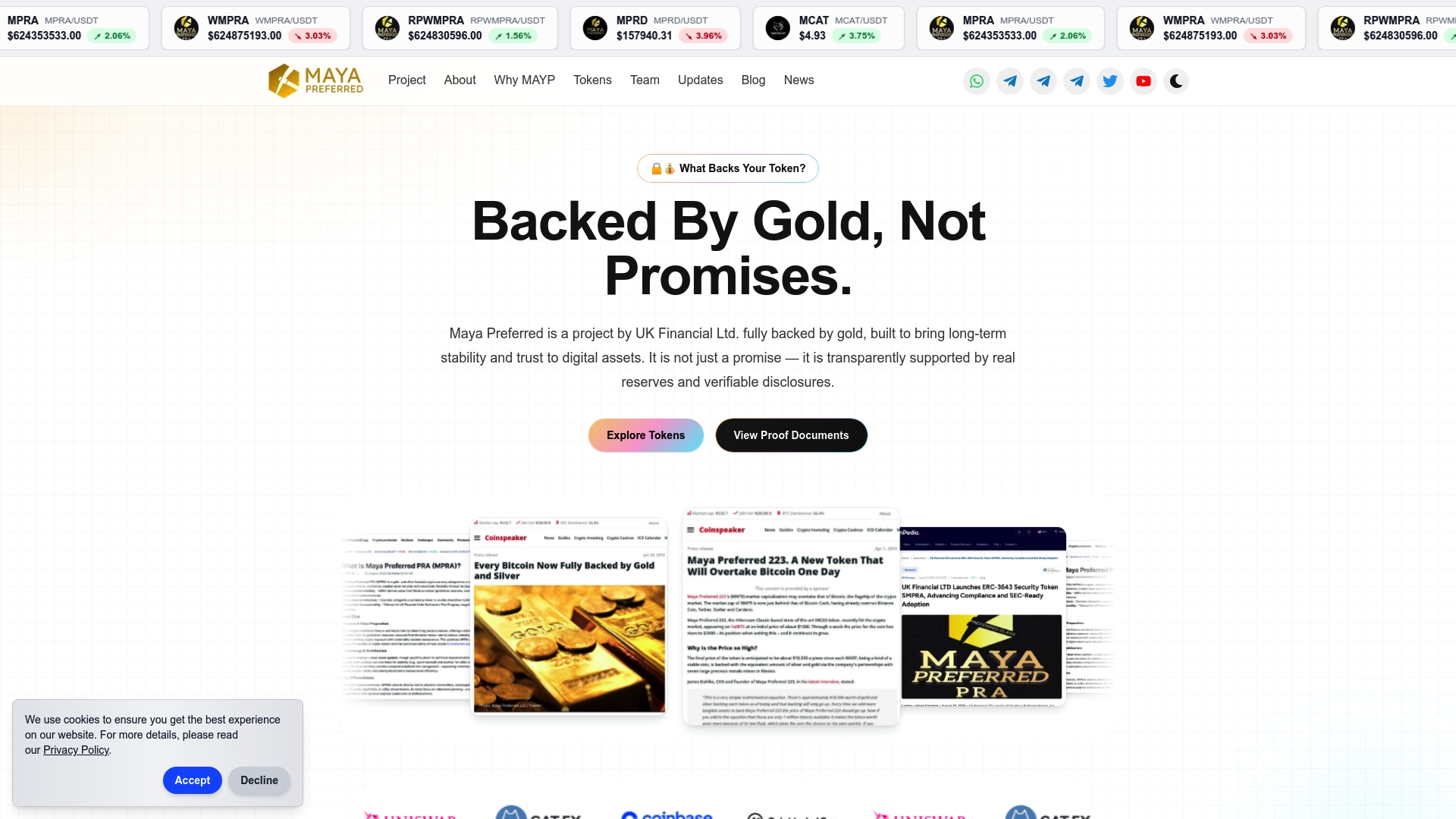
Explore how Maya Preferred’s tokens like MPRA, MPRD, and MCAT provide fractional ownership of precious metals secured by proven audits and reserve disclosures. Visit Maya Preferred today to access comprehensive asset documentation, stay updated on regulatory compliance, and join a community focused on bridging traditional gold investments with the future of digital assets. Don’t wait to invest confidently in digital gold backed by real assets and transparent governance.
Frequently Asked Questions
What is digital gold?
Digital gold is a tokenized representation of actual gold assets, allowing investors to own and trade gold without physical storage issues. Each token represents a specific quantity of gold stored in secure vaults.
How does asset-backed digital gold work?
Asset-backed digital gold functions by tokenizing physical gold reserves, where each token corresponds to a verifiable amount of gold. Investors receive digital certificates of ownership, verified through blockchain technology, ensuring security and transparency.
What are the benefits of investing in digital gold compared to physical gold?
Digital gold offers advantages like instant transferability, lower transaction costs, and fractional ownership opportunities, while eliminating concerns related to storage and transport of physical gold.
What should investors consider regarding regulatory compliance and transparency when investing in digital gold?
Investors should ensure that the digital gold platform provides comprehensive documentation about its gold reserves, undergoes regular independent audits, and adheres to relevant compliance protocols to maintain trust and transparency.