
7 Steps Digital Asset Security Checklist for Investors

Protecting your investment in gold-backed or silver-backed tokens takes more than just a strong password. With new threats and evolving regulations, it is easy to overlook critical security steps that could make the difference between peace of mind and sudden loss. Your digital assets deserve more than basic protection, especially when they are tied to real-world value.
You can use proven strategies that actually keep your holdings secure. These steps are drawn from best practices and regulatory guidance, and each one adds real protection against theft, scams, or simple mistakes. You will discover how to safeguard your accounts, verify your assets, and stay ahead of changing risks.
If you want practical actions that work, do not miss the approaches in this list. The next steps could protect your digital wealth for years to come.
Table of Contents
- 1. Assess The Reputation And Regulation Of Asset Platforms
- 2. Enable Multi-Factor Authentication For All Accounts
- 3. Use Secure Hardware Wallets For Asset Storage
- 4. Regularly Review And Update Private Key Storage
- 5. Verify Real Asset Backing And Third-Party Audits
- 6. Stay Informed On Phishing Scams And Social Engineering
- 7. Maintain Access To Legal And Compliance Documentation
Quick Summary
| Takeaway | Explanation |
|---|---|
| 1. Assess Regulatory Compliance | Ensure the platform has valid licenses and is governed by recognized regulatory authorities for better security. |
| 2. Enable Multi-Factor Authentication | Use MFA to significantly reduce the risk of unauthorized access to your accounts holding digital assets. |
| 3. Utilize Hardware Wallets | Store your private keys in hardware wallets to protect them from malware and unauthorized access effectively. |
| 4. Review Private Key Security Regularly | Conduct annual reviews of your key storage practices to ensure they remain adequate as your holdings grow and threats evolve. |
| 5. Verify Asset Backing | Always check for third-party audits and clear documentation of physical assets supporting your digital tokens before investing. |
1. Assess the Reputation and Regulation of Asset Platforms
Before you move a single dollar into any digital asset platform, you need to understand who’s actually watching the watchers. Reputation and regulatory status are the foundation of your security strategy, not afterthoughts. When your investment is tied to real-world assets like gold and silver, regulatory clarity becomes even more critical.
When evaluating where to hold or trade your digital assets, start by determining which regulatory frameworks actually govern the platform you’re considering. The regulatory landscape for digital assets continues to evolve, with different regions adopting distinct approaches to oversight and investor protection. Platforms operating in jurisdictions with clear regulatory authority, robust compliance requirements, and transparent governance structures offer substantially more security than those operating in regulatory grey areas. You want a platform that has made compliance decisions and can point to specific regulatory oversight bodies, not one that avoids regulatory questions entirely.
Research the platform’s licensing status and regulatory approvals. Look for certifications from financial regulatory bodies in major jurisdictions like the United States, European Union, or United Kingdom. These aren’t just badges on a website; they represent actual examination and ongoing compliance monitoring by government authorities. Check whether the platform has filed required disclosures, maintains proper insurance, and undergoes regular audits. Platforms holding financial licenses must demonstrate adequate capital reserves, customer fund segregation practices, and fraud prevention measures. If you cannot find clear evidence of these regulatory credentials, that alone should be a significant red flag.
Beyond the regulatory details, assess the platform’s actual reputation in the investment community. Look at whether industry organizations and credible financial authorities recognize the platform as legitimate. The Securities Industry and Financial Markets Association emphasizes that investors should assess platforms’ regulatory compliance and reputation, focusing on those operating under clear regulatory oversight with proper investor protections. Read what other investors actually report about the platform. Join community forums where traders discuss their experiences. Check financial news sources for any mentions of compliance issues, regulatory warnings, or security breaches. A platform with real regulatory backing typically has a transparent communication history with its user base about compliance matters and regulatory developments.
Dig into the platform’s corporate structure and management team. Reputable platforms publish clear information about their leadership, board members, and advisors. Verify these individuals have actual track records in financial services or blockchain technology. Red flags include anonymous management teams, leadership with no verifiable background, or constant management turnover. A platform that openly shares executive information and corporate governance details is signaling confidence in its legitimacy. For asset-backed token platforms specifically, verify that the company’s management has experience managing real physical assets and can document their reserve holdings with third-party audits.
Check whether the platform explicitly addresses investor protection mechanisms. This includes what happens if the platform experiences a security breach, goes bankrupt, or faces regulatory action. Legitimate platforms carry insurance for customer assets, maintain segregated customer accounts, and have clear policies about fund recovery in worst-case scenarios. They publish privacy policies that explain how your data gets protected and trading records that demonstrate transparent market operations. If a platform won’t clearly explain its investor protection measures, you cannot trust it with substantial capital.
Pro tip: _Create a regulatory compliance checklist before opening an account anywhere: verify the platform’s actual licenses in your jurisdiction, check for any regulatory warnings or enforcement actions against the platform, confirm the platform publishes audited financial statements, and verify third-party insurance coverage for customer assets. This ten-minute review process catches the vast majority of problematic platforms before you risk your money.
2. Enable Multi-Factor Authentication for All Accounts
If you are protecting only your password, you are protecting almost nothing. Multi-factor authentication (MFA) is the single most effective step you can take to prevent unauthorized access to your digital asset accounts. This requirement goes beyond recommendations for general internet security when your accounts hold real value in asset-backed tokens.
Multi-factor authentication works by requiring you to prove your identity through at least two independent verification methods before gaining access to your account. The first factor is typically your password, which you already know. The second factor might be a code from an authenticator app on your phone, a hardware security key, a biometric scan, or a one-time code sent via text message. Even if someone steals your password through phishing, malware, or a data breach, they cannot access your account without also having your second factor. This creates a significant barrier that stops the vast majority of unauthorized access attempts before they succeed.
The power of MFA becomes clear when you consider real-world attack scenarios. Criminals routinely purchase stolen password lists on the dark web and attempt to access accounts using those credentials. Without MFA, your account is immediately compromised. With MFA enabled, that stolen password is worthless because the attacker cannot provide the second verification factor. Research shows that MFA prevents 99.9% of account attacks by requiring multiple independent credentials for identity proof. For investors holding gold-backed or silver-backed digital assets, this level of protection is not optional.
You should enable MFA on every account that matters to your financial security. Start with your digital asset trading and wallet accounts, as these hold the most direct value. Move quickly to your email accounts, which serve as the key to resetting passwords on everything else. If someone gains access to your email, they can reset your passwords everywhere and bypass your security setup. Then enable MFA on your banking accounts, investment accounts, and any accounts linked to payment methods. The goal is to create multiple layers of protection so that compromising one account does not immediately lead to compromising everything.
Different MFA methods offer different levels of security and convenience. Time-based one-time password (TOTP) applications like Google Authenticator, Microsoft Authenticator, or Authy generate new codes every 30 seconds on your phone. These are significantly more secure than text message codes because they work even if your phone number is compromised through a SIM swap attack. Hardware security keys like YubiKeys provide the highest security level because they work through physical USB connections or wireless protocols, making them virtually impossible for remote attackers to intercept. Text message codes (SMS) offer the lowest security because they can be intercepted or redirected, but they remain far better than having no MFA at all. For your most valuable accounts holding asset-backed tokens, use either TOTP applications or hardware keys rather than SMS codes.
Set up your backup and recovery options before you need them. When you enable MFA on an account, the platform typically generates backup codes that allow you to regain access if you lose your phone or security key. Write these codes down and store them separately from your devices, perhaps in a safe deposit box or with a trusted family member. Do not store backup codes on your computer or in cloud storage where they might be compromised alongside your other credentials. Test your backup procedures before an emergency forces you to use them. Many investors have locked themselves out of accounts by losing their authenticator device without having tested their recovery options beforehand.
MFA significantly improves account security by preventing unauthorized access even if passwords are compromised, making it a critical security practice for accounts involving sensitive digital assets.
When selecting which MFA method to use for each account, consider both security and usability. TOTP applications provide an excellent balance for most accounts. They are more secure than SMS, they work even when your internet connection is down, and they do not require purchasing additional hardware. For accounts holding your most valuable asset-backed token holdings, layer TOTP with a hardware key if the platform supports it. Some platforms allow you to register multiple authentication methods, which gives you flexibility and backup options if one method fails.
Enable MFA immediately, not eventually. Do not tell yourself you will set it up after your first trade or after your account grows larger. The time to protect your account is before you add significant value to it. Many successful account compromises happen to new accounts because owners assume the account is not worth protecting initially. Attackers are equally willing to compromise small accounts to gain experience or to monitor the account’s growth over time.
Pro tip: Use an authenticator app rather than SMS for your asset accounts, write your backup codes on paper and store them in a physical safe away from your home, and test your backup access method immediately after setup to confirm it works before you actually need it.
3. Use Secure Hardware Wallets for Asset Storage
Your private keys are the master password to your digital assets, and they deserve protection that goes far beyond what your computer can provide. A hardware wallet is a specialized device designed specifically to store your cryptographic keys in an isolated, secure environment where they cannot be accessed by malware, hackers, or compromised software on your computer.
Understanding how hardware wallets protect your assets requires knowing what makes them different from software alternatives. When you store private keys on your computer or phone, those keys exist in memory alongside your operating system, your internet connection, and countless other applications. Any malware or sophisticated attack that gains access to your device can potentially extract those keys. A hardware wallet physically separates your private keys from the internet and your general-purpose computer. Your keys live on a dedicated device with its own processor, secure storage, and minimal software. When you need to approve a transaction, the hardware wallet signs it internally without ever exposing your private key to your computer or the internet. The signed transaction is then sent out, but your key remains locked inside the device.
The security architecture of hardware wallets provides multiple layers of protection. Hardware-based security mechanisms provide a root of trust and reduce the risk of key theft or compromise by isolating private keys in dedicated hardware and protecting them from cyber threats. This isolation is the fundamental difference between a hardware wallet and other storage methods. Even if someone physically steals your hardware wallet, they cannot simply extract your keys because the device protects them with encryption and physical safeguards. If someone gains complete access to your computer, they cannot access your keys because your keys never leave the hardware wallet. The device essentially creates a completely separate security domain that your computer cannot penetrate.
For investors holding asset-backed tokens like gold-backed digital assets, hardware wallets provide peace of mind that your holdings are protected from the most common attack vectors. Phishing attacks that trick you into revealing your password will not compromise your hardware wallet because the password only accesses your software interface, not your actual keys. Malware that infects your computer will not steal your keys because they never touch your computer. Data breaches at exchanges or online services will not compromise your personal holdings because your keys are stored on your own device. The combination of these protections makes hardware wallets exponentially more secure than keeping your assets on any online platform or your personal computer.
Implementing hardware wallet security requires making a few practical decisions. First, decide which assets warrant hardware wallet storage. Your largest holdings and long-term investments should absolutely live on hardware wallets. Assets you trade frequently might remain on your trading platform for convenience, though this represents an acceptable tradeoff between security and usability that only you can decide. Your gold-backed token holdings, which represent real precious metals and serve as a store of value, absolutely belong on a hardware wallet where they are completely under your control. Second, choose a reputable hardware wallet manufacturer. Established companies like Ledger, Trezor, and Coldcard have built their reputations on security and have been scrutinized by the entire industry. Do not buy hardware wallets from unknown sellers on secondary markets because supply chain attacks could compromise the device before you receive it. Purchase directly from the manufacturer or from authorized retailers you can verify.
When you receive your hardware wallet, you will set up a PIN code and generate a recovery seed. The recovery seed is a list of words, typically 12 or 24 words, that can restore access to your wallet if your device is lost or damaged. Write this seed down on paper and store it in a secure location such as a safe deposit box, a home safe, or with a trusted family member. Never store your seed digitally, never photograph it with your phone, and never type it into your computer. The seed is your absolute backup to everything on your hardware wallet. Anyone who gains access to your seed can recover your entire wallet and steal all your assets, so protect it as carefully as you protect your device itself.
Test your hardware wallet setup before you move significant value onto it. Make your first transactions small amounts and verify that the wallet functions as expected. Confirm that you can send and receive assets correctly. Practice accessing your recovery process using a secondary device to ensure you actually know how to restore your wallet if needed. Many investors discover issues with their setup after they have already moved substantial holdings, which is far more stressful than discovering problems with small test transactions. The time to work out any confusion is when you are not under pressure.
Secure hardware lifecycle management and end-to-end hardware security protect digital assets cryptographically and physically from cyber and supply chain attacks, making hardware wallets the gold standard for long-term asset storage.
Maintain physical security of your hardware wallet just as you would maintain security of cash or physical gold. Keep your device in a secure location when you are not using it. Do not leave it unattended in public or in easily accessible places at home. If you travel internationally with your hardware wallet, consider the border security implications and whether you want to carry your keys across multiple jurisdictions. Some investors maintain hardware wallets in multiple secure locations for redundancy. Others keep one in a safe deposit box for their largest holdings and a separate device at home for more frequent access. Your specific approach depends on your holdings size, your travel patterns, and your comfort with different security tradeoffs.
Pro tip: Purchase your hardware wallet directly from the manufacturer’s official website, not from third-party sellers or used markets, then verify the device’s authenticity using the manufacturer’s tools before loading any assets onto it.
4. Regularly Review and Update Private Key Storage
Security is not a one-time setup that you complete and then forget about. Your private key storage strategy needs regular review and updates as your holdings grow, as technology evolves, and as threats change. What worked perfectly for protecting a small portfolio may become inadequate when your asset-backed token holdings represent substantial value.
Think of private key management as an ongoing process rather than a destination you reach. Your keys live in a specific environment with specific protections right now. That environment may change. Your hardware wallet might age and eventually become obsolete. New threats may emerge that expose vulnerabilities in your current setup. Your personal circumstances might shift, requiring different security tradeoffs. Perhaps you started with keys stored on your personal computer and later moved to a hardware wallet. That was an improvement, but now you should ask yourself whether your current setup still represents the best approach given what you know today.
Periodic reviews of key usage and regular updates or rotation of keys reduce risks of compromise according to cryptographic key management best practices. This principle applies to your digital asset holdings just as it applies to enterprise security systems. You should establish a regular schedule for reviewing your private key storage setup. Many investors conduct this review annually or when they experience significant changes in their portfolio size. During each review, you assess whether your current storage method still provides adequate security for your current holdings and examine whether better options have become available.
Regular reviews typically involve several specific questions you should ask yourself. First, where are your private keys currently stored and is that storage still appropriate? If your holdings have grown from a few thousand dollars to hundreds of thousands of dollars, storage methods that were acceptable for small amounts may no longer be sufficient. Second, is your hardware wallet firmware current? Manufacturers regularly release firmware updates that patch security vulnerabilities. Using outdated firmware exposes you to known attacks that could have been prevented. Third, are your recovery seeds still secure and accessible? Have you verified recently that your backup actually works and that you can recover your wallet if needed? Fourth, have new storage options or security technologies emerged that might better serve your needs? The hardware wallet landscape constantly evolves with new models offering improved security features or better usability.
When you conduct your review, take the opportunity to validate that your recovery process actually functions. Do not wait for a disaster to discover that your recovery seed is illegible, lost, or stored somewhere you cannot access. Every few years, practice restoring a test wallet from your recovery seed to confirm the process works. This verification takes an hour and prevents catastrophic mistakes during actual emergencies. Many investors maintain multiple recovery seeds stored in different secure locations. Testing each one periodically ensures all of them remain viable. If you discover that a recovery seed is damaged or inaccessible, you can generate a new one while your wallet still functions normally, then update your backup storage accordingly.
Consider whether your current key management strategy still aligns with your risk tolerance and holdings size. Perhaps when you started, keeping your largest holdings on a hardware wallet and maintaining a small reserve on an exchange made sense for trading flexibility. As your portfolio has grown, that tradeoff might no longer be acceptable. You might now prefer to keep all your gold-backed token holdings on hardware wallets and only move small amounts to an exchange when you actually intend to trade. This shift in strategy requires updating your key storage plan, which you will catch during your regular review process.
Secure storage, access control, key renewal, and backup are critical practices throughout the key management lifecycle, and your setup should reflect current best practices. If you set up your security years ago and have not revisited it, you are probably using outdated approaches. Newer hardware wallets offer better security, improved backup mechanisms, and more intuitive interfaces. Industry standards have evolved to reflect lessons learned from past compromises. Your current setup might work fine, but better options likely exist. The purpose of your regular review is to identify these improvements and implement them strategically.
Document your key management setup clearly so that you actually remember what you did. Write down where your keys are stored, which hardware wallet models you are using, where your recovery seeds are located, which backup methods you have implemented, and anything else that matters to your security. This documentation is not for sharing with anyone else. It exists so that you, after time has passed and details have faded from memory, can understand exactly what you did and why. It also helps if you need to explain your setup to a family member or provide instructions for accessing your assets in an emergency situation.
When you discover during your review that your setup needs updating, create a specific plan and timeline for making changes. Do not tell yourself you will upgrade your hardware wallet eventually or move your recovery seed someday. Schedule it like you would schedule any other important task. If you need to migrate your keys from one storage method to another, do it methodically by first setting up the new storage, verifying it works correctly, and only then transferring your keys. The migration process itself introduces temporary risk, so do it deliberately rather than in a rush.
Regular assessment of your key storage mechanisms and updates to your key management practices ensure your security remains effective as both your holdings and the threat landscape evolve.
Maintain a simple calendar reminder to conduct your private key storage review at least annually. Set it for the same time each year so it becomes routine. During your review session, spend time on each question: Are my keys still stored appropriately? Is my hardware firmware current? Do my backups still work? Have better storage options emerged? Have my circumstances changed to require adjusting my security approach? By making this a regular practice, you catch problems and opportunities before they become urgent.
Pro tip: Schedule your private key review for the same date each year and combine it with a firmware update check for your hardware wallet, plus one full restoration test from your backup recovery seed to confirm everything works before you actually need it.
5. Verify Real Asset Backing and Third-Party Audits
Asset-backed digital tokens promise something revolutionary: blockchain technology combined with real physical value. But that promise only matters if the assets actually exist. Before you invest significantly in any gold-backed or silver-backed token, you must independently verify that real assets genuinely back those tokens and that credible third parties have audited the backing to confirm it.
The fundamental question every investor in asset-backed tokens must ask is whether the issuer actually owns the physical assets they claim to hold. This is not paranoia. History is filled with investment schemes where promised assets never existed or were used to back multiple claims simultaneously. A company could claim to hold one million ounces of gold while actually holding none. Or they could hold one million ounces but use that same gold to back five million ounces of tokens. Without independent verification, you have no way to distinguish between legitimate asset backing and elaborate fraud. Third-party audits exist specifically to bridge this gap between what an issuer claims and what actually exists.
When evaluating asset backing, start by understanding what the issuer claims about their holdings. Do they specify exactly how many ounces of gold or silver they hold? Do they identify the location where the assets are stored? Do they explain the custody arrangement? Legitimate asset-backed token issuers provide detailed information because transparency builds investor confidence. If an issuer is vague about their holdings, cannot specify quantities, or refuses to disclose storage locations, that opacity is a serious warning sign. They might be genuine but simply poor at communication, or they might be hiding something. Either way, you should not invest substantially until you get clarity.
Third-party audits provide the verification that bridges claims and reality. An independent auditor, particularly one with experience in precious metals or commodity verification, physically inspects the assets, confirms quantities, and verifies that the assets exist and are owned by the issuer as claimed. Investors should verify that digital assets representing physical assets have real backing and that third-party auditors validate the underlying asset pools to ensure legitimacy. A reputable audit includes the auditor’s statement about what they inspected, where they inspected it, when they inspected it, and their conclusions about the asset quantities and ownership.
Look for audits from established firms with genuine expertise in precious metals verification, not general accounting firms making their first venture into asset auditing. The auditing firm should have a track record of commodity or precious metals verification. They should be willing to attach their name and professional reputation to their findings. An audit report from an unknown firm with no verifiable background is substantially less valuable than one from a recognized firm that could face professional consequences for incorrect reporting. Review the audit date and consider whether additional verification has occurred since then. A single audit from two years ago, while better than no audit, is less current than regular or annual audits conducted more recently.
Understand what the audit actually verifies and what it does not. A typical precious metals audit confirms the existence and quantity of gold or silver at a specific point in time. It does not necessarily confirm who ultimately owns the assets or whether the issuer has legal title. The audit inspects the physical materials but may not verify documentation of ownership or liens. Read the audit report thoroughly to understand exactly what the auditors verified and any limitations they note. If you do not understand a section of the audit, contact the auditor or the token issuer and ask for clarification. You have a right to understand exactly what verification has been conducted on assets backing your investment.
Beyond the audit itself, investigate the custody arrangement for the assets. Where exactly are the gold or silver holdings stored? Is it a major commercial vault operated by a recognized custodian? Is it stored in a secure facility operated by the issuer themselves? Custody at a major third-party vault provides extra security because the custodian has no incentive to help the issuer misappropriate the assets. Custody at the issuer’s own facility provides less assurance because the issuer controls both the assets and the access to them. Some arrangements use a combination, with assets held at a third-party custodian but with the issuer maintaining operational control. Each arrangement has different security implications that you should understand before investing.
Look for evidence that the audit process is ongoing rather than one-time. Some token issuers conduct regular audits, perhaps annually or quarterly, which allow investors to see that asset levels remain consistent with token quantities over time. An issuer conducting audits only once and then never again is less transparent than one demonstrating a commitment to continuous verification. If you can access historical audit reports, examine whether asset quantities have changed and whether those changes match the activity you would expect from trading or minting of new tokens. Discrepancies between audit reports could indicate problems.
Digital asset markets require proper audit processes and asset transparency to mitigate potential financial instabilities arising from unverified backing claims. The Federal Reserve and other financial regulators recognize that insufficient verification of asset backing creates systemic risks. This regulatory perspective reinforces why you should make asset verification a non-negotiable requirement before investing.
Verify that you can actually access the audit reports yourself rather than relying on the issuer’s summary. The issuer might provide a one-sentence claim that assets are audited without providing the actual audit document for your review. Request the full audit report directly from the issuer or from the auditing firm. If the issuer refuses to provide the complete report, question why. Legitimate issuers want investors to review audit documentation because it builds confidence. If accessing the audit documentation feels like pulling teeth, that friction is informative.
Consider the valuation of assets in the audit. A gold audit should state the quantity in specific units like ounces or kilograms, not vague descriptions. If an audit report says assets are worth X amount but does not state the physical quantity, be cautious. Physical quantity is objective. Valuation is subjective and dependent on market prices. You want the audit to focus on what is objectively verifiable, which is the quantity of physical material present.
Transparency about asset pools, independent verification through third-party audits, and detailed disclosure of custody arrangements transform asset-backed tokens from abstract promises into investments backed by reality you can verify.
Maintain a simple spreadsheet tracking audits over time. Record the audit date, the reported quantities, the auditor, and any observations about changes from previous audits. This simple tracking helps you spot anomalies. If one audit claims 100,000 ounces and the next audit claims 95,000 ounces, you know exactly how much quantity was lost. If there were no major token burns or redemptions, such a decrease raises questions.
Pro tip: Request the complete third-party audit report directly from the token issuer and contact the auditing firm independently to verify they actually conducted the audit, then check whether the audit is current within the past year and whether regular ongoing audits are scheduled rather than one-time verifications.
6. Stay Informed on Phishing Scams and Social Engineering
Your hardware wallet protects your private keys. Your multi-factor authentication protects your passwords. But no technology can protect you against your own decision to voluntarily hand over sensitive information to a criminal pretending to be someone you trust. Phishing and social engineering represent the human vulnerability in your security chain, and staying informed about these tactics is essential to avoiding them.
Phishing attacks work by exploiting trust and urgency. A criminal sends you a message that appears to come from a legitimate source like your exchange, your wallet provider, or even a government agency. The message creates a sense of urgency or concern: your account may be compromised, your wallet needs verification, or a tax issue requires immediate action. The message includes a link that takes you to a fake website that looks identical to the real one. When you enter your credentials or sensitive information on that fake site, the criminal captures everything you type. By the time you realize something was wrong, your account has been accessed and your assets are gone.
Social engineering attacks take phishing further by establishing fake relationships. A criminal might spend weeks building rapport with you through social media, trading forums, or community channels. They learn about your interests, your experience level, and your concerns. When trust is established, they gradually introduce their scheme. They might recommend a specific trading strategy, encourage you to use a particular platform, or suggest you need better security tools. Each recommendation appears reasonable because it comes from someone you believe you know. Social engineering attacks including phishing, vishing, and smishing exploit human behavior to gain unauthorized access by manipulating trust and urgency.
Recognizing phishing attempts requires developing skepticism about unsolicited communication. Any message asking you to click a link and enter credentials should trigger suspicion. Your exchange will never ask you to confirm your password via email or text message. Your wallet provider will never ask you to enter your recovery seed. A legitimate company asking about account security will never push you to act immediately. If a message creates urgency or pressure, that is a red flag. Legitimate companies understand you need time to verify requests before responding.
Examine the sender details carefully before trusting any message. Check the email address, not just the display name. A message might appear to come from “exchange-support@official-trading-platform.com” but actually come from “exchange-support@official-trading-platform-secure.com” with a subtle misspelling. Criminals register similar domain names intentionally to fool people in a hurry. Hover over links before clicking them to see where they actually lead. A link might display as “www.official-exchange.com” but actually link to “www.official-exchange-verify.ru” or some other compromised or fake domain. This simple step of verifying where links actually lead catches most phishing attempts before you click.
Approach cryptocurrency and trading communities with particular caution because criminals specifically target these spaces. A message in a trading forum or chat group might claim to be from a moderator asking you to verify your account or claiming a special offer for community members. Verify such messages directly with the platform by logging in normally and checking whether that moderator actually sent you a message. Do not use links provided in the message. Instead, navigate to the site normally and look for official communication in your account dashboard. The extra minute this takes could prevent the loss of all your assets.
Be extremely cautious about links in social media direct messages, emails, and text messages. Criminals use these channels specifically because they know people let their guard down in less formal communication. A friend’s social media account might be compromised, allowing a criminal to send messages that appear to come from your friend. Before clicking any link, ask yourself whether you actively requested that link or whether it arrived unsolicited. If it arrived unsolicited, do not click it. Navigate to the website directly by typing the URL into your browser instead.
Understand that you are the last line of defense against phishing attacks. Even excellent technical controls cannot prevent you from voluntarily entering your credentials into a fake website. Phishing attacks require user training, cautious handling of unsolicited communication, and verification of identity before divulging sensitive information to avoid falling victim. You must develop the habit of questioning requests for sensitive information and verifying the legitimacy of communication before responding. This awareness is not paranoia. It is the realistic understanding that criminals actively target investors with significant digital assets.
Practice a simple verification ritual for any message asking you to take action. First, identify who the message claims to be from. Second, verify that person or organization actually sent the message by contacting them through a channel you know is legitimate. Do not use contact information provided in the suspicious message. Look up the phone number or website independently. Third, only after you have verified the message’s legitimacy should you respond or click any links. This ritual takes extra time, but that time is the difference between preserving your assets and losing them.
Develop awareness of common phishing scenarios targeting cryptocurrency investors. Criminals frequently pose as exchanges claiming your account has suspicious activity and needs verification. They pose as wallet providers claiming your recovery seed needs updating. They pose as tax services claiming you owe back taxes on your cryptocurrency gains. They pose as security companies offering protection against phishing, ironically while attempting to phish you. Recognizing these common scenarios helps you spot them when they appear in your inbox.
When you receive a message you suspect might be phishing, report it rather than simply deleting it. Most platforms have mechanisms to report phishing attempts. By reporting, you help the platform block similar attacks targeting other investors. If a message impersonates a legitimate company, you can report it to that company. They want to know when criminals are using their brand to attack customers.
Staying informed about phishing and social engineering tactics transforms you from a potential victim into someone who can recognize and avoid these attacks, protecting your digital assets from the human vulnerabilities that criminals exploit.
Maintain awareness that phishing techniques evolve continuously. Criminals study which approaches work and refine their tactics accordingly. What you learn today about recognizing phishing might be less effective next year as attackers develop new approaches. Stay updated by reading security advisories from reputable sources, following your exchange’s official security communications, and remaining skeptical about any requests for sensitive information.
Pro tip: Never click links in unsolicited emails or messages asking you to verify accounts, confirm credentials, or take urgent action. Instead, navigate directly to the official website by typing the URL in your browser, log in normally, and check your account dashboard for legitimate notifications from the platform.
7. Maintain Access to Legal and Compliance Documentation
Your digital assets exist within a complex legal and regulatory framework that evolves constantly. Maintaining organized access to documentation about your holdings, transactions, and compliance obligations is not just good practice. It is essential protection that could determine whether you face penalties or legal complications when regulations change or when disputes arise.
Compliance documentation serves multiple critical purposes in your overall security strategy. First, it creates an auditable record of your holdings and transactions that you control, rather than relying entirely on exchange records or blockchain data. Second, it demonstrates good faith compliance if regulators ever question your activities. Third, it helps you understand your actual tax obligations and prepare accurate tax filings. Fourth, it provides evidence of legitimate ownership if your assets are ever challenged or if you need to recover them after a theft or dispute. Without organized documentation, you are vulnerable to disputes where your word stands against someone else’s claims.
Start by collecting and organizing documentation from every platform where you hold or have held digital assets. Download your complete transaction history from each exchange where you trade. Export your wallet addresses and balances from each platform where you store assets. Maintain copies of account opening documentation, including the date you opened each account and any verification documents you submitted. Keep records of deposits and withdrawals, particularly the dates and amounts. If you have transferred assets between platforms or wallets, document those transfers with dates and amounts. This documentation should cover your entire history of digital asset activities, not just recent transactions.
Organize this documentation in a way that makes it easily accessible during emergencies or legal inquiries. Create folders by year, by platform, and by asset type if that helps you locate information quickly. Include both digital copies stored securely and physical printed copies stored in a safe location. Preserving digital evidence with a clear chain of custody and well-documented procedures ensures integrity and admissibility of digital assets and transactions in regulatory and legal contexts. Your documentation should maintain this chain of custody by including dates, sources, and any modifications to records.
Maintain separate documentation for each asset-backed token you hold. Record the date you purchased each token, the quantity you purchased, the price you paid, and any unique identifier like a transaction hash that proves you own it. If you receive audited reports about the assets backing those tokens, save those reports with clear dating and source information. If you receive official communications from the token issuer about reserve levels, dividends, or corporate actions, save those communications. Over time, this documentation becomes the authoritative record of your holding history.
Keep records of all communications with platforms and issuers regarding your accounts and assets. If you contact customer support with a question or problem, save the entire conversation including dates and time stamps. If you receive emails from an exchange about security updates, compliance changes, or account events, file those emails systematically. These communications often contain important information about the platform’s policies and your account status. If a dispute ever arises, these communications may be crucial evidence.
Understand your tax obligations related to digital asset holdings. Tax reporting requirements vary by jurisdiction and change regularly as governments develop their approaches to cryptocurrency taxation. Maintain records showing the cost basis of each asset you purchase, the date of purchase, the date of sale or transfer, the proceeds from any sale, and the gains or losses on each transaction. If your jurisdiction requires reporting of digital assets even if you do not sell them, maintain records showing the fair market value on required reporting dates. Consult with a tax professional familiar with digital assets to understand your specific obligations, then document their advice. Poor tax compliance could result in penalties that dwarf the value of your holdings.
Create a secure backup of all your documentation in multiple locations. Your digital copies should be stored in encrypted cloud storage that you control, not just on your personal computer. If your house burns down or your computer is stolen, you still need access to your documentation. Consider whether you want to entrust some documentation to a safety deposit box, particularly critical documents like purchase receipts for significant holdings or communications from platforms confirming your ownership. The backup locations should themselves be secure and protected from theft or unauthorized access.
Develop a system for updating your documentation regularly. Set a calendar reminder to export transaction histories and account statements quarterly or annually. Review your documentation every year to ensure it remains complete and accurate. As you make new transactions or receive new communications from platforms, add those immediately to your documentation system. Do not wait until a crisis forces you to scramble for records. Ongoing maintenance of your documentation is far less stressful than trying to reconstruct years of activity when you suddenly need the information.
If you ever face a dispute with an exchange, encounter regulatory inquiries, or need to establish ownership for recovery purposes, your comprehensive documentation becomes invaluable. Documentation best practices necessary for legal compliance, audit trails, and preservation requirements apply to your personal digital asset management just as they apply to official record keeping. A well-maintained documentation system demonstrates that you have taken compliance seriously and maintained organized records of your activities.
Consider the format of your documentation carefully. Digital formats like PDF or CSV are searchable and backup easily. Printed formats are immune to digital attacks but harder to search and organize. A combination of both digital and printed copies provides redundancy. Avoid storing documentation in formats that depend on specific software that might become obsolete. Plain text files, PDFs, and spreadsheets remain readable indefinitely. Proprietary formats specific to certain software might become inaccessible if that software is discontinued or updated.
Protect your documentation from unauthorized access with the same care you protect your assets themselves. Your documentation contains sensitive information about your holdings, your trading patterns, your financial activity, and potentially your personal identifying information. Store digital copies in encrypted drives or encrypted cloud storage. Store physical copies in a secure location like a safe or safe deposit box. Do not share complete documentation with anyone unless absolutely necessary, and when you must share, provide only the minimum information required.
Comprehensive documentation creates an authoritative record of your holdings and activities that protects you during disputes, tax audits, regulatory inquiries, and recovery efforts, transforming scattered records into organized evidence of legitimate asset ownership.
Maintain your documentation even for assets you no longer hold. Your historical records might be needed to establish tax basis for assets you currently own, to document past transactions for tax purposes, or to prove ownership history if disputes arise. The documentation about your gold-backed or silver-backed token purchases might be needed years later to establish your claim to those assets or to support a recovery effort if something goes wrong.
Pro tip: Export complete account history and transaction records from each platform quarterly, store encrypted digital copies in cloud storage, keep printed copies in a safe deposit box, and label everything with dates and sources so you maintain a complete audit trail of your holdings and activities.
Below is a comprehensive table summarizing key topics and advice discussed in the article related to securing and managing digital asset platforms, accounts, and investments responsibly.
| Main Topic | Summary |
|---|---|
| Reputation and Regulation | Assess platform reputation, licensing, and compliance to ensure secure investments and regulatory adherence. |
| Multi-Factor Authentication (MFA) | Enable MFA for all accounts to add a security layer, utilizing methods like hardware keys or authentication apps, ensuring account protection. |
| Hardware Wallets | Use dedicated hardware wallets to store private keys securely, protecting assets from cyber threats, and maintain backups for recovery. |
| Private Key Storage Review | Regularly review and update private key storage methods to match asset values and security requirements, ensuring up-to-date protection. |
| Asset Backing Verification | Validate the physical backing of asset-backed tokens through third-party audits, ensuring all claims are accurate and transparent. |
| Phishing Awareness | Stay informed on phishing tactics; verify communication sources and avoid unsolicited requests to safeguard accounts and holdings. |
| Documentation Maintenance | Maintain organized records for transactions, holdings, and compliance requirements to ensure clarity, support audits, and manage obligations efficiently. |
Secure Your Investment in Asset-Backed Digital Tokens Today
Investing in digital assets backed by tangible gold and silver requires more than just trust. You need transparency, verified asset backing, and airtight security measures that safeguard your private keys and protect you from phishing risks. This article highlights critical steps such as verifying third-party audits, enabling multi-factor authentication, and using secure hardware wallets to defend your holdings. At Maya Preferred, we share your commitment to transparency and reliability by providing clear audit documentation, detailed disclosures about our gold and silver reserves, and compliant blockchain tokens like MPRA, MPRD, and MCAT that combine real-world assets with digital innovation.
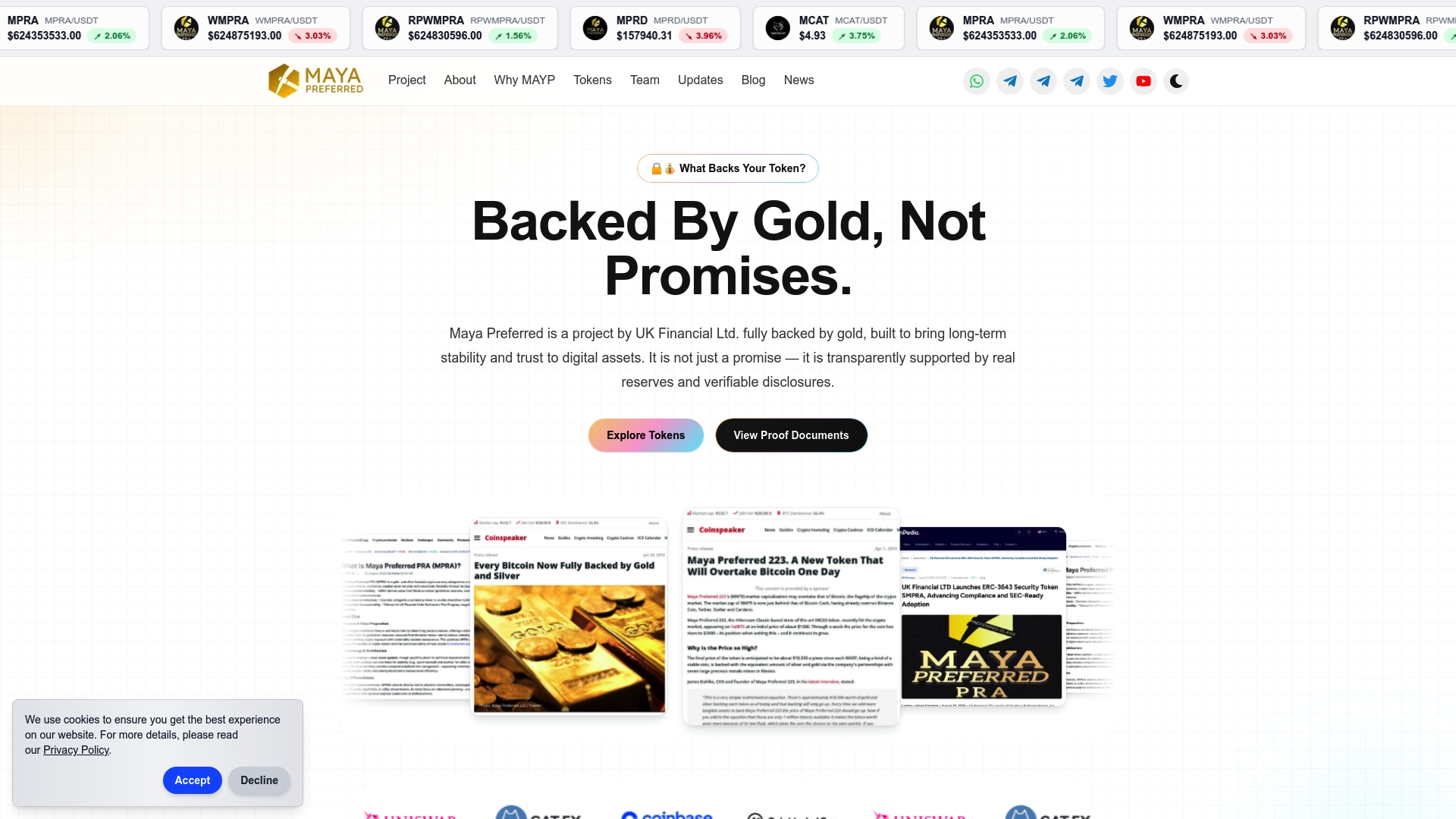
Don’t leave your investments vulnerable to uncertainty or fraud. Explore how Maya Preferred bridges traditional precious metals investment with modern blockchain security by visiting our official site. Access up-to-date proof of reserves, regulatory compliance information, and discover how to start trading asset-backed digital tokens with confidence. Take control now and secure your financial future by learning more at Maya Preferred and see how our transparent approach can elevate your digital asset strategy.
Frequently Asked Questions
How can I assess the reputation of a digital asset platform?
To assess the reputation of a digital asset platform, research its regulatory status and compliance with financial authorities. Validate that the platform has licenses and positive reviews from credible sources, and check community forums for user experiences to gain insights into its trustworthiness.
What steps should I take to enable multi-factor authentication?
To enable multi-factor authentication, log in to your account settings on the digital asset platform and locate security options. Select the multi-factor authentication method that best fits your needs, such as a time-based one-time password, and follow setup instructions to add this layer of security to your account.
What are the benefits of using a hardware wallet for storing digital assets?
Using a hardware wallet provides secure storage by isolating your private keys from online threats. This physical device protects your assets from malware and other cyber threats, so consider transferring your significant holdings, like gold-backed tokens, to a hardware wallet for added security.
How often should I review my private key storage strategy?
Review your private key storage strategy at least annually or whenever significant changes occur in your portfolio. Regular assessments help ensure that your security measures remain effective and can adapt to new technologies and threats, allowing you to maintain control over your assets.
Why is verifying real asset backing important for digital tokens?
Verifying real asset backing is crucial because it confirms that the tokens you hold are indeed backed by the claimed physical assets, reducing the risk of fraud. Always request and review third-party audits to ensure transparency and maintain confidence in your investments.
What steps can I take to stay informed about phishing scams?
Stay informed about phishing scams by regularly reading updates from reputable sources and following security best practices. Implement a verification ritual for unexpected messages, which involves checking the sender details and contacting them directly to confirm legitimacy before taking any action.