
Defining Real-World Asset Tokens: Bridging Digital and Tangible Value

Over 40 percent of American investors are now exploring ways to own a slice of assets they could not touch before. This surge in interest comes as tokenized real-world assets transform how people buy and trade everything from real estate to fine art. Discover how digital tokens are reshaping traditional finance, unlocking access, and allowing everyday American investors to participate in markets once dominated by institutions.
Table of Contents
- What Are Real-World Asset Tokens?
- Types of Asset-Backed Token Models
- How Asset Tokens Derive Tangible Value
- Legal Frameworks and Compliance Standards
- Risks, Costs, and Investor Protections
Key Takeaways
| Point | Details |
|---|---|
| Real-World Asset Tokens Revolutionize Investment | RWA tokens transform tangible assets into digital representations, enhancing accessibility and reducing barriers to investment. |
| Diverse Asset-Backed Models | Various token models, like fully collateralized tokens and two-tier architecture, provide flexible ownership options for investors. |
| Compliance is Crucial | Navigating regulatory frameworks is essential for successful asset tokenization, requiring legal expertise to mitigate risks. |
| Understand the Risks | Investors should recognize challenges such as liquidity bottlenecks and regulatory uncertainty, employing due diligence and risk management strategies. |
What Are Real-World Asset Tokens?
Real-World Asset (RWA) tokens represent a groundbreaking financial innovation that transforms tangible and intangible assets into digital representations secured on blockchain technology. These digital tokens create a powerful bridge between traditional financial systems and emerging decentralized finance platforms, enabling investors to own fractional shares of complex assets with unprecedented accessibility.
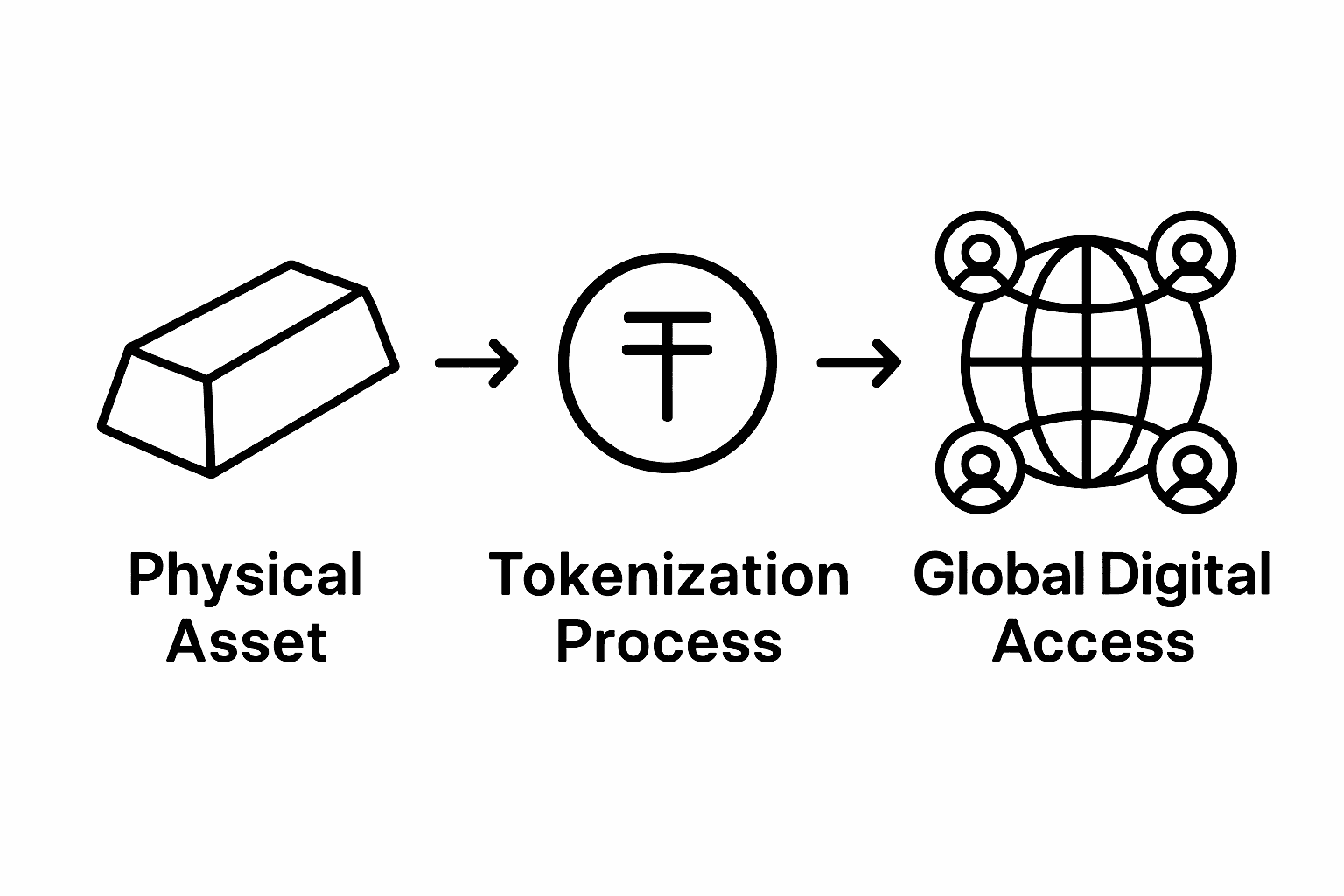
Through a process called tokenization, physical assets like real estate, precious metals, artwork, and financial instruments can be converted into blockchain-based digital tokens. Digital representations of tangible assets allow investors to purchase, trade, and manage ownership stakes that were previously difficult to subdivide or transfer. This technological breakthrough democratizes investment opportunities by reducing traditional barriers like high entry costs, complex paperwork, and geographic limitations.
RWA tokens offer multiple advantages for investors and asset owners. They provide enhanced liquidity, enable global trading, reduce transaction costs, and create transparent ownership records through blockchain’s immutable ledger system. Investors can now own fractional shares of high-value assets like commercial real estate, fine art, or gold reserves without requiring massive upfront capital or navigating complex traditional investment processes.
Pro Investor Tip: Always verify the underlying asset’s authenticity, legal documentation, and blockchain token mechanism before investing in any Real-World Asset token to ensure transparency and minimize potential risks.
As blockchain technology continues evolving, Real-World Asset tokens represent a significant leap toward more accessible, transparent, and flexible investment ecosystems that connect traditional tangible assets with cutting-edge digital financial technologies.
Types of Asset-Backed Token Models
Asset-backed tokens represent a sophisticated financial innovation that transforms traditional investment frameworks by creating digital representations of real-world assets. These tokens enable investors to engage with complex financial instruments through flexible, technologically advanced ownership models that break down traditional investment barriers.
Digital tokens whose value is directly tied to underlying assets can be structured through several innovative models. The first primary model involves fully collateralized tokens, where each digital token represents a precise, verifiable fraction of a tangible asset like gold, real estate, or commodities. These tokens provide investors with transparent, auditable ownership stakes that can be traded globally with minimal friction.
A more advanced tokenization approach introduces a two-tier architecture comprising Element Tokens and Everything Tokens, which allows for unprecedented granularity in asset ownership. Element Tokens represent standardized, discrete components of an asset (such as specific rights, outputs, or credits), while Everything Tokens encapsulate the entire asset as a comprehensive, fixed combination of those elements. This model enables investors to choose between partial, fine-grained ownership or integrated whole-asset investment strategies.
The diversity of asset-backed token models demonstrates the flexibility of blockchain technology in reimagining traditional financial structures. By converting physical assets into digital tokens, these models create more accessible, liquid, and transparent investment opportunities across multiple asset classes.
Pro Investment Strategy: Carefully analyze the tokenization mechanism, underlying asset quality, and conversion protocols before investing in any asset-backed token to ensure you understand the precise ownership structure and potential risks.
Here’s a comparison of key asset-backed token models and their unique characteristics:
| Token Model | Ownership Structure | Flexibility for Investors | Example Assets |
|---|---|---|---|
| Fully Collateralized | 1-to-1, direct stake in asset | Transparent, tradable, simple | Gold, real estate |
| Two-Tier Architecture | Discrete rights via Element Tokens; full ownership via Everything Tokens | Choose components or entire asset | Renewable credits, complex property |
| Synthetic Backed | Value tied to proxies or baskets | Allows innovative combinations | Commodity indices |
How Asset Tokens Derive Tangible Value
Asset tokenization represents a revolutionary approach to transforming physical and financial assets into digital representations that unlock unprecedented value and accessibility. By converting tangible assets into blockchain-based tokens, investors gain the ability to interact with complex financial instruments through a more flexible, transparent, and technologically advanced mechanism.

Transcribing an asset into a digital token on a blockchain enables multiple mechanisms for deriving tangible value. The primary value drivers include enhanced liquidity, fractional ownership capabilities, reduced transaction costs, and dramatically improved asset transferability. These digital tokens essentially democratize investment by allowing smaller investors to participate in high-value asset classes that were previously accessible only to wealthy institutional investors.
However, the tokenization process is not without challenges. Real-world asset tokens face significant liquidity bottlenecks, with many tokens experiencing low trading volumes and limited investor participation. The true tangible value emerges when tokens can successfully bridge the gap between traditional asset ownership and digital financial infrastructure, creating a seamless ecosystem that provides verifiable ownership, transparent transaction records, and programmable financial interactions.
The value derivation of asset tokens extends beyond mere digital representation. By converting physical assets into blockchain-based tokens, investors gain unprecedented advantages such as 24/7 global trading, instantaneous settlement, reduced intermediary costs, and enhanced security through cryptographic verification. These tokens transform static assets into dynamic, tradable financial instruments that can be bought, sold, or fractionalized with unprecedented ease.
Pro Investment Insight: Always conduct comprehensive due diligence on the underlying asset’s quality, the token’s legal framework, and the blockchain platform’s reliability before making any investment decisions in asset-backed tokens.
Legal Frameworks and Compliance Standards
Regulatory compliance forms the critical foundation for asset tokenization, ensuring that digital financial innovations operate within established legal boundaries. The emerging landscape of blockchain-based assets requires sophisticated legal frameworks that balance technological innovation with investor protection and financial system stability.
In the United States, the tokenization of real-world assets is determined by the underlying asset’s fundamental nature, not the blockchain technology used for representation. If a tokenized asset meets the definition of a security, it falls under the jurisdiction of the U.S. Securities and Exchange Commission (SEC) and becomes subject to comprehensive federal securities laws. This approach ensures that digital tokens are evaluated based on their economic substance rather than their technological implementation.
Global regulatory bodies are developing comprehensive frameworks to address the integration of digital assets into national financial systems. Landmark legislation like the European Union’s Markets in Crypto-assets Regulation (MiCA), the United States’ GENIUS Act, and Hong Kong’s Stablecoins Bill demonstrate a coordinated international effort to create standardized oversight mechanisms. These regulatory frameworks aim to provide clear guidelines for tokenization, addressing critical concerns such as investor protection, anti-money laundering protocols, and financial system stability.
The complexity of asset tokenization compliance requires investors and issuers to navigate intricate legal landscapes. Factors such as token classification, jurisdictional requirements, reporting obligations, and investor accreditation create a multifaceted regulatory environment that demands rigorous due diligence and expert legal consultation.
Pro Legal Strategy: Consult specialized blockchain legal experts who understand both traditional securities law and emerging digital asset regulations to ensure complete compliance and mitigate potential regulatory risks in asset tokenization projects.
Risks, Costs, and Investor Protections
Asset tokenization presents a complex financial landscape where promising opportunities coexist with significant potential risks. Investors must develop a nuanced understanding of the intricate challenges that accompany these innovative digital investment mechanisms.
Real-world asset tokens consistently face critical liquidity bottlenecks that can significantly impact investor outcomes. These challenges manifest through multiple dimensions, including extremely low trading volumes, extended holding periods, and limited investor participation. Structural barriers compound these difficulties, creating obstacles such as regulatory gating, concentrated custodial control, complex whitelisting processes, valuation opacity, and the current scarcity of decentralized trading venues.
Asset tokenization confronts substantial implementation challenges that extend beyond simple technological considerations. Investors must navigate a landscape marked by regulatory uncertainty, complex technology integration issues, and significant adoption hurdles. The absence of global standardization for tokenized assets creates additional complexity, requiring sophisticated infrastructure including secure oracles and robust technological frameworks. Traditional financial institutions often demonstrate cultural resistance and limited understanding, further complicating widespread acceptance.
Investor protection in the asset tokenization ecosystem demands a multi-layered approach. Key protective strategies include comprehensive due diligence, understanding underlying asset fundamentals, evaluating technological infrastructure, assessing regulatory compliance, and maintaining a diversified investment portfolio. Sophisticated investors recognize that while tokenization offers unprecedented access to previously illiquid assets, it simultaneously requires heightened risk management protocols.
Below is a summary of primary risks and protections in asset tokenization:
| Challenge | Impact on Investors | Potential Protections |
|---|---|---|
| Liquidity Bottlenecks | Difficult to buy or sell quickly | Invest in widely adopted tokens |
| Regulatory Uncertainty | Compliance issues, legal exposure | Consult experienced legal counsel |
| Technology Integration | Security, operational failures | Select robust, proven platforms |
| Valuation Opacity | Hard to determine fair value | Use reputable third-party audits |
Pro Risk Management Tip: Allocate no more than 5-10% of your total investment portfolio to experimental asset tokens, and consistently monitor regulatory developments, technological advancements, and market liquidity to make informed, dynamic investment decisions.
Unlock True Transparency and Tangible Value with Maya Preferred
The challenge of bridging digital tokens with real-world assets is at the heart of today’s investment landscape. This article clearly shows how liquidity bottlenecks, regulatory uncertainty, and valuation opacity make it hard for investors to trust and engage confidently with Real-World Asset tokens. At Maya Preferred, we address these exact concerns by backing our blockchain tokens—MPRA, MPRD, and MCAT—directly with gold and silver reserves, accompanied by thorough audits and legal disclosures. Our commitment to transparency provides peace of mind for investors seeking fractional ownership in precious metals without the confusion or risk typically associated with asset tokenization.
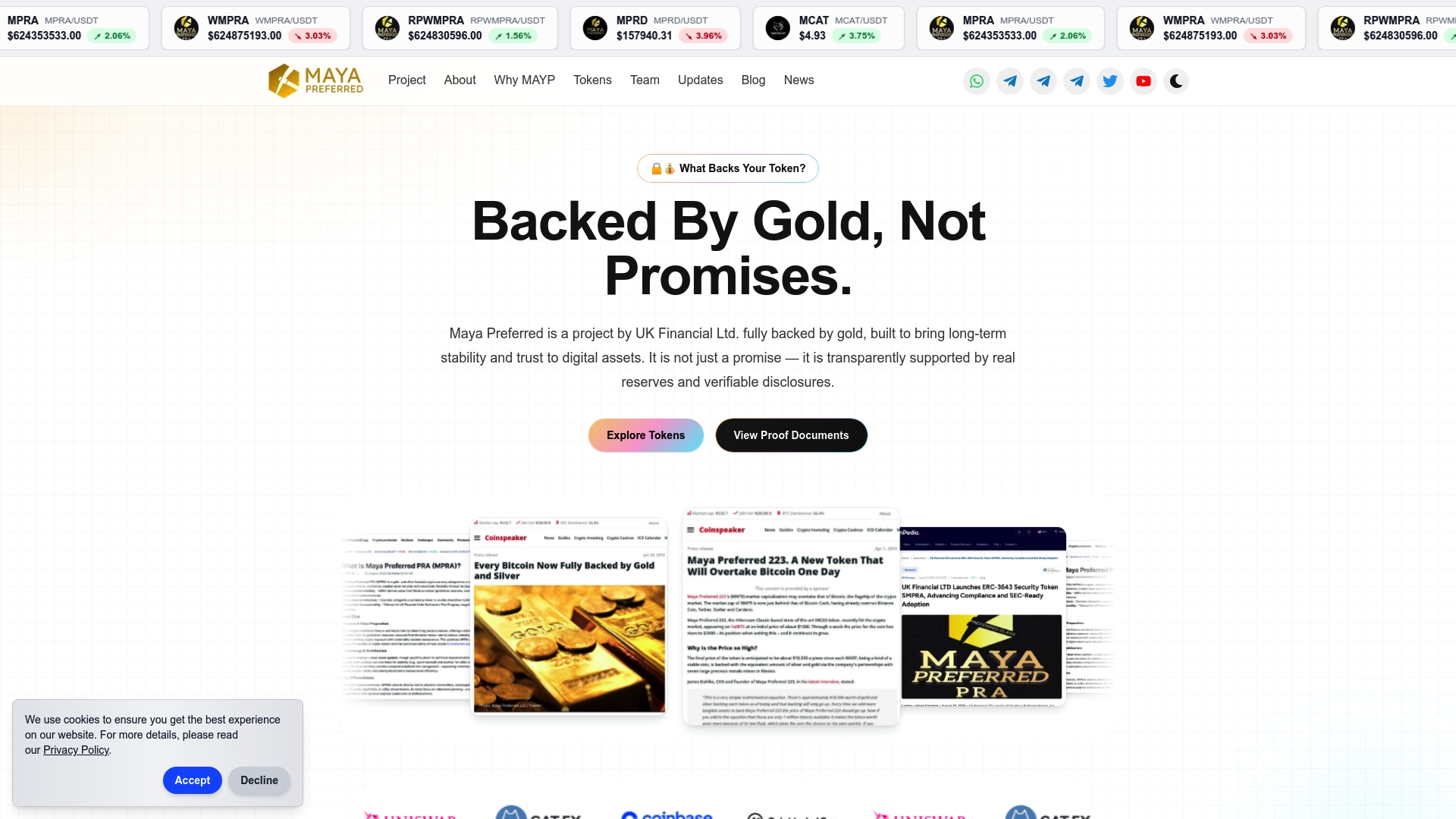
Explore how our digital assets create a seamless connection between immutable blockchain proof and verified tangible reserves by visiting Maya Preferred. Discover detailed documentation on our mining projects, reserve audits, and regulatory compliance to help you invest smarter in asset-backed cryptocurrencies. Start building your portfolio with confidence today by visiting our main platform and learn why thousands trust Maya Preferred as a pioneering link between traditional precious metals and modern tokenized investment solutions.
Frequently Asked Questions
What are real-world asset tokens?
Real-world asset tokens are digital representations of tangible or intangible assets secured on blockchain technology. They allow investors to own fractional shares of various assets like real estate, art, and gold, making these investments more accessible.
How does the process of tokenization work?
Tokenization involves converting physical assets into blockchain-based digital tokens. This allows for fractional ownership, easier transferability, and increased liquidity, enabling broader participation in investments that were traditionally difficult to access.
What are the benefits of investing in asset-backed tokens?
Investing in asset-backed tokens offers benefits such as enhanced liquidity, lower transaction costs, transparent ownership records, and the ability to trade globally without significant entry barriers, making it easier for smaller investors to participate in high-value assets.
What are the risks associated with real-world asset tokens?
The risks include liquidity bottlenecks, regulatory uncertainty, potential security issues with technology, and valuation opacity. Investors should conduct thorough research and due diligence before investing in these tokens.