
How Crypto Bridges Precious Metals for Investors

Sudden market shifts force even experienced investors to reconsider how they protect their wealth. The search for stability is driving interest in the powerful blend of precious metal tokenization and blockchain. By combining the permanence of gold or silver with the transparent digital infrastructure outlined by the Bank for International Settlements, these asset-backed cryptocurrencies offer a pathway to global trading with real-time verification. Discover how this technology is reshaping access, security, and flexibility for investors who demand control in unpredictable times.
Table of Contents
- Defining Crypto-Metal Bridges And Core Concepts
- Tokenized Precious Metals: Types And Functions
- How Asset-Backed Tokens Ensure Transparency
- Trading, Storage, And Yield Opportunities
- Legal, Tax, And Security Considerations
- Risks, Platform Selection, And Common Pitfalls
Key Takeaways
| Point | Details |
|---|---|
| Crypto-Metal Bridges Innovate Investment | Cryptocurrency enables new investment pathways for precious metals through tokenization and blockchain technology. |
| Transparency and Security are Crucial | Blockchain technology offers real-time verification and an immutable record, enhancing transparency in asset ownership. |
| Regulatory Compliance is Essential | Investors must navigate varying global regulations and ensure compliance to protect their investments in tokenized metals. |
| Diligence in Platform Selection | Thoroughly investigate digital asset platforms to understand security protocols, operational risks, and transaction transparency before investing. |
Defining Crypto-Metal Bridges and Core Concepts
Cryptocurrency represents a revolutionary mechanism for transforming traditional asset ownership, particularly in precious metals markets. By leveraging blockchain technology, these digital instruments create innovative pathways for investors to engage with tangible assets through decentralized platforms. Interdisciplinary cryptocurrency research reveals how digital tokens can effectively link physical commodities like gold and silver to blockchain ecosystems.
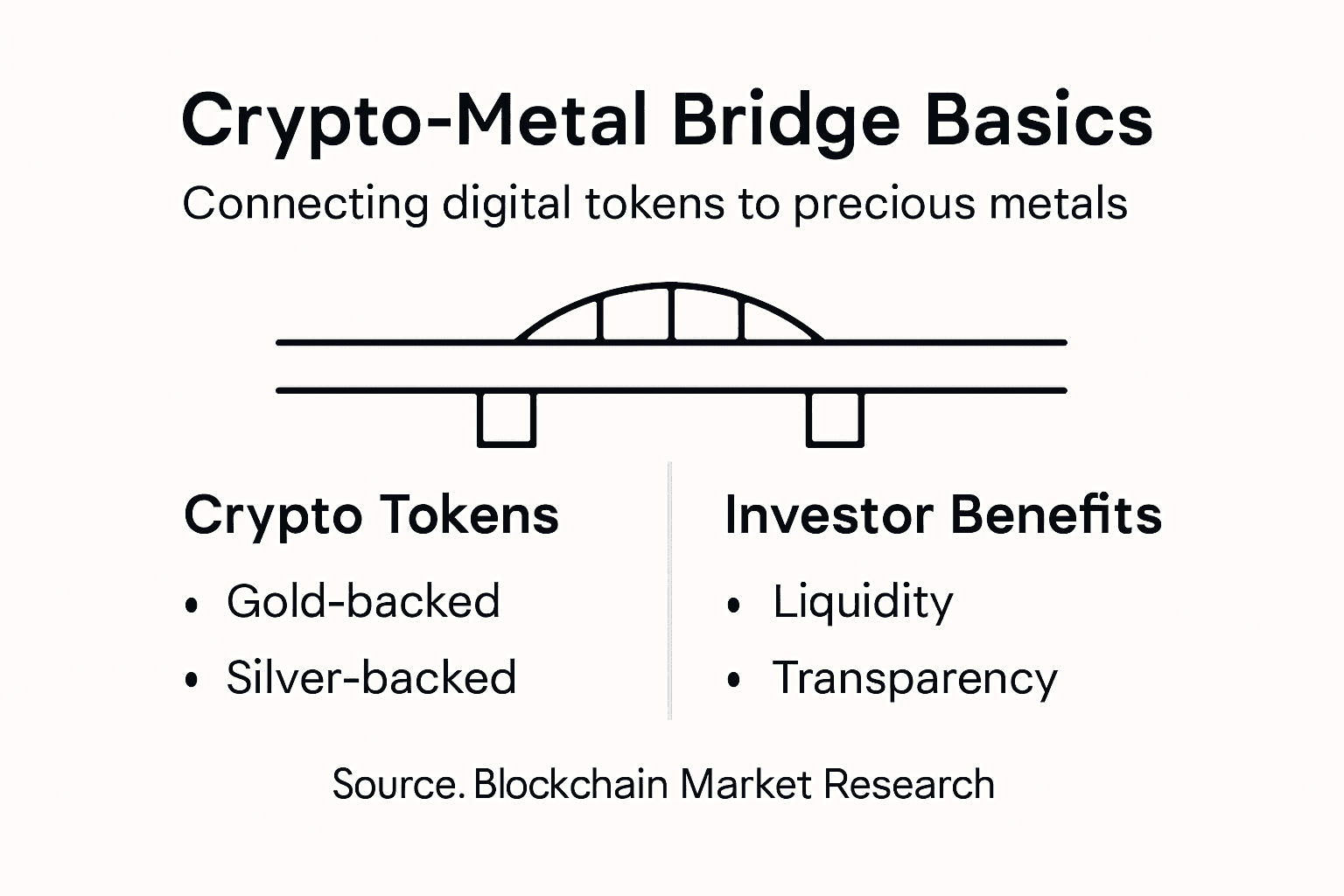
At its core, a crypto-metal bridge functions as a sophisticated financial mechanism that transforms physical precious metal holdings into tradable digital assets. This process involves several critical components:
- Tokenization: Converting physical metal ownership rights into blockchain-based digital tokens
- Fractional Ownership: Enabling investors to purchase smaller portions of precious metal assets
- Transparent Tracking: Providing real-time verification of underlying metal reserves
- Global Accessibility: Removing traditional geographic and institutional investment barriers
Blockchain technology serves as the foundational infrastructure enabling these crypto-metal bridges. International financial research demonstrates how blockchain provides enhanced transparency, reduces transaction costs, and creates new liquidity channels for traditionally illiquid assets like physical metals.
The emerging crypto-metal ecosystem fundamentally reimagines asset ownership by introducing unprecedented levels of accessibility and flexibility. Investors can now seamlessly trade fractional metal holdings, track asset provenance, and participate in global markets with minimal friction. This technological innovation transforms precious metals from static, location-bound assets into dynamic, globally tradable digital instruments.
Pro tip: Always verify the physical metal backing, auditing processes, and regulatory compliance before investing in any crypto-metal token to ensure asset authenticity and investment security.
Tokenized Precious Metals: Types and Functions
Tokenized precious metals represent a sophisticated financial innovation that transforms traditional commodity investments through blockchain technology. Precious metal tokenization enables investors to participate in metal markets with unprecedented flexibility and accessibility, breaking down historical barriers to entry.
The primary types of precious metal tokens include:
- Full Asset-Backed Tokens: 100% backed by physical metal reserves, providing direct ownership representation
- Fractional Ownership Tokens: Allowing investors to purchase smaller portions of high-value metal assets
- Commodity-Linked Digital Securities: Representing indirect exposure to metal price movements
- Hybrid Tokens: Combining physical metal backing with additional financial derivatives
Smart contract technology plays a crucial role in these tokenization processes, enabling automatic verification, transparent tracking, and seamless transaction execution. These digital instruments fundamentally revolutionize how investors interact with precious metal assets by introducing several key functional advantages:
- Instantaneous global trading
- Reduced transaction costs
- Enhanced liquidity
- Real-time asset provenance verification
- Elimination of traditional storage and transportation challenges
The tokenization ecosystem provides investors with unprecedented opportunities to diversify their portfolios, access previously restricted markets, and engage with precious metals through flexible, technologically advanced financial instruments.
Here’s how the main types of tokenized precious metals compare:
| Token Type | Asset Backing | Investor Control Level | Typical Use Case |
|---|---|---|---|
| Full Asset-Backed Token | 100% physical metal | Direct, high | Long-term ownership |
| Fractional Ownership Token | Portion of metal assets | Shared, moderate | Portfolio diversification |
| Commodity-Linked Security | Price exposure only | Indirect, low | Speculation or hedging |
| Hybrid Token | Metal + derivatives | Variable, depends on terms | Income and risk management |
Pro tip: Thoroughly investigate the physical metal backing, regulatory compliance, and auditing processes of any precious metal token before making an investment decision.
How Asset-Backed Tokens Ensure Transparency
Blockchain technology fundamentally transforms asset transparency by creating an immutable, verifiable record of ownership and transactions. Asset tokenization mechanisms provide investors with unprecedented visibility into the underlying physical assets, dramatically reducing information asymmetry and potential fraud risks.
The key transparency mechanisms in asset-backed tokens include:
- Permanent Transaction Logging: Every transaction is permanently recorded and cannot be altered
- Real-Time Auditing: Instant verification of asset ownership and movement
- Decentralized Verification: Multiple independent nodes confirm transaction legitimacy
- Smart Contract Automation: Transparent execution of predefined ownership rules
Public blockchain transparency enables investors to trace the complete history of their asset-backed tokens, from initial issuance through every subsequent transfer. This level of detailed tracking represents a quantum leap in financial transparency, allowing unprecedented insight into asset provenance and ownership.
The technical infrastructure supporting these tokens creates multiple layers of verification:
- Physical Asset Confirmation
- Digital Token Issuance Tracking
- Blockchain Transaction Validation
- Ongoing Compliance Monitoring
- Cryptographic Security Protocols
By eliminating intermediaries and providing real-time, tamper-proof records, asset-backed tokens represent a revolutionary approach to financial transparency that empowers investors with comprehensive, instantaneous information about their investments.
Pro tip: Always verify the blockchain explorer and smart contract address to conduct independent verification of any asset-backed token’s transparency claims.
Trading, Storage, and Yield Opportunities
Blockchain-enabled technologies are revolutionizing how investors interact with precious metal assets, creating sophisticated trading, storage, and yield generation mechanisms. Precious metals trading technologies have evolved dramatically, offering unprecedented flexibility and accessibility for global investors seeking alternative investment strategies.
Key trading and storage opportunities in the tokenized precious metals ecosystem include:
- 24/7 Global Trading: Instant transactions across international markets
- Fractional Ownership: Ability to purchase smaller metal asset portions
- Secure Digital Storage: Blockchain-verified physical metal reserves
- Decentralized Yield Mechanisms: Advanced financial instruments for generating returns
Global trading infrastructure now supports multiple innovative approaches to metal asset management. Investors can now leverage sophisticated strategies that were previously unavailable in traditional precious metals markets:
- Direct Token Trading
- Collateralized Lending
- Yield Farming
- Smart Contract-Enabled Derivatives
- Automated Rebalancing Strategies
The convergence of blockchain technology and precious metals markets creates a dynamic ecosystem where investors can seamlessly convert between physical and digital asset representations, optimize storage costs, and generate additional returns through advanced financial instruments.

Pro tip: Always diversify your metal token investments across multiple platforms and verify the physical asset backing before committing capital.
Legal, Tax, and Security Considerations
Regulatory compliance represents a critical dimension of tokenized precious metal investments, requiring sophisticated understanding of complex global frameworks. Cryptocurrency taxation challenges highlight the intricate legal landscape investors must navigate when engaging with digital asset platforms.
Key legal and security considerations for investors include:
- Jurisdictional Variations: Different countries impose unique regulatory requirements
- Tax Reporting Obligations: Mandatory declarations of digital asset transactions
- Custody Regulations: Strict standards for securing digital and physical assets
- Investor Protection Mechanisms: Frameworks designed to mitigate potential risks
Global regulatory frameworks reveal multiple critical compliance dimensions that investors must carefully evaluate:
- Cross-Border Transaction Legality
- Anti-Money Laundering Verification
- Know Your Customer (KYC) Requirements
- Capital Gains Tax Implications
- Securities Law Compliance
The intersection of blockchain technology and precious metals creates a complex regulatory environment where technological innovation constantly challenges existing legal structures. Sophisticated investors must remain vigilant, understanding that regulatory landscapes are dynamic and subject to rapid transformation.
The following table summarizes key legal and security considerations for tokenized metals investors:
| Consideration | Why It Matters | Example Challenge |
|---|---|---|
| Jurisdiction | Regulatory compliance varies | Differing KYC/AML rules |
| Tax Reporting | Prevents legal complications | Capital gains tax obligations |
| Custody | Ensures asset safety | Digital wallet security risks |
| Investor Protection | Safeguards against fraud | Insufficient insurance coverage |
Pro tip: Consult with international tax specialists and legal professionals who specialize in digital asset regulations before making substantial tokenized precious metal investments.
Risks, Platform Selection, and Common Pitfalls
Investment risks in tokenized precious metals demand meticulous evaluation and strategic planning. Crypto ecosystem risks reveal complex challenges that sophisticated investors must carefully navigate to protect their financial interests.
Critical risk areas investors should thoroughly examine include:
- Technological Vulnerabilities: Potential blockchain infrastructure weaknesses
- Market Volatility: Significant price fluctuations in digital assets
- Regulatory Uncertainty: Evolving legal frameworks across jurisdictions
- Custody Security: Potential digital wallet and asset protection challenges
Digital asset provider selection requires comprehensive due diligence across multiple dimensions:
- Operational Risk Assessment
- Platform Security Protocols
- Regulatory Compliance History
- Asset Custody Mechanisms
- Transaction Transparency
Successful investors recognize that risk management in tokenized precious metals involves continuous monitoring, adaptive strategies, and deep understanding of technological and financial ecosystems. Proactive risk mitigation requires ongoing education, diversification, and strategic platform selection.
Pro tip: Conduct thorough background investigations on platforms, verify independent security audits, and allocate investments across multiple verified providers to minimize potential risks.
Unlock the Future of Precious Metals Investment with Maya Preferred
The article highlights challenges like transparency, secure asset backing, and seamless trading in crypto-metal bridges. Investors want clear proof of physical gold and silver reserves, audited documentation, and trustworthy blockchain tokens that enable fractional ownership and global access. If you seek a solution built on these exact principles, Maya Preferred delivers real-world asset backing through tokens like MPRA, MPRD, and MCAT. These tokens provide tangible ownership linked to precious metals and mining projects, addressing transparency and security concerns with detailed proof documents and legal disclosures.
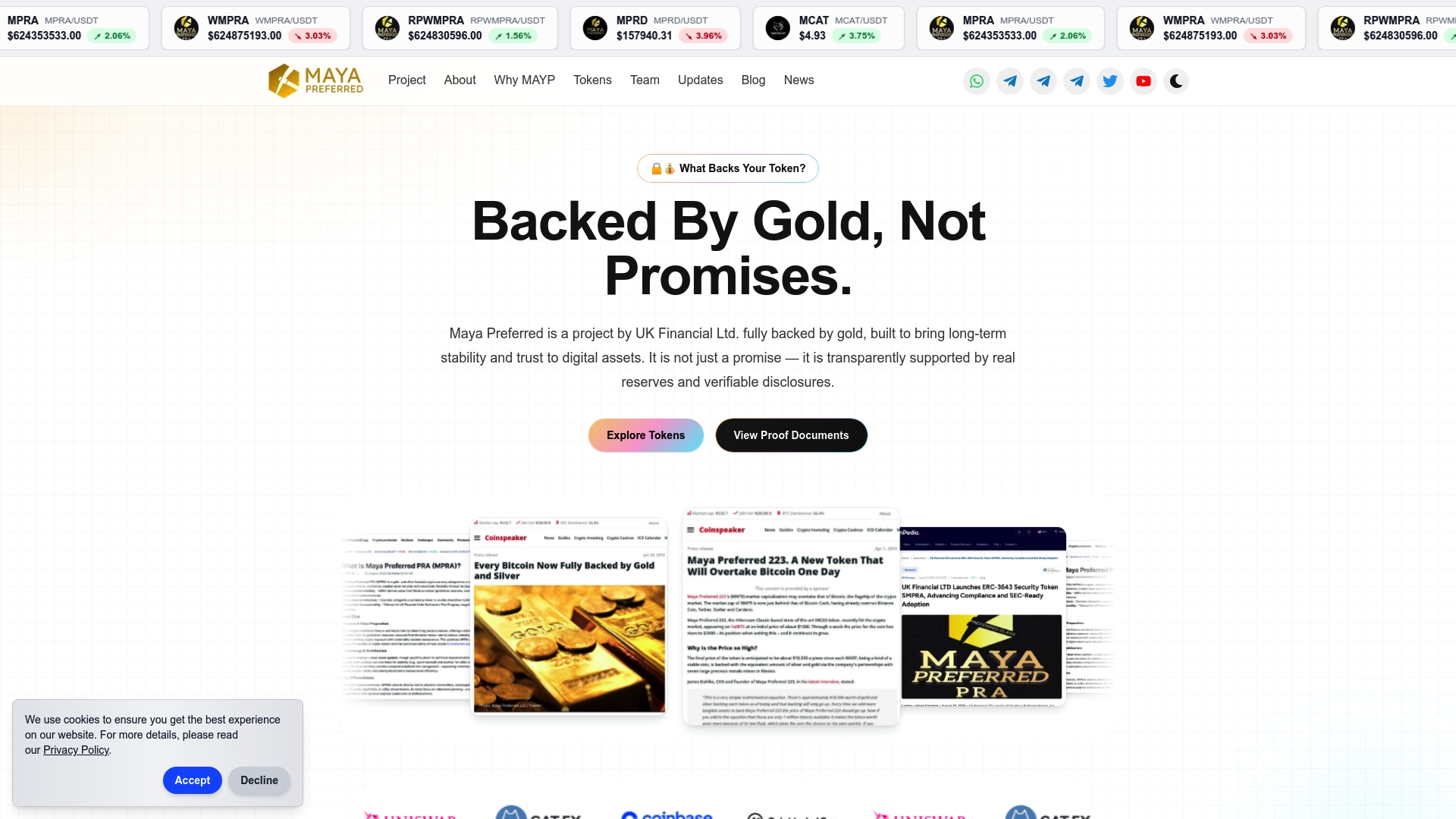
Discover how Maya Preferred bridges traditional precious metal investments with innovative blockchain technology. Visit Maya Preferred to explore transparent digital assets backed by verified reserves. Take control of your portfolio now by trading secure, fully-backed tokens and join a community dedicated to trust and long-term stability. Start building confidence in your investments today at Maya Preferred.
Frequently Asked Questions
What is a crypto-metal bridge?
A crypto-metal bridge is a financial mechanism that converts physical precious metal holdings into tradable digital assets using blockchain technology, enhancing accessibility and flexibility for investors.
How does tokenization work in precious metals?
Tokenization involves converting physical metal ownership rights into blockchain-based digital tokens, allowing for fractional ownership and enabling investors to trade smaller portions of precious metal assets.
What are the types of tokenized precious metals?
The main types of tokenized precious metals include full asset-backed tokens, fractional ownership tokens, commodity-linked digital securities, and hybrid tokens, each serving different investment purposes and levels of ownership control.
What are the legal considerations for investing in tokenized precious metals?
Investors must be aware of jurisdictional variations, tax reporting obligations, custody regulations, and investor protection mechanisms to ensure compliance and security when investing in tokenized precious metals.