
Asset-Backed Tokens: Real-World Value on Blockchain

Most American investors are surprised to learn that over eighty percent of digital assets are not actually backed by real-world value. Misunderstandings about asset-backed tokens can lead to costly mistakes, especially as more people blend traditional investments with digital opportunities. Gaining a clear understanding of what sets these tokens apart eliminates confusion, helps build real portfolio stability, and allows investors to make more confident choices in the fast-moving blockchain market.
Table of Contents
- Defining Asset-Backed Tokens And Misconceptions
- Types Of Assets Used For Token Backing
- How Asset-Backed Tokens Derive Value
- Regulatory Compliance And Transparency Standards
- Risks, Investor Rights, And Key Considerations
Key Takeaways
| Point | Details |
|---|---|
| Asset-Backed Tokens vs. Cryptocurrencies | Asset-backed tokens are linked to tangible assets, offering stability, unlike volatile cryptocurrencies. |
| Diverse Asset Classes | These tokens can represent both physical and intangible assets, expanding investment opportunities. |
| Regulatory Compliance | Investors should ensure that asset-backed tokens comply with regulations and provide transparency regarding their underlying assets. |
| Risk Assessment | Conduct thorough research and understand the risks associated with asset-backed tokens, including market volatility and technological vulnerabilities. |
Defining Asset-Backed Tokens and Misconceptions
Digital assets have transformed traditional investment paradigms, and asset-backed tokens represent a revolutionary approach to connecting tangible value with blockchain technology. Asset-backed tokens are digital representations that derive their intrinsic worth from physical assets like precious metals, real estate, or natural resources, providing investors with a unique bridge between traditional and digital investment mechanisms.
At their core, these tokens fundamentally differ from standard cryptocurrencies by maintaining direct linkage to real-world assets. Unlike speculative digital currencies that fluctuate based on market sentiment, asset-backed tokens offer stability through their underlying physical asset reserves. Investors receive a digital certificate of ownership that represents a specific quantity of a tangible asset, such as gold, silver, or other valuable resources, creating a transparent and verifiable ownership mechanism.
Common misconceptions about asset-backed tokens often stem from incomplete understanding of their structure and value proposition. Many investors mistakenly believe these tokens are equivalent to traditional cryptocurrencies, failing to recognize the critical distinction of having genuine asset backing. Unlike unbacked digital currencies that rely purely on market speculation, asset-backed tokens provide intrinsic value through their direct connection to measurable, physical assets with established market worth.
Pro Tip for Investors: Conduct thorough due diligence by verifying the actual asset reserves and audit documentation before investing in any asset-backed token to ensure legitimate backing and transparency.
Here is a comparison of asset-backed tokens and standard cryptocurrencies:
| Category | Asset-Backed Tokens | Standard Cryptocurrencies |
|---|---|---|
| Value Source | Linked to physical/digital assets | Driven by supply and demand |
| Stability | More stable due to asset reserve | Volatile, sentiment-driven |
| Ownership Representation | Digital proof of real asset stake | Purely digital, no asset claim |
| Investor Protection | Asset reserves and audit required | No backing, speculative only |
Types of Assets Used for Token Backing
Asset-backed tokens provide a versatile mechanism for representing value across multiple asset classes, transforming traditional investment landscapes. Asset tokenization involves converting rights to physical and digital assets into blockchain-based digital representations, enabling investors to access a wide range of investment opportunities through fractional ownership and enhanced liquidity.
The spectrum of assets used for token backing is remarkably diverse, encompassing both tangible and intangible resources. Tangible asset categories include physical commodities such as precious metals like gold and silver, real estate properties, agricultural products, and natural resources like oil. These assets provide a concrete foundation of value for digital tokens, offering investors a direct connection to measurable, physical resources with established market worth.

Intangible assets represent an equally compelling category for token backing, expanding the potential of digital asset representation. Digital token types can include intellectual property rights, carbon credits, art royalties, and other non-physical assets that traditionally faced challenges in fractional ownership and liquidity. By converting these rights into blockchain-based tokens, investors gain unprecedented access to asset classes previously difficult to subdivide or trade efficiently.
Pro Tip for Asset Diversification: Carefully research the specific underlying assets and verification mechanisms when considering investment in asset-backed tokens to ensure transparent and legitimate token representation.
This table summarizes the main types of assets used for token backing and their investment implications:
| Asset Type | Examples | Key Investment Benefit |
|---|---|---|
| Physical Commodities | Gold, oil, real estate | Tangible value, market trackable |
| Agricultural Products | Wheat, coffee | Seasonal demand, diversification |
| Intangible Assets | Patents, carbon credits | New markets, higher liquidity |
How Asset-Backed Tokens Derive Value
The intrinsic value of asset-backed tokens emerges from a complex interplay of fundamental economic principles and blockchain technology, creating a unique investment instrument that bridges traditional and digital financial ecosystems. The value of an asset-backed token is dynamically tied to the price of its underlying asset, though not always in a perfectly linear relationship due to various market factors.
Multiple mechanisms contribute to the value generation of asset-backed tokens. The primary driver is the intrinsic value of the physical or digital asset being represented, which provides a foundational price floor. Factors such as the asset’s market demand, scarcity, utility, and historical performance directly influence the token’s valuation. For instance, a gold-backed token’s value will fluctuate based on global gold prices, geopolitical economic conditions, and industrial demand for the precious metal.
Beyond the underlying asset’s inherent worth, blockchain technology introduces additional value-generation mechanisms. Tokenization enables fractional ownership, increased liquidity, and reduced transaction costs, which can potentially enhance the asset’s market attractiveness. The transparency of blockchain records, combined with the ability to quickly trade and transfer ownership, creates additional value propositions that traditional asset ownership models cannot easily replicate. Market sentiment, trading volume, and the token’s specific technological infrastructure also play crucial roles in determining its overall market value.
Pro Tip for Token Valuation: Always conduct comprehensive research on the specific backing assets, verify the token’s reserve documentation, and understand the precise mechanism linking the token’s price to its underlying asset before making any investment decisions.
Regulatory Compliance and Transparency Standards
Asset-backed tokens operate within a complex regulatory landscape that demands rigorous compliance and transparency mechanisms to protect investor interests. Indirect tokenization creates sophisticated financial instruments by establishing intermediary structures that enable fractional ownership while maintaining legal and financial integrity through carefully designed regulatory frameworks.
The regulatory environment for asset-backed tokens involves multiple layers of oversight, focusing on critical aspects such as asset verification, investor protection, and financial transparency. Regulatory bodies increasingly require comprehensive documentation demonstrating the precise nature of asset backing, reserve holdings, and redemption mechanisms. Asset-referenced tokens face significant scrutiny regarding their reserve holdings and potential investor redemption rights, with regulations aimed at preventing potential misrepresentation or fraudulent token issuance.
Transparency standards for asset-backed tokens demand extensive disclosure practices that go beyond traditional financial reporting. Investors require access to real-time information about the underlying assets, including detailed audit reports, reserve valuations, and verification of asset ownership. Blockchain technology provides unique advantages in this context, enabling immutable record-keeping and providing unprecedented visibility into token backing, transaction histories, and asset movements that traditional financial systems cannot easily replicate.
Pro Tip for Investor Protection: Always request and thoroughly review the complete asset backing documentation, independent audit reports, and regulatory compliance certifications before investing in any asset-backed token to ensure maximum transparency and legal protection.
Risks, Investor Rights, and Key Considerations
Asset-backed tokens present a complex investment landscape that demands careful analysis and understanding of potential risks and investor protections. Indirect tokenization introduces significant challenges related to regulatory uncertainty and legal frameworks, requiring investors to develop a sophisticated approach to risk management and due diligence.
Investors must critically evaluate several key risk factors inherent in asset-backed token investments. Market volatility, liquidity constraints, and the potential for underlying asset value fluctuations represent primary concerns. Asset-referenced tokens may lack explicit requirements for maintaining reserves equal to their nominal value, which introduces additional uncertainty regarding the token’s stability and potential redemption. Technological risks, including blockchain infrastructure vulnerabilities and potential smart contract limitations, further compound the complex risk profile of these digital assets.
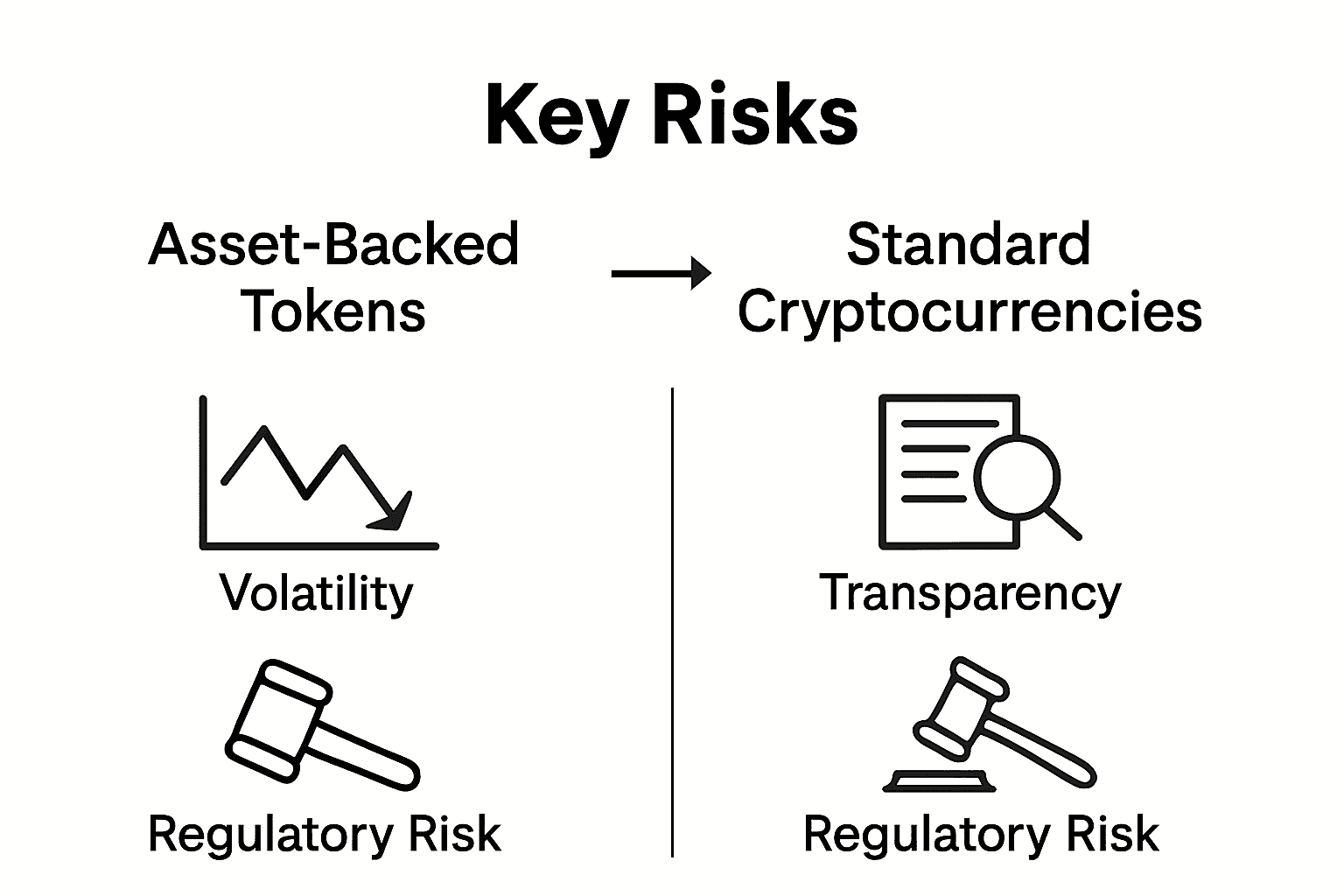
Protecting investor rights requires a multilayered approach that combines thorough research, regulatory awareness, and proactive risk management strategies. Investors should prioritize tokens with transparent reserve documentation, clear redemption mechanisms, and robust legal frameworks. Blockchain’s inherent transparency can provide additional security, but it does not eliminate the need for comprehensive due diligence. Understanding the precise relationship between the token’s value and its underlying asset, verifying the credibility of token issuers, and maintaining a diversified investment portfolio are crucial strategies for mitigating potential risks.
Pro Tip for Risk Mitigation: Develop a comprehensive risk assessment strategy that includes independent verification of asset backing, regular portfolio review, and maintaining a balanced investment approach that limits exposure to any single asset-backed token investment.
Unlock Tangible Value with Trusted Asset-Backed Tokens
Navigating the complexities of asset-backed tokens requires confidence in transparency and legitimate backing by real-world assets. The article highlights key challenges investors face such as verifying reserve documentation, understanding intrinsic value connections, and ensuring regulatory compliance. If you seek stable digital assets backed by physical commodities like gold and silver, Maya Preferred offers exactly that with robust proof documents, detailed audits, and clear disclosures that foster trust in every token issued.
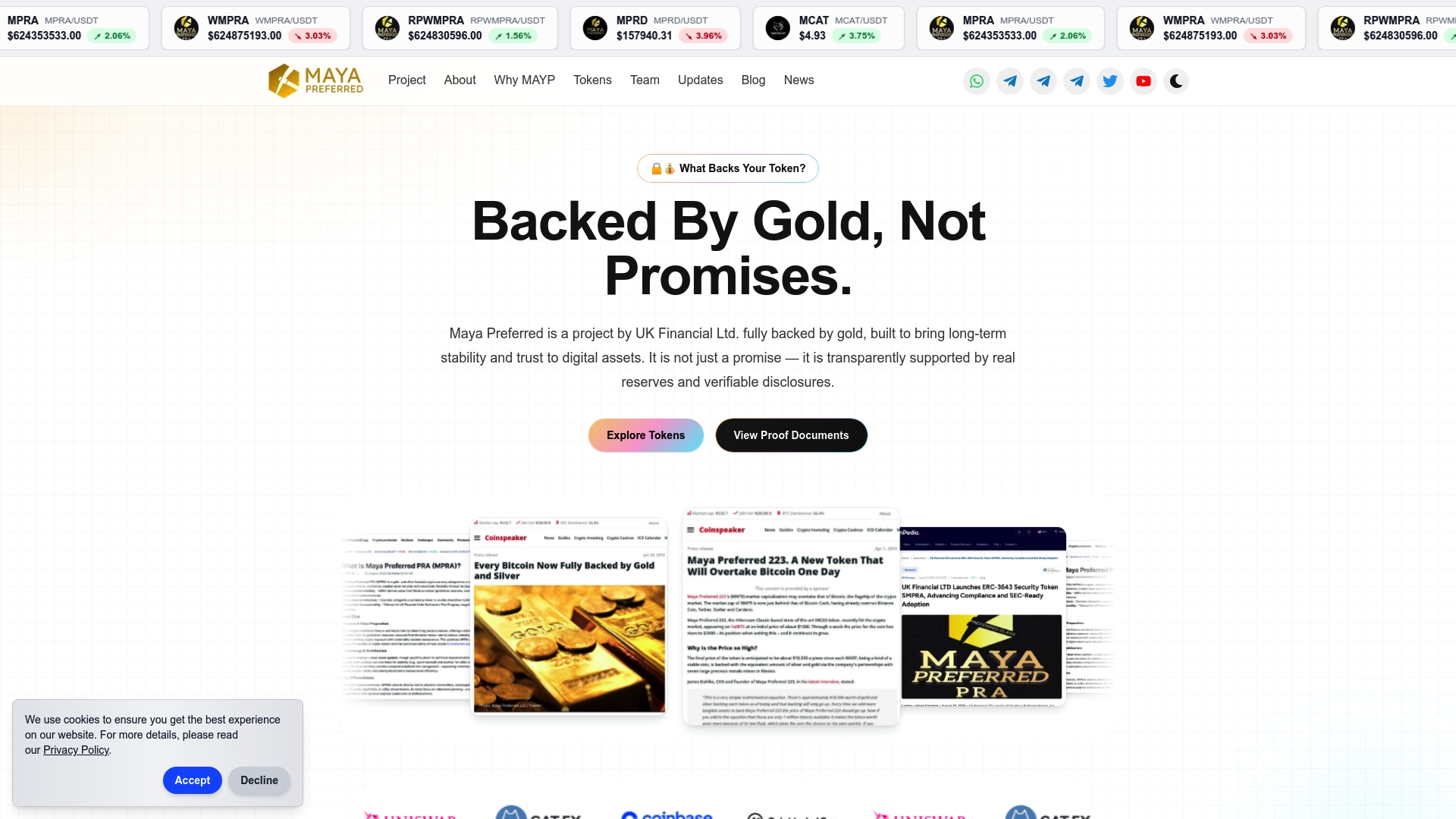
Take control of your investment journey by exploring Maya Preferred’s suite of gold and silver-backed tokens such as MPRA, MPRD, and MCAT. Experience a seamless bridge between traditional precious metals investment and innovative blockchain technology. Visit Maya Preferred now and access transparent asset reserves, mining project insights, and regulatory updates designed to empower your decisions with real-world value and long-term stability. Don’t wait to invest in digital assets where transparency and security come first.
Frequently Asked Questions
What are asset-backed tokens?
Asset-backed tokens are digital representations of ownership linked to physical assets like gold, real estate, or other commodities, providing a stable investment alternative compared to standard cryptocurrencies.
How do asset-backed tokens derive their value?
The value of asset-backed tokens is primarily determined by the intrinsic worth of the physical or digital assets they represent, influenced by market demand, asset scarcity, and blockchain technology, which facilitates fractional ownership and liquidity.
What are the risks associated with investing in asset-backed tokens?
Investing in asset-backed tokens carries risks such as market volatility, liquidity constraints, and potential fluctuations in the value of underlying assets. Thorough research and understanding of regulatory frameworks are essential for risk management.
Why is transparency important in asset-backed tokens?
Transparency is critical in asset-backed tokens as it ensures that investors have access to real-time information about the underlying assets, including audit reports and verification of ownership, thereby protecting investor interests and fostering trust.