
Asset-Backed Crypto: Stability With Real Gold & Silver

Market swings in the crypto world leave even seasoned precious metals investors searching for truly stable options. Asset-backed cryptocurrencies have emerged as a solution, using real-world asset reserves to create digital tokens that offer price stability alongside blockchain flexibility. These tokens tie their value to tangible reserves like gold or national currencies, aiming to reduce volatility and provide transparency. This article uncovers how asset-backed crypto works, what sets it apart, and the key features every informed investor should know.
Table of Contents
- Asset-Backed Crypto Explained And Debunked
- Gold- And Silver-Backed Token Types
- How Asset Reserves Ensure Price Stability
- Transparency, Audit Processes, And Compliance
- Risks, Costs, And Mistakes To Avoid
- Alternatives And Strategic Comparisons
Key Takeaways
| Point | Details |
|---|---|
| Stability through Assets | Asset-backed cryptocurrencies are designed to minimize volatility by tying digital tokens to real-world assets, offering greater price stability compared to traditional cryptocurrencies. |
| Importance of Transparency | Investors should prioritize tokens with transparent reserve documentation and regular independent audits to ensure genuine backing and reduce risks. |
| Evaluate Risks Carefully | Understand the inherent risks such as liquidity challenges and potential regulatory issues before committing to asset-backed tokens. |
| Comparative Analysis of Models | Investors should weigh the distinct characteristics and risks of asset-backed, algorithmic, and fiat-backed tokens to determine the best fit for their investment goals. |
Asset-backed crypto explained and debunked
Asset-backed cryptocurrencies represent an innovative digital financial instrument designed to address inherent volatility challenges in traditional cryptocurrency markets. These digital tokens are uniquely structured with real-world asset reserves as collateral, providing investors a more stable alternative to conventional cryptocurrencies. Comprehensive research on stablecoins reveals these instruments can be backed by various assets including gold, fiat currencies, and other commodities.
The fundamental mechanism behind asset-backed crypto involves direct linkage between digital tokens and tangible physical assets. Unlike algorithmic or non-collateralized cryptocurrencies that fluctuate dramatically, these tokens maintain value through direct connection to real-world reserves. Asset-backed tokens offer enhanced credibility by providing investors transparent mechanisms for understanding token valuation and reducing speculative risks.
Investors should recognize several critical characteristics of asset-backed cryptocurrencies:
- Direct correlation with physical asset value
- Enhanced price stability compared to traditional crypto
- Transparent reserve documentation
- Reduced market manipulation potential
- Lower volatility risk profile
Pro tip: Before investing in asset-backed cryptocurrencies, always verify the asset reserves, audit documentation, and regulatory compliance of the specific token to ensure genuine backing and minimize potential investment risks.
Gold- and silver-backed token types
Gold and silver have emerged as premier assets for backing cryptocurrencies, offering investors a unique blend of digital flexibility and tangible value preservation. Precious metal-backed stablecoins represent a niche but growing segment of the cryptocurrency market, with gold-backed tokens currently leading the way. These tokens provide a sophisticated mechanism for converting traditional precious metal investments into digital, easily transferable assets.

The mechanics of gold and silver-backed tokens involve direct representation of physical metal reserves. Scholarly research on tokenized precious metals demonstrates how blockchain technology enables precise tracking and verification of underlying asset reserves. Investors can typically redeem these tokens for actual physical gold or silver, creating a transparent and accountable investment vehicle that bridges traditional commodity markets with digital financial innovations.
Key characteristics of gold and silver-backed tokens include:
- Direct linkage to physical metal reserves
- Potential for physical asset redemption
- Enhanced transparency through blockchain verification
- Lower volatility compared to traditional cryptocurrencies
- Simplified international metal trading
Pro tip: Before investing in gold or silver-backed tokens, carefully examine the token’s reserve ratio, audit documentation, and the reputation of the issuing organization to ensure genuine asset backing and investment security.
How asset reserves ensure price stability
Asset reserves play a crucial role in maintaining cryptocurrency price stability through sophisticated mechanisms designed to minimize market volatility. Stablecoin stabilization mechanisms demonstrate how carefully managed reserves can effectively anchor digital token values, providing investors with a more predictable financial instrument. These reserves act as a financial buffer, allowing tokens to maintain consistent value even during market turbulence.
Asset reserve management strategies involve multiple approaches to ensuring price consistency. These include over-collateralization, where tokens are backed by assets valued significantly higher than the token’s total market capitalization, periodic audits to verify reserve authenticity, and maintaining diverse asset portfolios that can absorb market fluctuations. The goal is to create a robust mechanism that provides transparency and investor confidence.
Key strategies for maintaining price stability through asset reserves include:
- Maintaining reserve ratios above 100%
- Conducting regular, independent asset audits
- Diversifying underlying asset types
- Implementing automated rebalancing mechanisms
- Establishing clear redemption protocols
Pro tip: Evaluate an asset-backed token’s stability by examining its reserve documentation, audit frequency, and the quality of underlying assets before making any investment decisions.
Transparency, audit processes, and compliance
Transparency serves as the foundational cornerstone of asset-backed cryptocurrencies, establishing critical trust mechanisms between investors and digital asset providers. Regulatory landscape of stablecoins emphasizes that credible digital assets must provide comprehensive, verifiable documentation of their underlying reserves, creating a robust framework of accountability that protects investor interests and maintains market integrity.
Independent audit processes play a pivotal role in validating the authenticity of asset-backed tokens. These third-party verifications ensure that the declared reserves genuinely exist, are accurately valued, and meet regulatory standards. The audit mechanism typically involves detailed examinations of asset holdings, verification of reserve ratios, and comprehensive financial assessments that provide investors with confidence in the token’s underlying economic structure.
Key components of effective transparency and compliance include:
- Regular independent financial audits
- Publicly accessible reserve documentation
- Compliance with international anti-money laundering standards
- Real-time reporting of asset composition
- Adherence to securities and financial regulations
- Transparent redemption and verification processes
Pro tip: Always request and thoroughly review the most recent independent audit report before investing in any asset-backed cryptocurrency to confirm the legitimacy and health of its reserve holdings.
Risks, costs, and mistakes to avoid
Asset-backed cryptocurrencies, while offering enhanced stability, are not immune to significant financial risks and potential pitfalls. Comprehensive risk assessment reveals multiple complex vulnerabilities that investors must carefully evaluate before committing capital. These risks range from operational challenges to potential regulatory complications that could compromise the token’s fundamental value proposition.
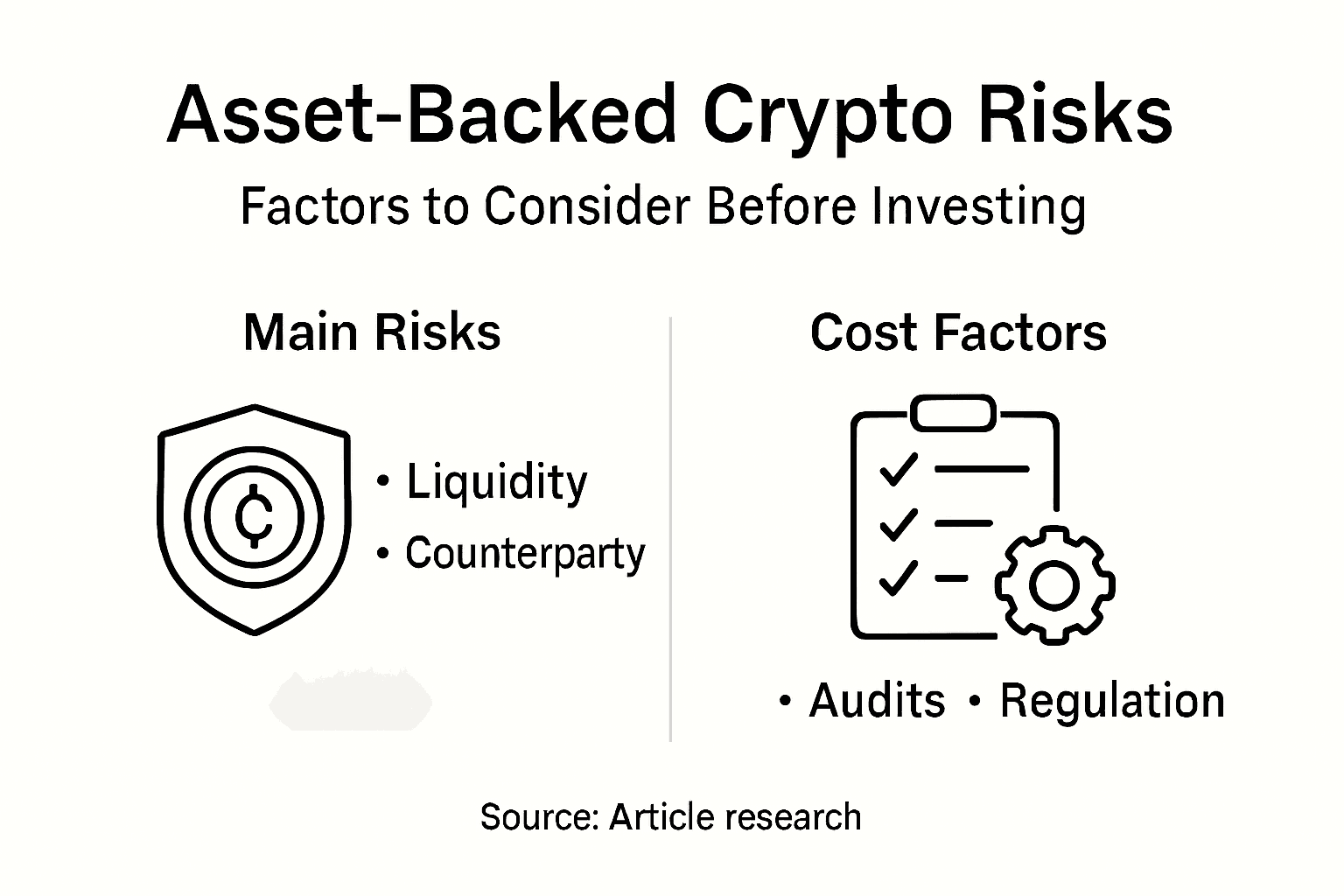
Asset-backed coin vulnerabilities encompass several critical areas of concern. Liquidity risks, counterparty exposures, and potential audit failures represent significant threats that can undermine investor confidence. The costs associated with maintaining robust reserves, conducting frequent independent audits, and ensuring continuous regulatory compliance can be substantial, potentially impacting the token’s overall economic efficiency.
Key risks and potential mistakes to avoid include:
The following table summarizes common risk factors and corresponding mitigation strategies for asset-backed cryptocurrency investors:
| Major Risk Factor | Potential Consequence | Recommended Mitigation |
|---|---|---|
| Incomplete Reserve Disclosure | Loss of trust, sudden de-pegging | Demand independent audit reports |
| Overexposure to Single Asset Class | Value drop if asset declines sharply | Diversify collateral/reserves |
| Poor Liquidity Management | Difficulty redeeming tokens | Verify issuer’s liquidity protocols |
| Regulatory Non-Compliance | Legal actions, trading suspensions | Confirm continuous regulatory check |
- Insufficient asset reserve ratios
- Lack of transparent audit documentation
- Overexposure to single asset classes
- Inadequate compliance with international financial regulations
- Failure to conduct regular third-party financial assessments
- Poor liquidity management strategies
- Incomplete risk mitigation protocols
Pro tip: Develop a rigorous due diligence checklist that systematically evaluates an asset-backed token’s reserve quality, audit history, and regulatory compliance before making any investment decisions.
Alternatives and strategic comparisons
Asset-backed cryptocurrencies represent one strategic approach in a diverse landscape of digital financial instruments. Comparative stablecoin architectures reveal multiple models, each with distinct advantages and limitations. Investors must carefully evaluate these alternatives based on specific risk tolerance, investment objectives, and desired market functionality.
Stablecoin model comparisons demonstrate three primary cryptocurrency stabilization strategies: asset-backed, algorithmic, and fiat-backed tokens. Each model offers unique trade-offs between volatility, operational complexity, and regulatory compliance. Asset-backed tokens distinguish themselves through tangible reserve connections, providing investors a more transparent and potentially less speculative investment mechanism compared to purely algorithmic alternatives.
Key strategic comparisons between stablecoin models include:
Below is a concise comparison of the main stablecoin types to help clarify their unique attributes and implications for investors:
| Category | Asset-Backed Tokens | Algorithmic Tokens | Fiat-Backed Tokens |
|---|---|---|---|
| Reserve Structure | Physical assets held in trust | No reserves, uses algorithms | Backed by fiat in bank accounts |
| Price Stability | Strong anchoring to assets | Volatility risk if demand drops | Generally stable if reserves safe |
| Scalability | Limited by asset availability | Scales quickly on demand | Tied to banking system limits |
| Primary Risk | Reserve mismanagement | Loss of peg, collapse risk | Banking or regulatory exposure |
- Asset-backed tokens
- Pros: Tangible value, lower volatility
- Cons: Higher operational costs
- Algorithmic tokens
- Pros: Scalability, decentralization
- Cons: Higher price volatility
- Fiat-backed tokens
- Pros: Quick conversion, regulatory familiarity
- Cons: Dependence on traditional financial systems
Pro tip: Evaluate stablecoin alternatives by creating a personalized decision matrix that weighs your specific investment requirements against each model’s unique risk and performance characteristics.
Bridge Stability and Trust with Maya Preferred’s Gold and Silver-Backed Tokens
Navigating the complexities of asset-backed cryptocurrencies demands clarity and verified stability. This article highlights the need for transparent reserve documentation and rigorous audits to ensure genuine backing by real-world assets like gold and silver. If you are seeking a trustworthy digital asset solution that addresses volatility while providing tangible value, Maya Preferred offers just that with its blockchain-based tokens MPRA, MPRD, and MCAT. These tokens are firmly rooted in mining projects and precious metal reserves, giving you direct exposure to gold and silver’s proven asset stability.
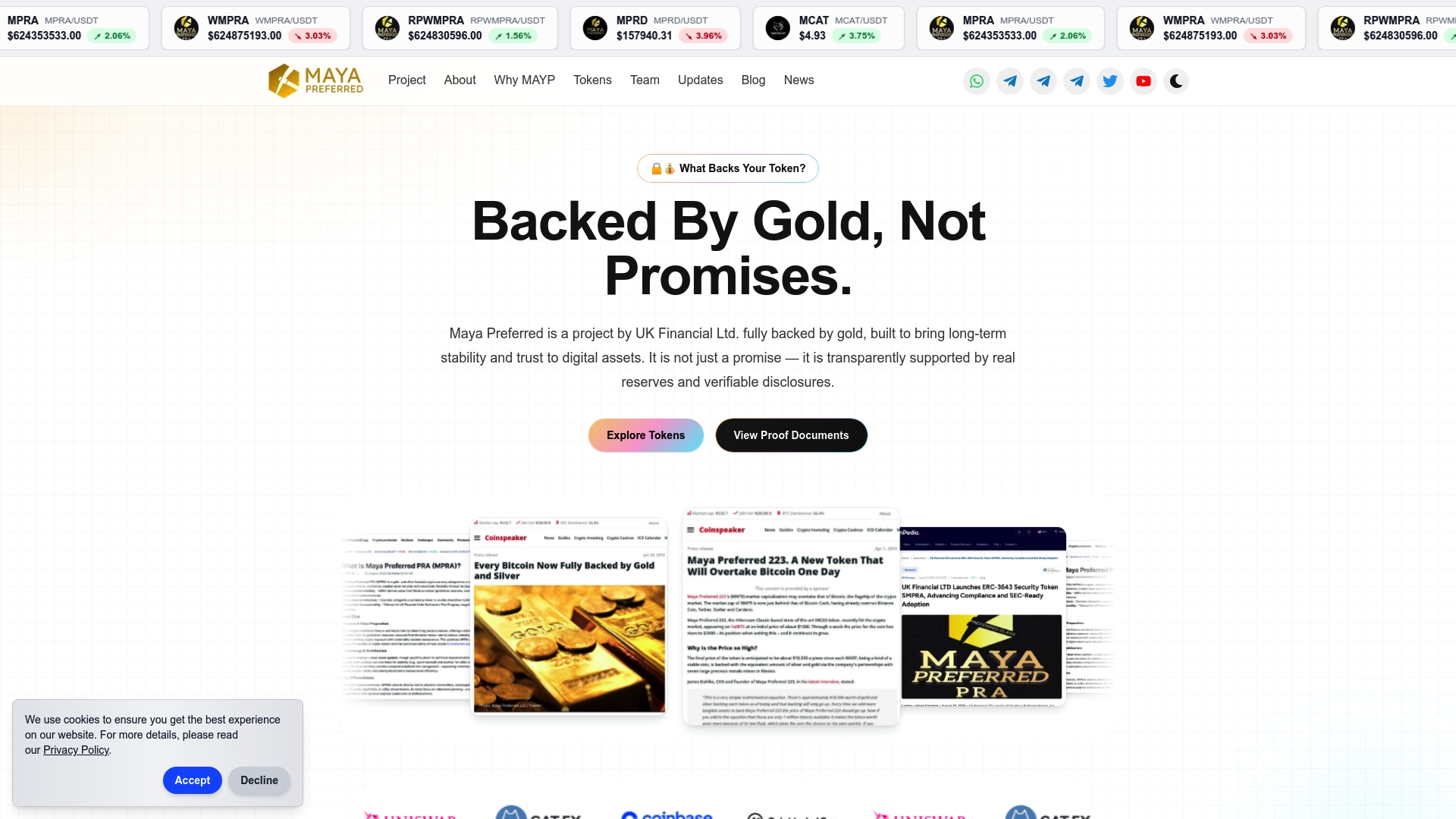
Experience peace of mind by exploring Maya Preferred’s comprehensive proof documents, ongoing audit disclosures, and regulatory compliance updates. Take control of your investment strategy today by visiting Maya Preferred to review detailed transparency reports and discover how real asset-backed digital tokens can enhance your portfolio. Don’t settle for uncertainty when authentic gold and silver-backed cryptocurrencies are just a click away.
Frequently Asked Questions
What are asset-backed cryptocurrencies?
Asset-backed cryptocurrencies are digital tokens that are backed by real-world assets, such as gold or silver, providing a more stable alternative to traditional cryptocurrencies. They maintain their value through direct connection to physical reserves.
How do gold- and silver-backed tokens work?
Gold- and silver-backed tokens represent direct ownership of physical gold or silver reserves. These tokens can typically be redeemed for the actual metals, and they utilize blockchain technology for transparent tracking and verification of underlying assets.
What are the benefits of investing in asset-backed cryptocurrencies?
Investing in asset-backed cryptocurrencies offers benefits like enhanced price stability, transparent documentation of reserves, lower volatility compared to traditional cryptocurrencies, and the potential for physical asset redemption, which can provide added security for investors.
What risks should I consider before investing in asset-backed crypto?
Investors should be aware of various risks, such as incomplete reserve disclosures, liquidity issues, regulatory compliance challenges, and the potential for mismanagement of the underlying assets. It’s crucial to conduct thorough due diligence before committing to any investment.