
7 Best Blockchain Investment Strategies for 2025

Deciding how to invest in blockchain assets can feel overwhelming when the choices range from cryptocurrencies to digital tokens backed by real-world commodities. It is not always clear which strategies offer genuine value and which are simply high-risk speculation. The financial impact of your decisions may depend on how well you understand ownership claims, transparency, and the unique characteristics of asset-backed tokens.
This list goes beyond the hype to reveal practical strategies you can use to evaluate and diversify blockchain investments. You will discover how asset-backed tokens work, why proof of reserves and transparency matter, and what makes gold-backed cryptocurrencies unique as safe havens during uncertain times. Each step will help you gain confidence and clarity as you build a smarter, more resilient blockchain investment approach.
Table of Contents
- Understand Asset-Backed Blockchain Tokens
- Evaluate Gold and Silver-Backed Cryptocurrencies
- Assess Proof of Reserves and Transparency
- Diversify Across Multiple Blockchain Assets
- Monitor Regulatory Compliance and Security
- Use Project Audits and Legal Disclosures
- Engage with Investor Communities and Updates
Quick Summary
| Takeaway | Explanation |
|---|---|
| 1. Verify Asset Reserves | Always confirm the physical assets backing any blockchain token before investing. This ensures that the token has intrinsic value and legitimacy. |
| 2. Diversify Your Portfolio | Spread investments across various blockchain assets to minimize risk and enhance stability. Balanced allocation can help withstand market fluctuations. |
| 3. Understand Regulatory Compliance | Stay informed about regulations affecting blockchain investments. Compliance is crucial for protecting your investment and ensuring legitimacy. |
| 4. Engage with Investor Communities | Join discussions in blockchain forums and professional groups to share insights and stay updated on trends and regulations. Community knowledge can enhance decision-making. |
| 5. Conduct Thorough Due Diligence | Perform rigorous checks on project audits and legal disclosures to gain transparency and reduce investment uncertainty. Quality research is essential for informed investing. |
1. Understand Asset-Backed Blockchain Tokens
Blockchain technology has revolutionized how we think about digital assets by enabling the transformation of traditional assets into tradable tokens. Asset-backed blockchain tokens represent a powerful investment strategy that bridges the gap between physical and digital economies.
At their core, these tokens are digital representations of real-world assets like real estate, commodities, or precious metals. They leverage blockchain’s transparency and security to create tradable digital ownership certificates.
Key characteristics of asset-backed blockchain tokens include:
- Fractional ownership of high-value assets
- Increased market liquidity
- Automated transaction processing
- Enhanced transparency through digital ledgers
- Reduced intermediary costs
The primary advantage of these tokens is their ability to democratize investment opportunities. Investors can now purchase fractional shares of assets that were previously difficult to access or divide.
Asset-backed tokens carry inherent value directly linked to their underlying physical assets, creating a more stable investment vehicle compared to purely speculative cryptocurrencies.
When evaluating asset-backed tokens, investors should consider:
- Verification of underlying asset reserves
- Legal compliance of token structure
- Technical infrastructure of the blockchain platform
- Regulatory environment in target markets
Pro tip: Always conduct thorough due diligence and verify the tangible assets backing any blockchain token before making an investment decision.
2. Evaluate Gold and Silver-Backed Cryptocurrencies
Gold and silver-backed cryptocurrencies represent a sophisticated investment strategy that transforms traditional precious metal investing into the digital age. Empirical research demonstrates their potential as robust financial instruments during market uncertainties.
These unique digital assets are directly linked to physical gold and silver reserves, offering investors a blend of technological innovation and tangible value. Unlike traditional cryptocurrencies that rely solely on market speculation, gold and silver-backed tokens provide intrinsic value through precious metal ownership.
Key advantages of gold and silver-backed cryptocurrencies include:
- Direct ownership of physical metals
- Lower volatility compared to standard cryptocurrencies
- Easy international transferability
- Potential hedge against economic instability
- Transparent asset backing
Gold-backed digital assets serve as powerful diversification tools with proven resilience during global financial challenges.
When evaluating these cryptocurrencies, investors should assess:
- Verification of physical metal reserves
- Redemption mechanisms
- Storage and custody arrangements
- Regulatory compliance
- Platform security infrastructure
Historical market data reveals that these digital assets maintain low correlation with volatile markets, making them attractive for risk-conscious investors seeking portfolio diversification.
Pro tip: Always request comprehensive documentation proving the exact quantity and quality of precious metals backing your cryptocurrency tokens before making an investment.
3. Assess Proof of Reserves and Transparency
Proof of Reserves (PoR) represents a critical transparency mechanism for blockchain investments that helps investors verify the actual assets backing digital platforms. Cryptographic proofs enable real-time asset verification and provide unprecedented visibility into institutional holdings.
This blockchain-powered approach allows investors to independently confirm that digital platforms maintain sufficient reserves to cover their financial obligations. Transparency becomes a quantifiable metric rather than a vague promise.
Key components of effective Proof of Reserves include:
- Cryptographically signed asset snapshots
- Independent third-party audits
- Real-time transaction visibility
- Verifiable total asset calculations
- Comprehensive liability disclosures
Proof of Reserves transforms trust from an abstract concept into a mathematically verifiable standard.
When evaluating blockchain platforms investors should look for:
- Frequency of reserve verification
- Depth of audit documentation
- Technical complexity of verification methods
- Regulatory compliance of disclosure practices
- Historical consistency of reported reserves
Additionally, public blockchain transparency reveals complex ownership structures, enabling unprecedented investor insight into digital asset ecosystems.
Pro tip: Always request comprehensive, cryptographically verifiable documentation of reserves and never rely solely on verbal assurances from blockchain platforms.
4. Diversify Across Multiple Blockchain Assets
Successful blockchain investment strategies require sophisticated portfolio management that goes beyond traditional asset allocation. Cryptocurrency portfolio diversification offers unique risk mitigation strategies that can dramatically improve investment stability.
Diversification in blockchain assets means spreading investments across different types of digital tokens and blockchain platforms to reduce overall portfolio risk. Strategic asset distribution minimizes potential losses by preventing overexposure to a single cryptocurrency or blockchain ecosystem.
Key diversification principles include:
- Invest across multiple blockchain networks
- Balance high-risk and stable tokens
- Include asset-backed and utility tokens
- Consider geographical and technological diversity
- Maintain flexible investment allocations
Effective blockchain diversification transforms potential volatility into strategic opportunity.
When constructing a diversified blockchain portfolio investors should consider:
- Market capitalization differences
- Technology underlying each token
- Historical performance correlations
- Regulatory environments
- Long-term technological potential
Cryptocurrency collective dynamics reveal complex market interactions that reward thoughtful, balanced investment approaches.
Pro tip: Regularly rebalance your blockchain asset portfolio and allocate no more than 10-15% of your total investment strategy to cryptocurrency investments.
5. Monitor Regulatory Compliance and Security
Blockchain investments require more than financial acumen they demand a comprehensive understanding of complex regulatory landscapes. Privacy-preserving cryptography offers innovative compliance solutions that balance technological innovation with legal requirements.
Navigating the intricate world of blockchain regulation means understanding how emerging technologies intersect with existing legal frameworks. Regulatory compliance is not optional but a critical investment protection strategy.
Key regulatory monitoring aspects include:
- Global data protection laws
- Cross-border transaction regulations
- Cryptocurrency trading restrictions
- Securities and investment compliance
- Anti-money laundering requirements
Blockchain security is not just a technical challenge but a comprehensive legal and operational commitment.
When assessing blockchain investment regulatory risks consider:
- Jurisdictional legal variations
- Ongoing regulatory evolution
- Technological compliance mechanisms
- Reporting and transparency obligations
- Potential legal liability scenarios
Blockchain technology requires interdisciplinary compliance approaches that integrate technical innovation with legal frameworks.
Pro tip: Consult with legal professionals specializing in blockchain technology and maintain a dynamic compliance strategy that adapts to rapidly changing regulatory environments.
6. Use Project Audits and Legal Disclosures
Blockchain investments demand rigorous verification beyond traditional financial assessment. Blockchain integration transforms audit transparency by enabling real-time transaction monitoring and authentication.
Project audits and comprehensive legal disclosures serve as critical investor protection mechanisms in the complex blockchain ecosystem. Detailed documentation mitigates investment risks by providing transparent insights into project infrastructure and operational standards.
Key audit and disclosure components include:
- Independent third-party verification
- Comprehensive financial documentation
- Technical infrastructure assessments
- Risk management frameworks
- Regulatory compliance reports
Robust audits transform uncertainty into quantifiable investment intelligence.
When evaluating blockchain project documentation investors should scrutinize:
- Auditor credentials and independence
- Depth of technical review
- Historical performance analysis
- Regulatory compliance assessment
- Transparency of disclosure processes
Blockchain audits reveal complex risk management challenges that require sophisticated assessment approaches.
Pro tip: Request comprehensive audit reports from multiple independent sources and cross-reference disclosures to validate the authenticity of blockchain project representations.
7. Engage with Investor Communities and Updates
Blockchain investments thrive on continuous learning and community insights. Institutional investors actively shape digital asset strategies through collaborative knowledge exchange and shared research.
Investor communities serve as critical platforms for understanding emerging blockchain trends, regulatory changes, and technological innovations. Collective intelligence drives investment success by providing real-time market perspectives and diverse expert viewpoints.
Key community engagement strategies include:
- Following reputable blockchain forums
- Participating in professional networking groups
- Attending virtual and in-person blockchain conferences
- Subscribing to industry research publications
- Monitoring expert social media channels
Informed investors leverage community knowledge to make strategic decisions.
When engaging with blockchain investor communities focus on:
- Verifying information sources
- Understanding consensus perspectives
- Identifying emerging technological trends
- Assessing regulatory developments
- Networking with experienced investors
Blockchain communities play crucial roles in trust-building and knowledge dissemination.
Pro tip: Maintain a critical and balanced perspective by cross-referencing information from multiple community sources and avoiding echo chambers of singular viewpoints.
Below is a comprehensive table summarizing the key concepts and strategies discussed in the article about blockchain token investments and related best practices.
| Concept | Description | Key Considerations |
|---|---|---|
| Asset-Backed Blockchain Tokens | Digital tokens representing physical assets for increased accessibility and liquidity. | Assure verification of assets and regulatory compliance when investing. |
| Gold and Silver-Backed Cryptocurrencies | Cryptocurrencies tied directly to reserves of precious metals providing intrinsic value. | Check reserve documentation and the technical security of the network. |
| Proof of Reserves (PoR) | A method using audits and blockchain tools to ensure transparency of asset backing. | Evaluate the depth and frequency of reserve audits. |
| Diversification Strategies | Spreading investments across blockchain platforms to mitigate risk. | Balance asset classes and maintain allocation flexibility. |
| Regulatory Compliance | Adhering to legal frameworks and operational standards in blockchain investments. | Monitor laws across jurisdictions and maintain up-to-date compliance strategies. |
| Audits and Legal Disclosures | Independent verifications to ensure project legitimacy and transparency. | Review the qualifications of auditors and technical assessments. |
| Investor Community Engagement | Participating in informational sharing to understand trends and better decision-making. | Validate shared insights and network with knowledgeable investors. |
Embrace Transparent, Asset-Backed Blockchain Investing for 2025
Navigating the complex world of blockchain investment demands strategies that emphasize real asset backing, transparency, and regulatory compliance. This article highlights challenges such as verifying Proof of Reserves, managing diversification, and assessing gold and silver-backed cryptocurrencies. If you are looking for a trustworthy platform that directly addresses these pain points, Maya Preferred offers a solution built on verified tangible assets and transparent disclosures.
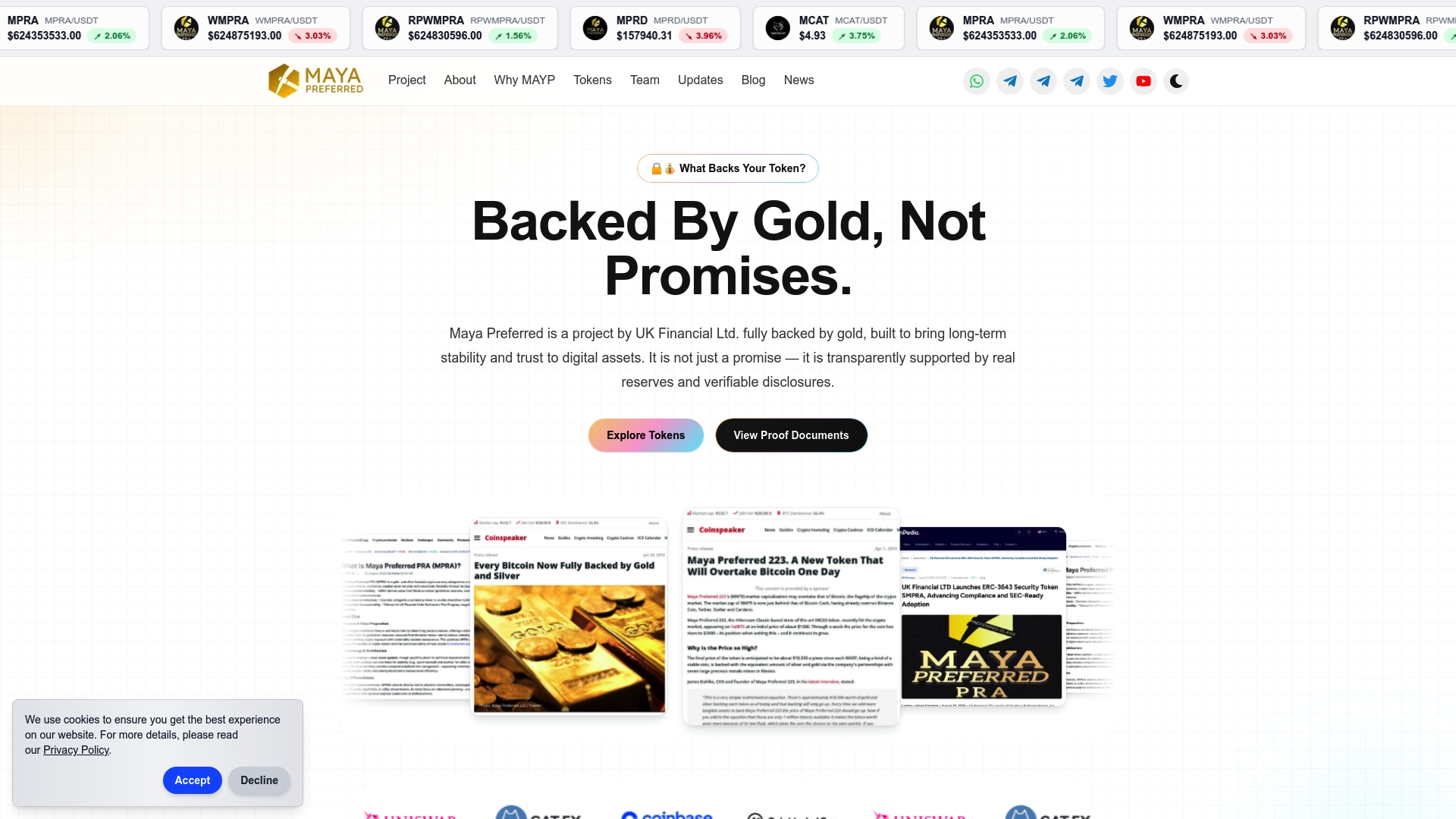
Discover how Maya Preferred’s tokens like MPRA, MPRD, and MCAT bridge traditional precious metal investment with blockchain innovation. By backing each token with actual gold and silver reserves, mining projects, and comprehensive audits, the platform transforms uncertainty into confidence. Don’t settle for speculative tokens. Act now and explore transparent investment alternatives that prioritize your peace of mind and portfolio stability at Maya Preferred. Learn more about our commitment to transparency and real-world asset integration with detailed Proof of Reserves and Audit reports and join a growing community of informed investors shaping the future of asset-backed digital assets.
Frequently Asked Questions
What are the key characteristics of asset-backed blockchain tokens?
Asset-backed blockchain tokens represent real-world assets in a digital format. They provide benefits like fractional ownership, increased liquidity, and automated transaction processing. To participate, research the underlying assets and ensure they align with your investment goals.
How can I effectively evaluate gold and silver-backed cryptocurrencies?
To evaluate gold and silver-backed cryptocurrencies, check for verification of the physical metal reserves and what redemption mechanisms are offered. Conduct thorough research to understand the storage arrangements and regulatory compliance details before investing.
What should I look for in Proof of Reserves to ensure transparency?
When evaluating Proof of Reserves, focus on the frequency of verification, the depth of audit documentation, and the real-time visibility of transactions. Ensure the platform undergoes regular independent audits to maintain a reliable level of transparency.
How can I diversify my blockchain investment portfolio?
To diversify your blockchain investment portfolio, invest across multiple platforms, including a mix of asset-backed and utility tokens. Aim for a balanced approach that allocates no more than 10-15% of your total investment strategy to cryptocurrencies, adjusting as market conditions change.
What are the best practices for monitoring regulatory compliance in blockchain investments?
Monitor regulatory compliance by keeping abreast of global data protection laws and cross-border transaction regulations. Develop a dynamic compliance strategy that adapts to regulatory changes, consulting with legal professionals specializing in blockchain technology when necessary.